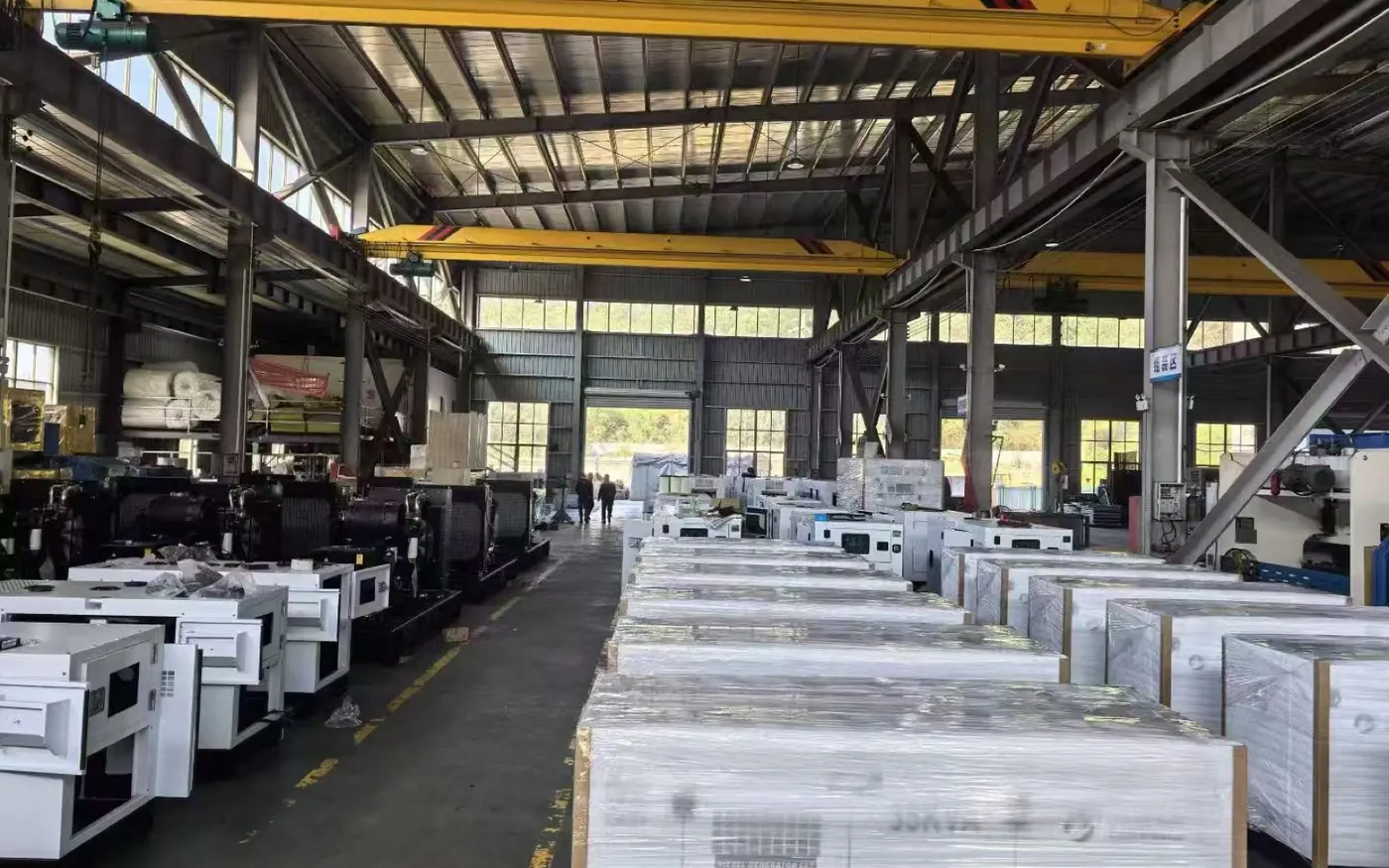
Sizing is a sequence. Skipping a step does not save time, it moves the error later, to the point where the set is already on site and the load has already been connected.
Sizing is a sequence, and the order matters
A generator rating is an output, not a starting point. It comes out of a short chain of decisions, and each decision depends on the one before it. The chain runs from what has to be powered, to what has to be started, to what units are being used, to how the set will be worked, to what is being supplied alongside it.
Enquiries that begin with a rating tend to end in a revision. A buyer asks for a specific size because a previous site used one, and the new site turns out to have a larger motor or a longer daily run. The chain would have shown that in a few lines.
The sections below follow the chain in order. Each one is short, and each one produces something that can be written down and checked.
Step one: build the load list
The load list is the only input that cannot be worked around. It names every significant item that will draw power, and for each one it records the rating and whether it has a motor in it.
Write it by equipment rather than by circuit, because a circuit schedule hides what is connected. Lighting, air conditioning, refrigeration, pumps, workshop machines, office equipment, lifts or hoists, and anything with a heating element should appear as itself.
Two columns make the list immediately more useful. The first marks whether the item runs continuously while the site is on backup or only intermittently. The second marks whether it can be shed, because that answer decides which loads must be carried and which can wait.
Step two: separate what runs from what starts
This is the step that most often changes the answer. Equipment with a motor draws far more current while accelerating than it does once it is running, so a list totalled from running figures can be well short of the real demand.
For every motor, record how it starts. Direct on line is the heaviest case. A star-delta arrangement, a soft starter or an inverter-driven motor reduces the surge, and the method should be written next to the rating rather than assumed.
Then look for the moment when two starting events could overlap. Two compressors restarting after an outage, or a pump starting while a mill is running, can define the rating even when the running total looks comfortable. The motor starting page on this site works through the mechanism in detail.
Step three: fix the unit and the power factor basis
A mixture of kW and kVA figures in one comparison is not a comparison. The two measure different things and are related through the power factor, so the same physical set can carry two different numbers.
Before offers are compared, put everything into one unit at one stated power factor. Working in round numbers, a set quoted at 0.8 power factor delivers a lower kW figure than the same kVA quoted at 0.9, and that gap is the whole reason the unit basis has to be written down.
Ask for the rating with its power factor and its duty basis in the same line. A rating without either is not yet a specification.
Step four: apply duty, site and growth
The same load list produces different recommendations depending on how the set will be worked. A set that runs only during grid outages is rated for standby service, while a set that is the only supply on site is rated for continuous work. These are not interchangeable, and a quotation should say which one it is offering.
Site conditions belong here too. Ambient temperature, altitude, the enclosure, and where the set can physically stand all affect what the machine can deliver in practice. A set installed with its ventilation obstructed is not the same installation as one with clearance around it.
Finally, decide how much growth to allow and write the reason down. A modest allowance for loads that are planned but not yet installed is defensible. A large one with no explanation simply pays for capacity that will never be used.
Step five: set the electrical and mechanical scope
A rating describes the machine, and a quotation describes a delivery. Between the two sit the items that decide whether the installation works: the changeover arrangement, the cabling and protection, the earthing, the fuel system, the exhaust route and the foundation or base.
The changeover decision is often the most consequential. An automatic panel restores supply without an operator, which matters wherever nobody is standing next to the set when the grid fails. A manual arrangement is simpler and depends on somebody being present.
Everything outside the set itself should be either included explicitly or excluded explicitly. A quotation that is silent on cabling and installation has not included them, whatever the buyer assumes.
Step six: read the quotation back against the list
The last step is the cheapest one. Take the load list and the quotation side by side and check that every significant item on the list is addressed by something in the offer.
If the largest motor is not mentioned, the starting method has not been considered. If the cooling load is absent, the compressors were not. If the changeover and cabling are not described, the scope is incomplete rather than included.
A quotation that survives this read-back is one that can be compared with another on the same terms. A quotation that does not survive it is not ready to be compared at all.
Three worked examples: flat, shop and clinic
The sequence above is general. What buyers actually arrive with is a particular building, and the useful thing to show them is how the same six steps land on three settings that between them cover most of the residential and small commercial enquiries in this market: a three-bedroom flat, a shop, and a small clinic.
Each example below is written as a list rather than an answer. The columns say what to take off the nameplate, whether the item is normally carried through an outage, and what that item does to the rating. None of the three tables ends in a figure, and that is deliberate. The rating is the output of the sequence, and it moves with the count of each item on the list. Two three-bedroom flats with different air-conditioning counts do not arrive at the same answer, so a table that printed one number would be wrong for at least one of them.
Example one: a three-bedroom flat
The flat is usually the simplest list, and it is dominated by one group. Air conditioners are the largest load that runs for long periods, and compressor starting is the heaviest single event in the building. Everything else on the list is small enough that it changes the answer mainly by adding to the running total.
| Item | What to record from the nameplate | Carried through an outage? | What it does to the rating |
|---|---|---|---|
| Air conditioners | Running load, cooling capacity, and how many units there are | Usually, and often the first thing the buyer insists on | Normally decides the rating, through both the running load and the compressor start |
| Lighting | Number of fittings and the wattage on each lamp | Partly; some circuits stay on all evening | Adds to the running total, and matters mainly because it is continuous |
| Refrigerator and freezer | Running load and the age of the appliance | Yes, continuously | Continuous load with its own starting event, and older units cycle harder |
| Water pump, if the flat has one | Motor rating, and whether it is single or three phase | Intermittently, but with a hard start | The starting method matters more than the running load here |
| Television, decoder, router, chargers | Individual loads, which are small but numerous | Yes, most evenings | Adds up, and is the part of the list buyers consistently underestimate |
| Microwave, kettle, iron | Heating load for each appliance | Rarely together, but often while the air conditioners run | Short, heavy draws that decide whether the set holds voltage at the worst moment |
| Washing machine, if fitted | Motor load, and whether it has a heater | Rarely at the same time as the iron or kettle | Contributes to simultaneity rather than to the total |
Example two: a shop
A shop often looks smaller than a flat and needs a comparable set, because the load mix is different rather than lighter. Display chillers and freezers run continuously and cannot be interrupted without consequence, lighting stays on through trading hours, and the duty is closer to continuous than to standby.
| Item | What to record from the nameplate | Carried through an outage? | What it does to the rating |
|---|---|---|---|
| Display chillers and freezers | Running load for each unit, and the number of units | Yes, and normally the reason a set is being bought | Decides the rating in most shops, and sets a continuous duty basis rather than standby |
| Lighting, including display lighting | Fitting count and lamp wattage, including any track or accent lighting | Yes, throughout trading hours | Continuous load over a long day, which is what makes the duty continuous |
| Point of sale, router, CCTV | Small individual loads, and any backup already fitted | Yes | Small in total, but not shedable, so it belongs in the base load |
| Air conditioner | Running load, and how many units | Usually, in hot weather | Adds a compressor start to a list that is already running continuously |
| Trade equipment, where the shop has any | Motor rating and starting method, for clippers, sewing machines or similar | Yes, while work is being done | Frequent starts, each one a demand on the set |
| Signage and exterior lighting | Load, and whether it runs after closing | Often | Extends the running hours rather than raising the peak |
Example three: a small clinic
The clinic is the case where the consequence of an interruption rather than the size of the load should drive the decision. Cold chain, sterilisers and diagnostic equipment do not tolerate a supply that drops when something else starts, so the rating has to be judged against the worst moment rather than the average one.
| Item | What to record from the nameplate | Carried through an outage? | What it does to the rating |
|---|---|---|---|
| Vaccine or specimen refrigeration | Running load, and whether the unit has a holdover or alarm | Yes, without exception | Continuous, un-shedable load that defines the floor of the rating |
| Steriliser or autoclave | Heating element load, which is large and short-lived | Yes, when in use | A heavy draw that overlaps with everything else, and often invisible on a circuit schedule |
| Air conditioning | Running load and unit count, including any treatment room units | Usually | Compressor starts on top of an already continuous base |
| Diagnostic and laboratory equipment | Load per unit, and any manufacturer requirement on supply quality | Yes, for the equipment in use | May impose a supply-quality requirement that changes the specification, not only the size |
| Lighting, including procedure lighting | Fitting count and wattage, with any dedicated circuit identified | Yes | Continuous, and the circuits that must not be shared |
| Water pump and water treatment | Motor rating and starting method | Intermittently | A hard start that frequently coincides with the steriliser cycle |
| Reception, records and IT | Small loads, plus any server or UPS already installed | Yes | Base load, and a UPS changes how the changeover should be arranged |
What separates the three
Read together, the three lists show why the rating cannot be read off the building type. The flat is decided by a peak that arrives when the compressors start. The shop is decided by a base load that never goes away and a duty that is continuous rather than standby. The clinic is decided by the combination of an un-shedable base and a heavy short draw, with a supply-quality requirement layered on top.
| Branch | What usually decides the rating | What the duty basis becomes | What to check on the quotation |
|---|---|---|---|
| Three-bedroom flat | The number of air conditioners and whether they start together | Standby, in most cases | That the starting method for the compressors is addressed, not only the running total |
| Shop | The continuous chiller and lighting load, over a long trading day | Closer to continuous than standby | That the duty basis is stated, and that the servicing interval suits long running hours |
| Small clinic | An un-shedable base plus a heavy short draw, with a supply-quality requirement | Continuous, with the changeover arrangement treated as critical | That the changeover, any UPS interaction and the supply quality are all described |
Once the list is built and the branch is identified, the next question is which pages on this site carry the detail for that branch. The home sizing page works through the flat and duplex cases, the shop set page covers the small commercial case, and the clinic set page covers the medical one. Where the flat is small enough that the choice comes down to a single-phase or three-phase set at the lower end, the 12 kVA home and business page sets out that comparison, and the single-phase versus three-phase page explains the wiring consequence.
The sizing pages on this site
The steps above are the general method. The pages below take one step each and go into detail, and they are the ones to read when the site you are sizing has a specific problem rather than a general one.
What to send for a sizing check
Send the load list, the largest motor with its starting method, the duty the set will work, the site conditions and the scope expected around the set. Ask for the rating to be stated with its power factor and duty basis so the offer can be compared.
Request a sizing check and quotation
Send the load list and the site facts, and ask for the rating with its power factor and duty basis plus the scope around the set, so the offer can be checked against the list.
Get a written quotation
Three fields. We reply with the rating, the engine option and the delivery basis.
Generator sizing questions
How do I size a generator for my load in Nigeria?
Work through a sequence: list the equipment, separate running load from starting load, put every figure into one unit at one power factor, apply the duty and site conditions, set the electrical scope, then check the quotation against the list. The rating comes out of that sequence rather than starting it.
What is the most common sizing mistake?
Totalling the running figures and ignoring starting. Motors, compressors and air conditioners draw far more current while accelerating, and if two of them start together the demand can exceed what a set sized on running load can supply.
Why does the power factor matter when comparing quotations?
Because kW and kVA measure different things and are related through the power factor. The same kVA figure delivers a different kW figure at 0.8 and at 0.9, so offers must be converted to one unit at one stated basis before they can be compared.
What is the difference between standby and prime ratings?
A standby rating describes a set used for outages, while a prime rating describes a set that is the main supply and runs for long periods. The same load list can lead to different recommendations under each, so the quotation should state which basis it uses.
Should I add extra capacity for future loads?
A modest allowance for loads that are already planned is reasonable, and the reason should be written down. A large allowance with no explanation simply buys capacity that will never be used and makes the set run below its efficient range.
What should be included besides the generator itself?
The changeover arrangement, cabling and protection, earthing, the fuel system, the exhaust route and the base or foundation. Items outside the set should be either explicitly included or explicitly excluded in the quotation, because silence is not inclusion.
