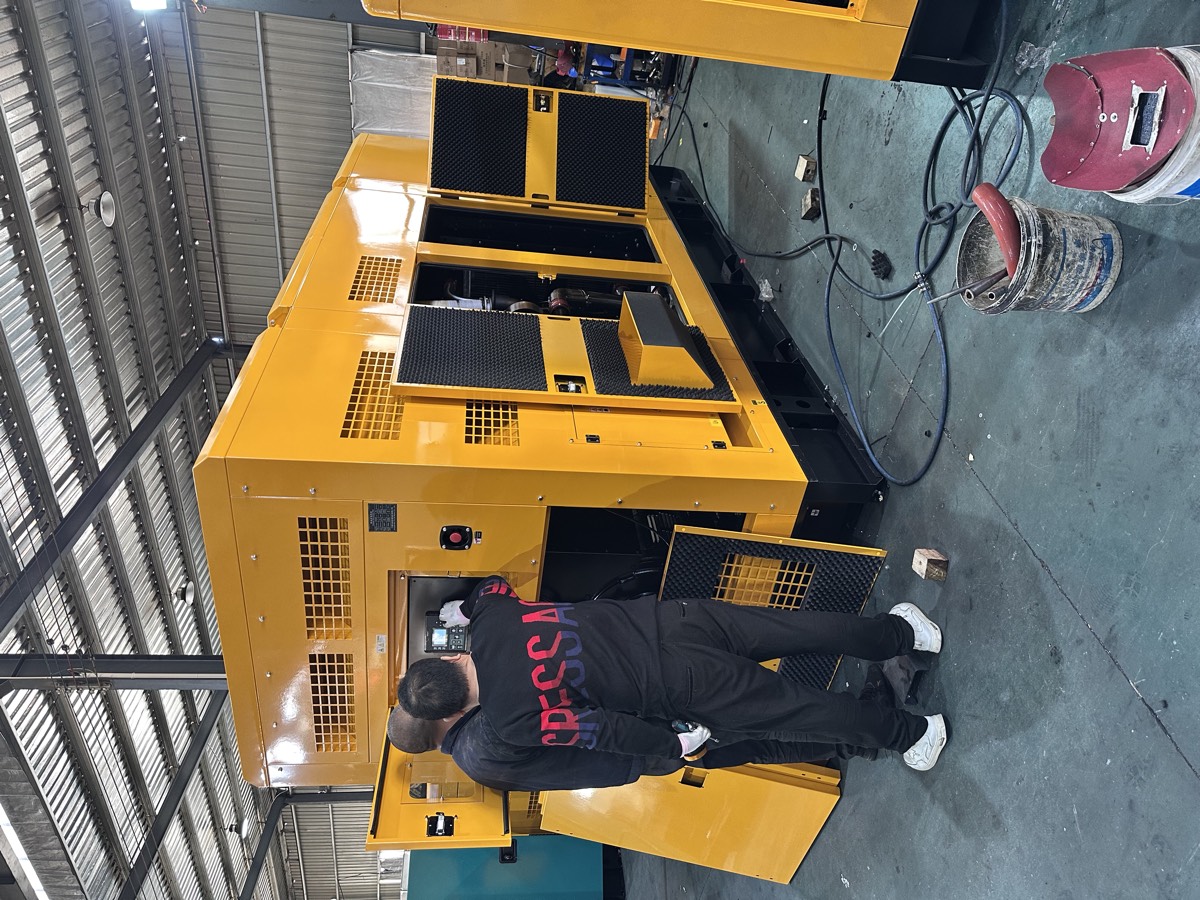
A no-load run proves the set starts and the alternator produces voltage. A load test proves it can hold that voltage and frequency while absorbing real current at temperature, which is where cooling faults, fuel restrictions, excitation weakness and control settings show themselves.
Why a new set still needs to be tested under load
A generator is assembled from parts made by different suppliers and set up by people working to a schedule. The faults that survive that process are rarely the ones that stop it starting. They are the ones that only appear when the set is asked to deliver current for long enough to get hot: a cooling system that cannot hold temperature, a fuel line with a restriction, an excitation system that runs out of field current under load, a control setting that trips at a level the site will reach on a normal day. The load the test should target comes from the site's own demand calculation, set out in the sizing guide, not from the set's badge.
A no-load run cannot find any of those, because at no load there is almost no heat and almost no current. It confirms that the engine runs and the alternator is excited, which is a low bar and one that a set with a serious fault can still clear.
The commercial argument is the same one. Payment is a one-time event and fault-finding afterwards is a negotiation. A recorded test before payment converts most of those arguments into a fact both sides can read.
What a load test actually proves
A load bank presents a controlled electrical load, usually resistive, that the set can be run against at defined steps. Because the load is known and adjustable, the test can establish output at several points rather than at one, and it can hold a point long enough for temperatures to stabilise.
The things it establishes are: that the set can carry its rated load at the site's ambient for a sustained period without exceeding temperature limits; that voltage and frequency hold within acceptable bands as load is applied and removed; that the engine's fuel and cooling systems can support that output; and that protection settings operate where they are supposed to rather than during normal running.
It also produces a baseline. A set with a recorded performance at commissioning can be compared with itself two years later, which turns a vague sense that it is not what it was into a measurement.
| Test | What it establishes | What it cannot show |
|---|---|---|
| No-load run | The engine starts and runs; the alternator produces voltage | Anything involving current, heat or sustained output |
| Load steps at low load | Voltage and frequency response to a changing load | Whether the cooling system copes at rating |
| Sustained run at rated load | Temperature stability, fuel and cooling adequacy | Behaviour above rating or on a hard motor start |
| Motor start test | Voltage dip and recovery with the real load | Long-term thermal behaviour |
| Protection test | That trips occur at the intended settings | Whether the settings suit the site's normal load |
How the test should be run and recorded
The sequence that gives useful information starts light and steps up, holding each step long enough for the readings to settle rather than sampling a transient. At each step, record the load in kW, the voltage and frequency, the coolant and oil temperatures, and the fuel consumption if it can be measured.
The sustained run at or near rated load is the part that finds real faults, and it is also the part that gets shortened when everyone is in a hurry. A short run at full load shows that the set can do it briefly; a sustained run shows whether the cooling system reaches equilibrium at a temperature it can live with.
What matters afterwards is the sheet. A test with no record is a conversation; a test with load, temperature, voltage and duration written down is evidence. The acceptance conversation should be about the sheet, and the same sheet is the reference point for the maintenance intervals in maintenance schedule.
When there is no load bank on site
A load bank is not always available, and its absence does not have to mean no test. The site's own load is the obvious substitute, used deliberately: bring the building up in stages, watch the readings at each stage, and hold at the highest load the site can present for as long as it can be held.
The limitation should be stated honestly. Site load is usually not adjustable in clean steps, it may not reach the set's rating, and it brings its own variability. A set tested only against a light site load has been proved capable of that load and nothing more, which is a weaker statement than a rated-load test and should be described as such.
Where the site load is far below the rating, the test is also the moment to notice that the set is oversized for its job. The load-band consequences are set out in under-loading damage, and the rating class the test should be run against is covered in prime, standby and continuous ratings.
What to accept, and what to send back
Accept when the recorded performance matches the rating the order was placed against, at the site's conditions, with temperatures stable rather than still climbing when the test ended. Reject or hold when the set cannot reach its rating, when temperature keeps rising at a steady load, or when protection operates during normal running.
Two specific findings are worth treating as stop items. The first is a set that reaches its electrical rating but cannot hold temperature, which indicates a cooling or installation problem that will not improve with use. The second is a fuel restriction that only shows at high load, which appears as a falling frequency or a governor that cannot hold speed, and which is often mistaken for a cooling fault until the temperatures are read. The thermal side is covered in overheating diagnosis.
The voltage and frequency behaviour during load steps deserves a separate look, because it is what the rest of the building experiences. A dip that recovers cleanly is normal; one that lingers points at excitation, and the division of labour between the two control loops is set out in AVR and spare parts.
Testing again after commissioning
A set that passed at commissioning is not proved for ever. Load patterns change, cooling cores block, fuel systems foul, and the set drifts away from the condition it was tested in. An annual loaded run, recorded the same way, is the cheapest way to catch that drift while it is still a maintenance item.
The loaded run also does the set a favour. A set that spends most of its life at light load benefits from a periodic run at real load, which is the recovery method for the deposits that light-load running creates. The mechanism is the same one described in under-loading damage.
Where a site has no way to present a load, the honest position is that the annual check is a maintenance inspection rather than a performance test, and it should be described that way in the record rather than being presented as proof of output.
FAQ
Does a new generator need a load test before delivery?
It should be tested under load before payment wherever a load bank is available. A no-load run confirms only that it starts and produces voltage, and the faults that cost money appear under sustained load and heat.
How long should a load test last?
Long enough for temperatures to stabilise at each step rather than still climbing when the test ends. A short run at full load shows the set can do it briefly; the sustained run is what shows whether the cooling system reaches a workable equilibrium.
Can I test a generator using the building's own load?
Yes, and it is better than nothing, but it is a weaker test. Site load is not adjustable in clean steps and may not reach the rating, so the result proves capability at that load and not at rating. It should be described that way in the record.
What should be recorded during a generator load test?
Load in kW, voltage, frequency, coolant and oil temperatures, and duration at each step, plus fuel consumption where it can be measured. The sheet is the evidence; the test without a record is only a conversation.
Is a load test also good for the generator?
A periodic loaded run helps a set that normally runs at light load, because it burns off the deposits that low-load running creates. It is both a test and a maintenance action.
