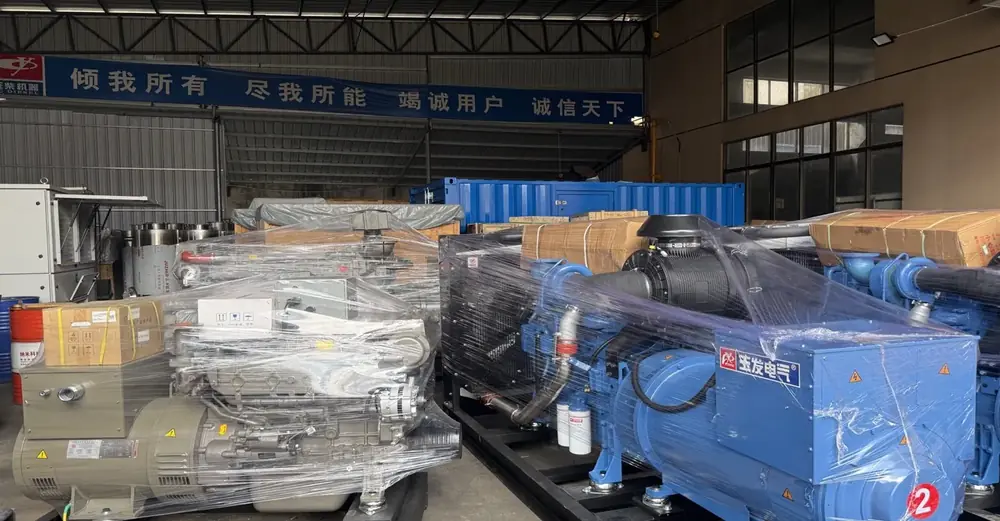
A factory acceptance test records how the set runs and how its controls and protection respond. Pre-shipment inspection records what was packed. Both belong in the order scope, and neither is useful if it is arranged after the fact.
What a factory acceptance test normally records
A factory acceptance test normally records no-load and load-bank results: output voltage, frequency, load steps and the response of protection and alarm functions. The purpose is to show that the machine behaves as the specification says before it leaves the factory.
The value of the test comes from the scope being agreed in advance. If the load steps and the protection functions are defined in the order, the record can be checked against something. If they are defined afterwards, the record is a description rather than a verification.
It is also worth distinguishing the factory test from site commissioning. A factory test checks the generator package, while commissioning confirms installation, cabling, earthing, fuel system, transfer logic and load performance at the actual project. They are different activities with different purposes.
The factory acceptance test guide sets out the checklist in detail.
The records worth asking for
A test is only useful if it produces something you can file. Ask for the model and rating confirmation, the controller and protection configuration, the no-load and load running results, and the identification of the actual unit.
It is also worth asking for the nameplate and engine identification to be recorded. That single item links the paperwork to the physical machine, and it is the detail that lets a buyer confirm later that the delivered unit is the one that was tested.
Records should be tied to the unit rather than to the product line. General literature is background material; the record of this machine's behaviour is evidence.
The factory and shipping proof centre gathers the evidence items that can be agreed in advance.
Records start at acceptance and continue through service life, which is the subject of generator maintenance and service.
The checks that must happen before sealing
Pre-shipment inspection focuses on packing, labels, accessories, nameplate data and dispatch photographs, which are precisely the items that cannot be verified once the container is sealed.
This is where accessory shortages are caught. Control panel spares, exhaust components, batteries, tool kits and documentation travel in different places, and each item should appear on the packing list as a line that can be checked off.
Dispatch photographs are worth requesting explicitly, taken at the point of loading. They document the packing standard and the condition of the goods at handover, and they are useful in any later discussion about transit damage.
The pre-shipment inspection guide covers the checklist, and the six-step import guide shows where inspection sits in the wider process.
Linking payment stages to verification
Linking the balance payment to a confirmed inspection record is a standard risk-control step for importers, and it works because it places the verification before the irreversible act of shipping.
The practical arrangement is to define in the order what evidence is required, when it is provided, and which payment stage it releases. Agreeing those three items before production is straightforward; agreeing them afterwards is a negotiation.
Third-party inspection can also be arranged where the buyer wants independent confirmation. Whether it is used or not, the arrangement should be decided in advance so the supplier knows the goods will be inspected and the buyer knows who pays for it.
Payment stages protect the buyer up to delivery, and the support that follows is set out in warranty and after-sales.
Writing inspection into the order
Include the test scope, the records required, whether third-party inspection is involved, and which payment stage each piece of evidence releases. Then confirm the packing and accessory list before the booking.
This guide sits alongside the import process guide. Together they cover what happens and in what order.
Request a quotation with the test scope included
State the test scope you require, the records you expect, whether third-party inspection is involved, and which payment stage the evidence releases.
Get a written quotation
Three fields. We reply with the rating, the engine option and the delivery basis.
Inspection and acceptance questions
What should a generator factory acceptance test include?
Typically no-load and load-bank results covering output voltage, frequency, load steps and the response of protection and alarm functions, together with confirmation of the model, rating and controller configuration.
Is factory testing the same as site commissioning?
No. Factory testing checks the generator package before shipment, while commissioning confirms installation, cabling, earthing, fuel system, transfer logic and load performance at the actual project.
What does pre-shipment inspection cover?
Packing, labels, accessories, nameplate data and dispatch photographs, which are the items that cannot be verified once the container has been sealed.
Should payment be linked to inspection?
Linking the balance payment to a confirmed inspection record is a standard risk-control step, because it places verification before the irreversible act of shipping. Define the evidence and the payment stage in the order.
Can a third party inspect the set?
Yes, where the buyer wants independent confirmation. The arrangement should be decided in advance so both parties know the goods will be inspected and who is responsible for the cost.
Why request dispatch photographs?
They document the packing standard and the condition of the goods at handover, which is useful if damage is discovered during transit or on arrival.
