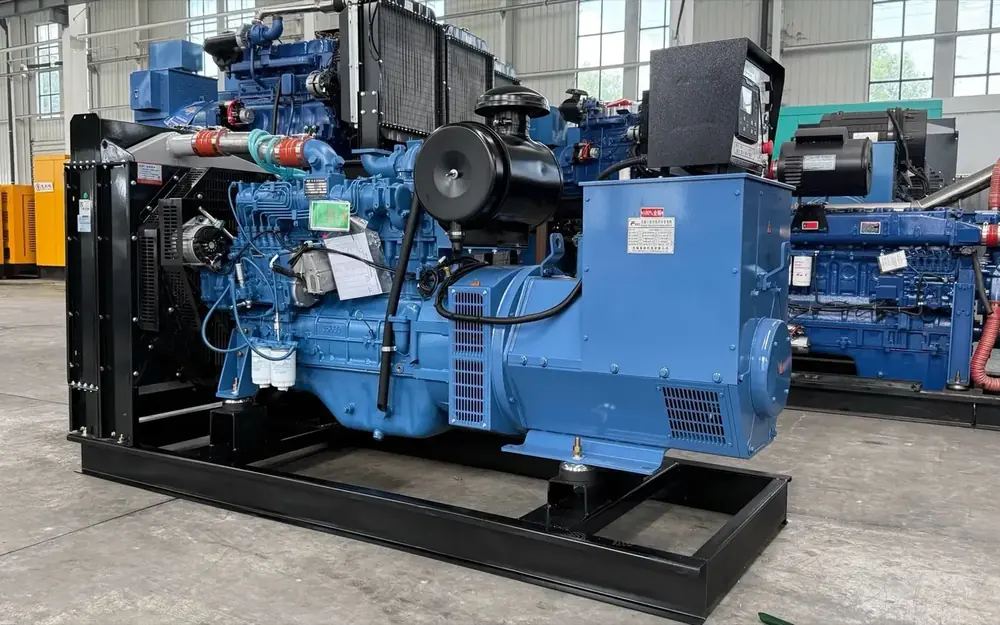
The generator does not cover the IT load instantly. The UPS carries the load while transfer takes place, so the transfer time and the UPS ride-through have to be compatible, and that relationship is a design input rather than a detail.
How the three layers hand over
Utility power fails, the uninterruptible power supply continues to supply the IT load from its batteries, the generator starts, and the transfer arrangement moves the critical load onto the generator once it is producing stable voltage and frequency. The UPS then recharges.
The sequence only works when the second and third steps happen inside the window the batteries provide. That is why transfer time and UPS ride-through are usually considered together, and why an accurate ride-through figure belongs in the specification rather than an assumption.
It also defines what the generator must do on arrival: accept a step load without collapsing frequency, and hold voltage within the tolerance of the UPS and the IT equipment. Alternator sizing and the set's transient behaviour matter more here than in most commercial applications.
N+1, 2N and what they change
Redundancy descriptions are simple but consequential. N+1 means one additional unit beyond what is needed to carry the load, so a single failure does not remove supply. 2N means full duplication of the capacity path, so either side can carry everything on its own.
The choice changes the number of sets rather than only their size. Two smaller units running in parallel can provide redundancy that a single larger unit cannot, because losing one leaves partial capacity instead of nothing.
Parallel operation brings its own scope: matching controls, synchronising equipment, load sharing and a protection philosophy designed as a system. Those items belong in the specification from the beginning, because retrofitting them is neither cheap nor straightforward.
Whichever model is chosen, make sure the offer states the boundary clearly, so it is visible whether synchronising and load-sharing equipment sits inside the generator scope or in separate switchgear.
Single set or parallel arrangement
A single set is simpler to operate and easier to maintain. A parallel arrangement is more complex but keeps partial capacity running after the loss of one unit, and allows the site to run one set lightly during low demand and bring the second online when demand rises.
For a site that expects to grow in stages, a parallel arrangement also lets capacity arrive with demand instead of being bought upfront and left idle.
The decision should be made at specification stage. Mention it when the quotation is requested even if the second unit is planned for later, because it changes the controller, the switchgear and the protection philosophy of the first set as well.
Fuel autonomy expressed in hours
Fuel is a design input rather than a tank size. The useful way to state the requirement is runtime under the expected load, because stored volume only means something once consumption at that load is known.
The relationship is straightforward to state even without numbers: runtime equals stored fuel divided by consumption at the expected load. Agreeing the runtime target first allows the tank, the transfer arrangement and the refuelling plan to be sized around it.
For a critical site it is also worth confirming what happens on prolonged outage, since refuelling access and fuel quality become operational matters rather than design ones. The fuel consumption calculator covers the consumption side and the ATS panel selection guide covers the transfer arrangement.
Sending a critical power request
Give the critical load, the UPS ride-through figure, the required transfer time, the redundancy target, whether parallel operation is intended, and the fuel autonomy requirement in hours.
If the site has a single-line diagram or a load study, mention it. Critical power decisions belong on the project's own documentation, and the data center power page and the telecom tower power guide cover adjacent applications.
Request a critical power quotation
Send the critical load, the UPS ride-through, the required transfer time, the redundancy target and the fuel autonomy requirement in hours. Mention parallel operation if it is planned now or later.
Get a written quotation
Three fields. We reply with the rating, the engine option and the delivery basis.
Data center generator questions
What does the generator do in a data center?
It carries the critical load once it is producing stable voltage and frequency and the transfer has taken place. The uninterruptible power supply covers the load during the interval before that happens.
How do transfer time and UPS ride-through relate?
The transfer must complete within the window the UPS batteries provide. Because of that, the transfer arrangement and the ride-through figure are usually specified together rather than separately.
What is the difference between N+1 and 2N?
N+1 provides one additional unit beyond the capacity needed to carry the load. 2N provides full duplication of the capacity path, so either side can carry everything independently. The choice changes how many sets are installed, not only their size.
Is one large generator or two smaller ones better?
They solve different problems. A single set is simpler to operate; parallel sets can keep partial capacity after the loss of one unit and can match capacity to staged demand, at the cost of additional control and switchgear scope.
How should fuel autonomy be specified?
In hours of runtime at the expected load rather than in litres, because runtime equals stored fuel divided by consumption at that load. The runtime target then drives the tank and refuelling arrangements.
Does the alternator matter more in this application?
It matters a great deal. The set has to accept a step load without collapsing frequency and hold voltage within the tolerance of the UPS and the IT equipment, so transient behaviour is a primary consideration.
