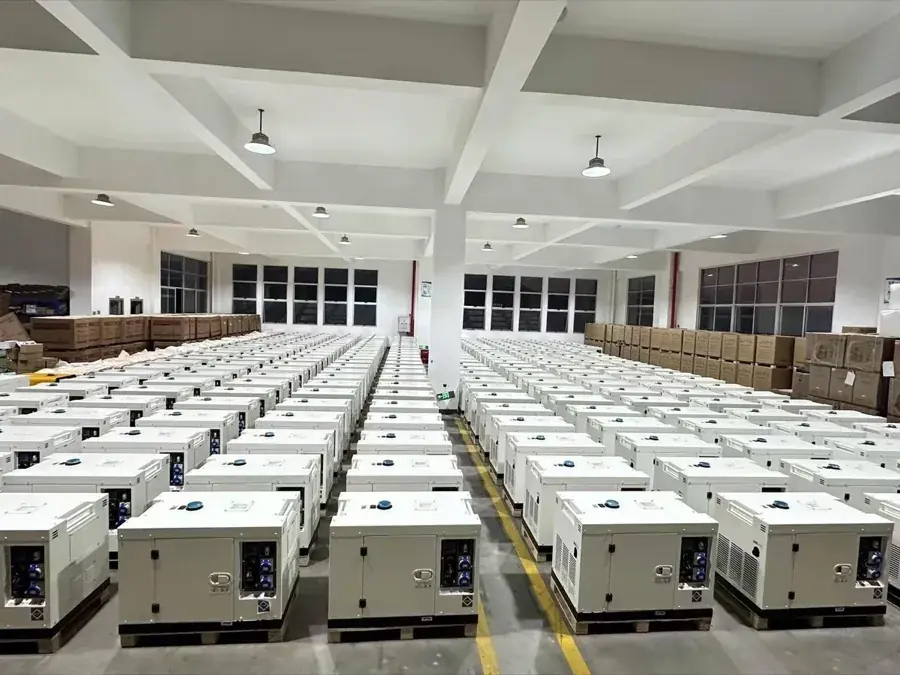
A kW figure and a kVA figure describe different things. Comparing a set sold as 10kW against one sold as 10kVA is comparing a smaller machine with a larger one, and the difference matters most when something has to start.
A 10kW label and a 10kVA label are not the same machine
Small generators are advertised in both kW and kVA, and the two are not interchangeable. The kVA figure is apparent power and the kW figure is real power, related through the power factor, which is why the same physical set can be described by two different numbers.
The practical risk is a buyer comparing a set labelled in kW against a set labelled in kVA and concluding that one is cheaper for the same output. It is not the same output. Before anything else, put both offers into the same unit and the same power factor basis.
The site explains the conversion in full on the kW, kVA and kWh page. What matters for a small set is the direction of the error: a buyer who mixes the labels usually ends up with less machine than intended, and small sets have the least headroom to absorb that.
What routinely fits inside this band
The small silent band covers a wide range of real work, and most of it is domestic, commercial or light industrial rather than heavy. Lighting, refrigeration, air conditioning, office equipment, a small pump and a small workshop machine are all normal loads here.
The band also covers a whole class of buyers the larger sets do not suit: a home with a borehole, a shop with a freezer, a clinic with a refrigerator and lights, a small block of offices, a guest house. Those loads share a characteristic, which is that they are small in total but one of them draws a large current when it starts.
What the band does not cover is a load that mixes several large motors, or a site that needs the supply to keep running for very long stretches of the day. Those cases belong one or two steps up, and pretending otherwise leads to a set that runs at its limit continuously, which is not what a small set is designed for.
Single phase, three phase and the load that decides
The phase decision is usually forced by the equipment rather than chosen. A three-phase motor, a three-phase air conditioner or three-phase workshop machinery cannot be fed from a single-phase set, however generously the set is rated.
The opposite case is a purely single-phase load, which does not need a three-phase set and is better served by a set designed for that duty. Buying three-phase capacity for a single-phase load is paying for capability that cannot be used.
Where the site has both, the practical answer is to insist that the phase arrangement of every significant load is written into the enquiry. The comparison between single-phase and three-phase small sets is covered in its own right on the site, and it is worth reading before the quotation is requested rather than after.
What the silent enclosure changes on a small set
On a small set, the enclosure is not only an acoustic decision. It changes the footprint, the weight, the ventilation path and how the set is serviced, and those details decide whether the installation works on the site you have.
A silent canopy needs air in and hot air out, and the openings have to remain clear after installation. A set squeezed against a wall so that its intake is obstructed will run hotter than the same set with clearance around it, and heat is the failure mode that shows up first on a small unit.
Service access is the other consequence. An enclosure that must be lifted off to reach the filters turns a routine task into a two-person job, which in practice means it happens less often. Ask how the enclosure opens and what can be reached with it closed.
The base tank is worth settling at the same time. An integrated tank saves space and removes a separate fuel store, but it also raises the weight and changes how the set is delivered and positioned.
Starting a small motor from a small set
The load that decides a small generator is almost always the one with a motor in it. A borehole pump, a compressor, an air conditioner or a workshop machine all draw their heaviest current while accelerating, and a small set has the least surplus to absorb that moment.
The same motor is a different problem depending on how it starts. A soft starter, a star-delta arrangement or an inverter-driven unit reduces the surge, and the enquiry should say which applies. Where the starting method is not yet decided, say so, because it is a decision that can be taken with the set rather than after it.
If two motor loads might start together, that pairing belongs in the enquiry as a single case. It is often the difference between two sizes inside the small band, and it costs nothing to state.
Where this band stops being the right answer
Stepping up is the correct decision when any of three things is true. The site has more than one significant motor. The set would run for most of the day rather than during outages. Or the enclosure for the smaller size cannot be sited with the clearances it needs.
Each of those points towards the next size band, which the site covers by range rather than by single rating. Moving up is cheaper than buying twice, and the honest answer to a small-set enquiry is sometimes that a small set is not the right machine.
Moving up a band changes the comparison rather than just the number, and the next steps are described for 50kVA sets and for the site work a larger set brings with it.
What to send for a small silent generator quotation
Send the load list with the largest motor and its starting method, the phase requirement, the site and the space available, and the delivery term. Ask for the rating to be stated in both kW and kVA at a named power factor, so two offers can be compared without conversion.
Request a small silent generator quotation
Send the load list, the largest motor with its starting method, the phase requirement and the space available, and ask for the rating in both kW and kVA at a named power factor.
Get a written quotation
Three fields. We reply with the rating, the engine option and the delivery basis.
Small silent generator questions
Is a 10kW generator the same as a 10kVA generator?
No. kW describes real power and kVA describes apparent power, and the two are related through the power factor. A set described in kW is a larger machine than one described by the same number in kVA, so both offers should be converted to the same basis before they are compared.
What can a small silent generator run in Nigeria?
Typical loads are lighting, refrigeration, air conditioning, office equipment, a small pump and light workshop machinery. What decides the size is not the total of those loads but the largest motor among them and the current it draws while starting.
Do I need a three phase small generator?
Only if something you must run is three phase. A three-phase motor, air conditioner or machine cannot be supplied from a single-phase set, while a purely single-phase load does not benefit from three-phase capacity.
How much space does a silent enclosure need?
Enough clear space around the air inlet and outlet for the set to breathe, and enough room to open the enclosure for service. A set installed with its ventilation obstructed will run hotter than the same set installed with proper clearance.
Why does my small generator struggle when the pump starts?
Because the current drawn while the motor accelerates is much higher than the running current. A soft starter, star-delta starting or an inverter-driven pump reduces that surge, and the starting method should be stated in the enquiry.
When should I choose a larger set instead?
When the site has more than one significant motor, when the set would run most of the day rather than during outages, or when the enclosure for the smaller size cannot be installed with the clearance it needs. Each of those points to the next range up.
