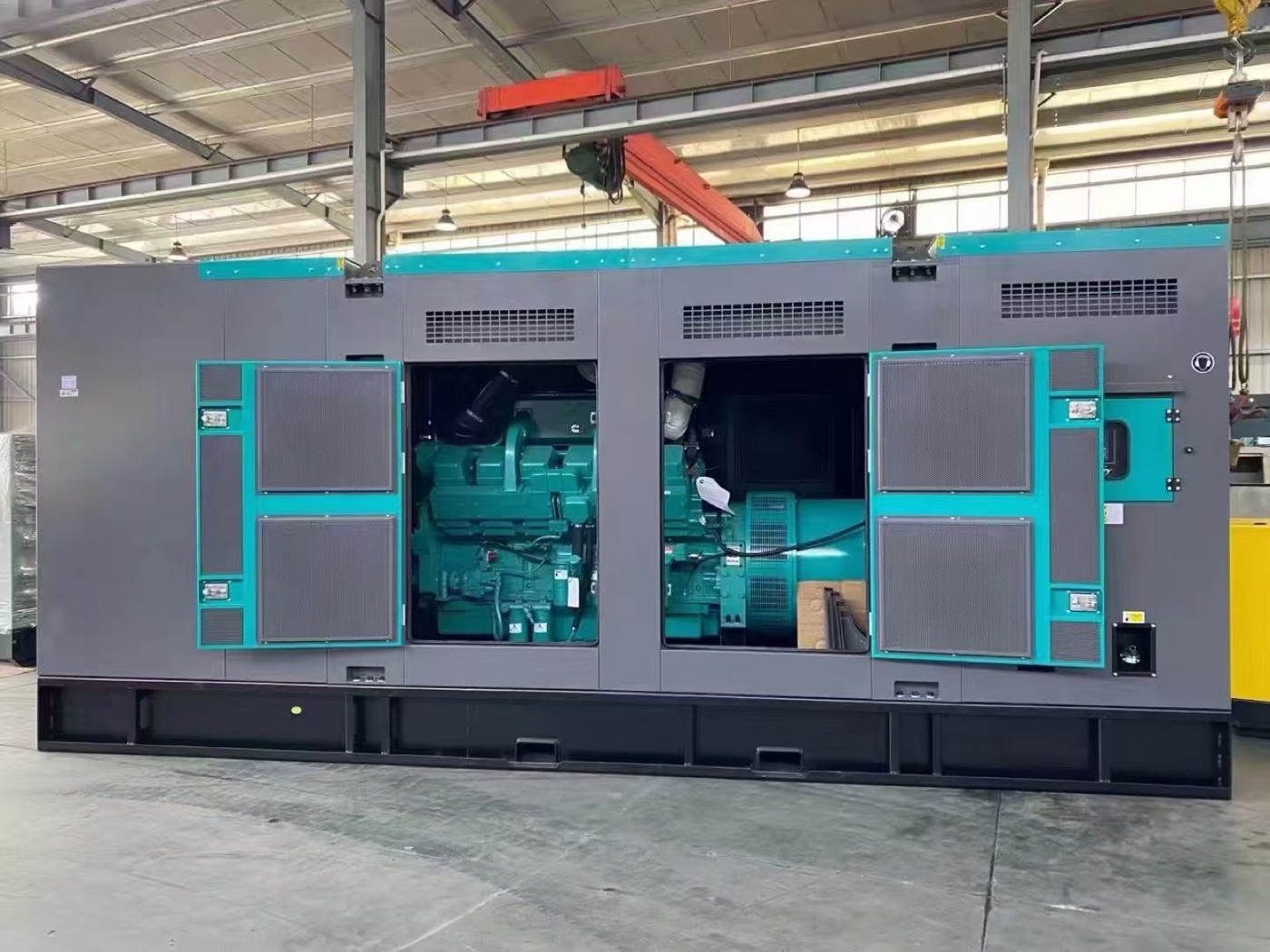
A load audit lists every load on the site, converts each to kW and kVA, applies a demand factor for how much of it runs at once, then adds the starting requirement of the largest motor. The result is the figure a generator should be sized from, and it is a document rather than a guess.
Why the nameplate total is always wrong
Adding up every rating on every appliance gives a number that no site ever draws, because nothing runs everything at once. It is also the number that leads to oversized sets, and an oversized set has its own costs: it runs at a light load, which is inefficient and, on a diesel engine, actively damaging over time.
The error runs in both directions. A site that sizes on the nameplate total buys too much; a site that sizes on last month's bill ignores the motor that starts twice a day and draws several times its running current for a few seconds. Both mistakes are avoidable with the same document.
The audit also produces something the site keeps. A load list with the largest motor, the duty pattern and the future load marked on it is the input to every later decision, including whether a second set is needed, which is the question on paralleling.
The five steps, in order
First, inventory. Walk the site and list every load: lighting circuits, sockets, air conditioning, motors, pumps, refrigeration, IT equipment. Record the rating from the nameplate and note whether it is single or three phase.
Second, convert. Ratings arrive in different units, and they have to be brought to one. A motor nameplate gives mechanical output in kW, not electrical input, so it has to be divided by its efficiency and its power factor to find the current it draws. The relationship between the units is set out in kW, kVA and kWh.
Third, apply demand and diversity. A demand factor accounts for how much of a load's rating it actually draws in service; a diversity factor accounts for how many loads run at the same time. Fourth, add the largest motor's starting requirement. Fifth, add the known future load and record the figure with its assumptions, because an unqualified number will be reused as though it were measured.
The order matters. Starting the calculation with the biggest motor and working backwards is how a site ends up sized for the motor and not for the building.
What the checklist has to capture
The table is the structure of the audit. Every row that cannot be filled is a question for the site rather than a gap to be papered over, and the completed sheet is the document that should travel with the inquiry.
| Field | What to record | Why it matters |
|---|---|---|
| Load description | What the equipment is and where it sits | Identifies what can be deferred or shed |
| Rating and unit | kW, kVA or amps, as written on the nameplate | Prevents mixing units in the total |
| Phase | Single or three phase | Affects how the load is balanced across phases |
| Duty | Continuous, intermittent, or occasional | Feeds the demand and diversity factors |
| Starting method | Direct on line, star-delta, soft start, drive | Decides the starting current the set must absorb |
| Largest motor | Rating and what it drives | Sets the transient requirement, often the real constraint |
| Future load | Known additions with a date | Prevents the set being at its limit on day one of year two |
| Assumptions | The factors used and who chose them | Makes the result auditable instead of a number |
The largest motor decides more than the total
A motor draws a multiple of its running current while it accelerates, and the set has to supply that current without its voltage collapsing far enough to disturb everything else on the board. This is why two sites with identical totals can need different generators: one starts its biggest motor direct on line, the other uses a starter that limits the surge.
The interaction between the motor, its starter and the set is a calculation rather than a rule of thumb, and it is set out in three-phase motor sizing. What the audit has to do is identify the case: which motor is largest, what it drives, how it starts and how often.
Where the starting requirement exceeds what the total load implies, the honest options are a larger set, a different starting method, or accepting a voltage dip that the site's other loads tolerate. Each is a decision with a cost, and none of them is a number to guess.
Checking the audit against reality
Where the site already has a supply, the audit can be tested. A clamp meter on the incoming phases over a working day shows the actual current profile, and comparing it with the calculated figure tells you whether the assumptions were reasonable. A day of readings is worth more than an argument about factors.
The comparison also reveals the load pattern that no calculation captures: the morning peak when everything starts, the quiet afternoon, the night load that keeps the site at a third of its peak. That pattern decides the rating class, which is the subject of prime, standby and continuous.
Where the measured peak is far below what the site believed, the audit has probably found an oversized set rather than an efficient site, and the consequences of leaving it that way are set out in under-loading damage.
What to send with the inquiry
A supplier given a kVA can only quote a kVA. A supplier given a load list can say which rating class fits, whether the largest motor needs a different starting method, and where the set will sit in its load band for most of its life. That is a better conversation and it usually produces a smaller, cheaper machine.
The minimum useful package is the load list, the largest motor and its starting method, the hours the site expects to run, and whether the site has a utility supply to fall back on. Everything else is refinement.
The same list is the basis for the acceptance test later, because a set should be proved against the load it was bought for rather than against whatever happens to be running on the day, as described in load bank testing. The general sizing method that sits behind all of this is on the sizing guide.
FAQ
How do I calculate the generator size my site needs?
List every load, convert each to kW and kVA from its nameplate, apply demand and diversity factors for what actually runs together, add the starting requirement of the largest motor, and add known future load. Record the assumptions with the figure so it can be checked later.
Should I add up all the nameplate ratings on the site?
No. Nothing runs everything at once, so the total overstates the demand and leads to an oversized set. A set that is oversized runs at a light load, which is inefficient and damaging to a diesel engine over time.
Why does the largest motor matter more than the total?
Because a motor draws several times its running current while accelerating, and the set has to supply that without the voltage collapsing. Two sites with the same total can need different generators if one starts a large motor direct on line.
Can I estimate the load from my electricity bill?
It gives energy in kWh rather than the peak demand in kVA, so it cannot size a generator on its own. It is useful as a cross-check against a measured current profile, which is the better input.
What should I send a supplier with a generator inquiry?
The load list, the largest motor with its starting method, the expected running hours and whether a utility supply exists. That is enough to recommend a rating class rather than simply quoting the kVA that was asked for.
