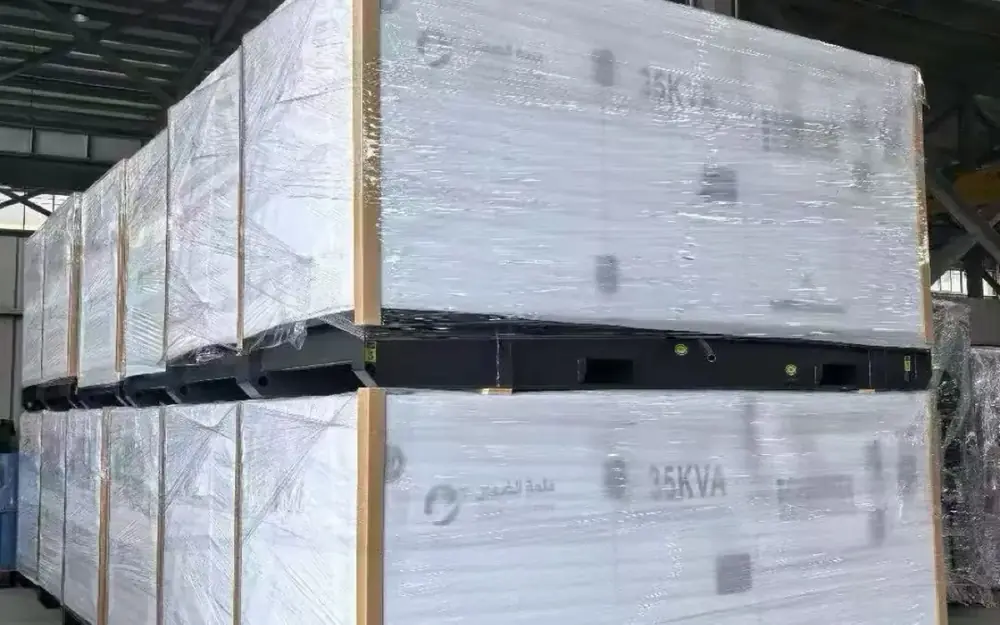
A containerized set packages the generator, control panel and sometimes the fuel tank inside a shipping container. The format simplifies transport and placing, but the internal airflow design decides whether the set reaches its rated output.
Container, silent canopy or open set
A containerized diesel generator is a packaging decision with engineering consequences: it simplifies shipping and placing on site, and at the same time it puts the cooling system inside a steel enclosure.
The three common configurations solve different problems. An open set is the simplest and easiest to service, and it suits a plant room with designed ventilation. A sound-attenuated canopy encloses the set to reduce site noise and buys placement freedom near occupied space. A containerized arrangement goes further: it packages the set inside a shipping container, which simplifies transport and handling.
The container is not only an acoustic measure. It is a structural and logistical one, and it is chosen when the set has to travel to a remote site, when it may need to be relocated, or when handling at the destination is easier with a standard container interface.
The cost of the format is in the design work. Because the set now sits inside a closed steel structure, the cooling arrangement and the maintenance access have to be engineered together rather than treated as separate items.
Airflow decides whether rated output is available
Container internals must be designed for airflow. Intake and exhaust sizing determines whether the set can run at rated output without overheating, because the container has to reject both the engine's heat and the heat generated by the alternator and any exhaust components inside the enclosure.
The airflow path also has to avoid recirculation. If hot air leaving the radiator is drawn back into the intake, the set effectively operates at an elevated ambient temperature, and output falls accordingly.
This is why the container arrangement and the site ambient temperature belong in the same conversation. A containerized set in a hot, sheltered position is a different installation from the same set in a shaded, well-ventilated one, and the quotation should reflect where it will actually stand.
How container size constrains the kVA band
Standard container footprints constrain the maximum set size that can be fitted, so the kVA choice follows the container size rather than being independent of it. Internal dimensions, the space taken by the radiator, the control panel and access walkways all reduce the usable volume.
Because of that, the practical sequence is to establish the required rating band from the load schedule first, and then confirm which container arrangement can accommodate it along with the access and airflow requirements.
The reference configurations for larger sets, where container arrangements are most common, are listed on the 500-2000kVA heavy project range page and the 300-500kVA industrial range page.
The physical route from the port to the site decides what can be moved at all, which is covered in Lagos port-to-site delivery.
Maintenance access inside a box
The most frequent disappointment with containerized sets is not performance but access. Filters, belts, hoses, batteries and control panels all need to remain reachable, and that has to be designed rather than assumed.
Ask which components are accessible through doors or removable panels and which require partial dismantling. On a remote site, a service item that cannot be reached without specialist help becomes an operational problem.
It is also worth confirming what travels inside the container and what is packed separately. Equipment that travels separately is the equipment most likely to be found missing at the destination, so the packing scope should be written down.
The pre-shipment inspection guide covers the checks that catch packing and accessory problems before the container is sealed.
Access inside a box is a planning constraint, and the site work it implies is costed in installation cost.
Where the format earns its cost
Containerized sets suit mining and quarry sites, remote installations, temporary project power and locations where a standard handling interface makes delivery and positioning simpler. They also suit projects where the power plant may need to move as the work moves.
They are less obviously right for a fixed commercial building with a prepared plant room, where an open set or a canopy may be simpler to install and easier to service over a long life.
The containerized generator page covers the configuration itself, and the construction site power guide covers temporary and project applications.
Request a containerized set quotation
Send the rating or load list, the duty, the preferred container size, the site conditions and the maintenance access requirement, and confirm whether the fuel tank is to travel inside the container.
Get a written quotation
Three fields. We reply with the rating, the engine option and the delivery basis.
Containerized generator questions
What is a containerized generator set?
It is a generator package arranged inside a shipping container, usually including the set, the control panel and sometimes the fuel tank, which simplifies transport and on-site placing.
Why does airflow matter so much in a container?
Because intake and exhaust sizing decides whether the set can run at rated output without overheating. Poor airflow or hot-air recirculation effectively raises the ambient temperature the set operates at, which reduces output.
Does container size limit the generator rating?
Yes. Standard container footprints constrain the maximum set size that will fit once the radiator, control panel and access walkways are accounted for, so the rating band is confirmed against the container arrangement.
Can maintenance be carried out inside a container?
It can, if the layout is designed for it. Ask which components are reachable through doors or removable panels and which would require partial dismantling on site.
Where do containerized sets make most sense?
Remote and harsh locations, temporary project power, and sites where a standard handling interface simplifies delivery and positioning, or where the power plant may need to be relocated.
How does packing relate to the container?
Confirm what travels inside the container and what is packed separately, because items packed separately are the ones most often found missing at the destination. Write the packing scope down before booking.
