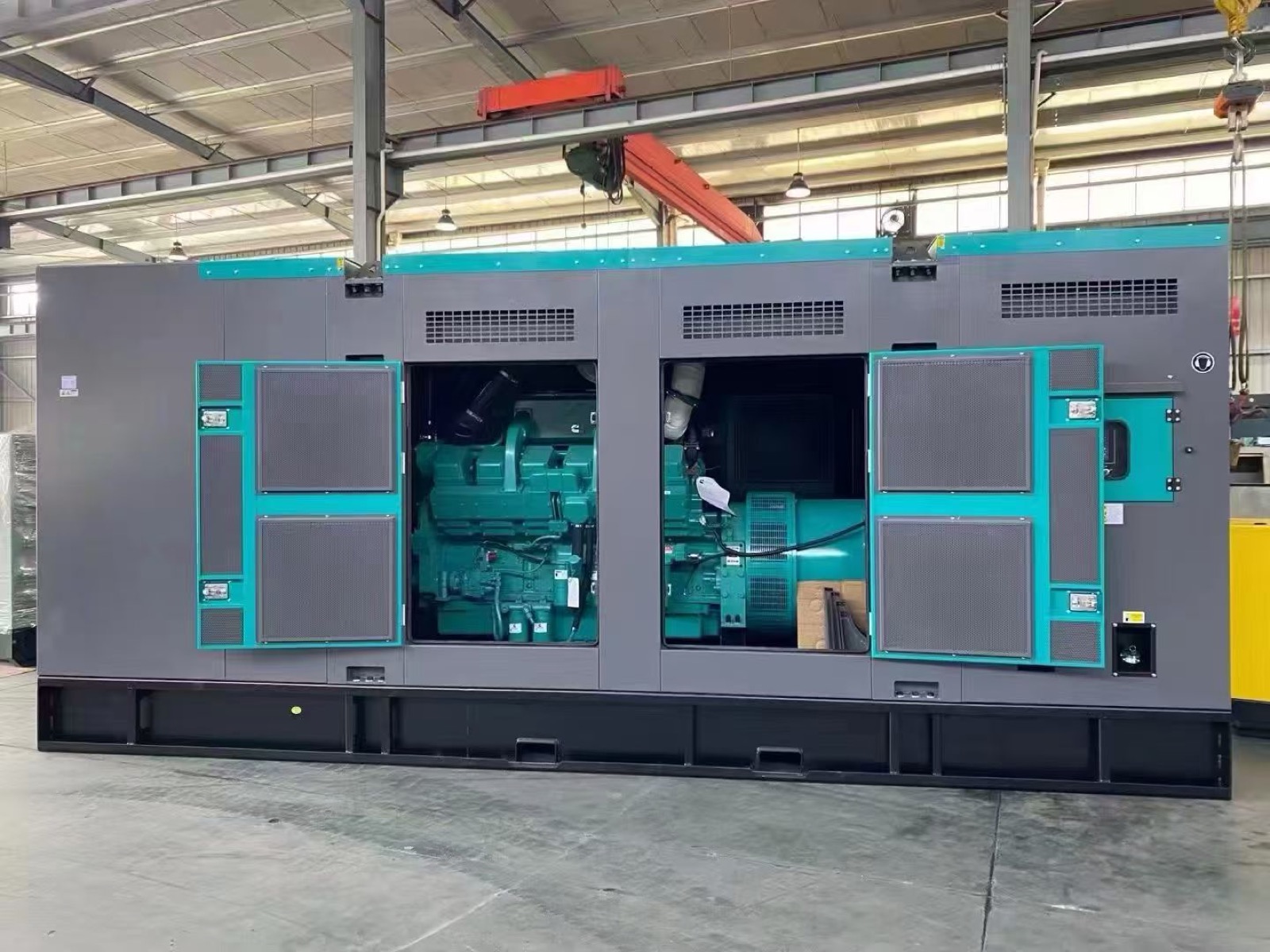
Real heat is usually airflow, not coolant. Measure at the block, look through the core, then measure the room.
Overheating is either a real temperature or a lying instrument
A generator that shuts down on high temperature has either genuinely exceeded its limit or has been told that it has. Those are two different faults with two different costs, and the first job is to decide which one you are dealing with before any part is touched.
The distinction is easy to make and is skipped constantly. A sender that has drifted, a gauge that reads against a corroded earth, a controller input configured for the wrong sender type: each produces a shutdown on a machine that is running at a perfectly normal temperature. Replacing a water pump on that machine changes nothing except the invoice.
The confirming measurement is a contact thermometer on the engine block near the coolant outlet and on the top hose, taken while the engine is at the load that caused the shutdown. If the block reads normally while the panel says otherwise, the instrument path is the fault. If both agree, the cooling system is.
| Observation | Real overheat | Instrument or sender fault |
|---|---|---|
| Contact reading at the block | High, and rising with load | Normal while the panel reads high |
| Top hose | Hot and hard, pressure in the system | Normal temperature and pressure |
| Bottom hose against top hose | Small difference; flow is poor | Normal difference across the radiator |
| Coolant level | Often falling with no external leak | Stable |
| Behaviour after a reset | Returns to high temperature under the same load | Repeats at the same gauge value regardless of load |
| Exhaust and power | May be derated, exhaust hot | Normal |
Thermostat, water pump and the flow you cannot see
The thermostat is a valve that stays closed until the engine warms, then opens to send coolant through the radiator. When it fails it usually fails closed, and the symptom is an engine that heats quickly and a radiator that stays cold at the top while the block is hot. That combination is almost diagnostic on its own.
A water pump fails more quietly. The impeller erodes, the seal weeps, the bearing whines, and the flow falls without any of those being obvious. A pump that is leaking is easy; a pump that is turning but not moving enough coolant looks exactly like a blocked radiator, and the test that separates them is temperature difference across the radiator core, measured by hand or by contact thermometer.
The belt belongs in this section because it is the cheapest cause and the easiest to miss on a canopy set. A belt that is glazed or slightly loose will drive the alternator and slip under the load of the fan, and the first sign is a temperature that climbs only at high ambient or high load.
The radiator fails from the outside in
In Nigerian service the radiator usually blocks from the air side before it blocks from the water side. Fine dust, and in some locations threshing chaff or seed fluff, packs into the fins and forms a mat that looks like a surface film and behaves like insulation. The engine then heats at load with a perfectly clean coolant system.
The test is visual and directional: hold a light behind the core and look through it. A core you cannot see through is a core that is not cooling, whatever the coolant condition. Cleaning is done with air or water from the fan side outward, so that the material is pushed out the way it came rather than driven deeper.
The internal side matters too, but more slowly: scale and sediment reduce flow, and a radiator that has been topped up repeatedly with hard water will have a coating on the tubes. A radiator that is cool at the bottom and hot at the top, with a normal thermostat, is telling you the flow through the core is restricted.
Forty degrees outside means the rating on the plate is not the rating you have
Every generator is rated at a reference ambient and altitude, and above that ambient the engine cannot make its rated output without exceeding its temperature limits. The plate figure assumes the reference conditions; a site at midday in the hot season is not those conditions.
This is why a set can be correctly sized on paper and still shut down on temperature at two in the afternoon. It is not a fault. It is a set being asked for its nominal rating in air that cannot carry the heat away, and the remedy is either a derated load or a larger cooling package, not a new water pump.
The derate curve belongs to the engine maker and differs between builds, so this page does not quote percentages. What it can say is how to use the curve: find the ambient at the air inlet to the radiator, not the forecast for the city; subtract the restriction caused by a canopy or a plant room; and read the continuous rating at that temperature rather than at the reference one.
| Measurement point | What it tells you |
|---|---|
| Open air in the shade, at the site | The ambient the weather actually delivers |
| At the radiator inlet, engine at load | The air the set is really breathing |
| At the top of the plant room | Heat stratification, often well above site ambient |
| At the louvre outlet, engine at load | Whether hot air is leaving or coming back in |
| Inside a canopy, at the radiator | The canopy's own recirculation penalty |
The plant room is part of the cooling system
A generator rejects a large amount of heat into the room it stands in, and that room has to get rid of it. Where the louvre area was sized for a smaller machine, or where the outlet and the inlet are on the same wall, the set ends up breathing its own exhaust air and no amount of radiator cleaning will help.
Two numbers decide this: the free area of the inlet and the free area of the outlet, both measured after subtracting the louvre blades, mesh and any fly screen. A louvre quoted by its frame size can have half that area actually open, and a room that looks ventilated from the doorway can be starving the set.
Recirculation is the other failure and it is visible from the dust pattern: if the outlet is close to the inlet, hot air leaves and returns. The fix is ducting or a physical separation, not a bigger fan. Where the room is underground or internal, mechanical extract sized to the heat rejection is the only reliable answer.
Coolant mix, pressure cap and the airlock nobody looks for
A cooling system is pressurised so that the coolant can run above its atmospheric boiling point without boiling. A cap that no longer holds pressure lowers that ceiling and the engine starts to vent at a temperature it used to handle, which reads on the gauge as overheating.
Water alone is not a coolant. It boils earlier, it corrodes the system from the inside, and in a hard-water area it scales the tubes. The correct mix for the site belongs to the engine maker's specification, and topping up with raw water after every leak is how a system slowly loses its ability to transfer heat.
An airlock after a drain and refill is the third cause, and it is easy to create and hard to see. A pocket of air at the thermostat housing or the water pump stops circulation, the block heats, and the radiator stays cold. Filling slowly, with the heater tap open where one exists, and running the engine to temperature with the cap off while watching for the level to settle, avoids most of it.
Why a temperature shutdown should be treated as an instruction
A high-temperature shutdown is the engine protecting itself from a failure that becomes permanent once the head distorts. The difference between stopping and continuing is the difference between a thermostat and a cylinder head.
Sustained overheating first softens the head gasket, then allows the head to warp, then lets coolant into the cylinder or compression into the water jacket. The first symptom of that progression is white smoke and a falling coolant level, which is the point at which the repair changes category.
There is also a cost that does not show as a failure: an engine run repeatedly at the top of its temperature range degrades its oil faster and wears its injectors and turbo earlier. A set that shuts down on temperature once a week is not only annoying, it is consuming its own service life at an accelerated rate.
The order to work in when the panel says hot
The sequence below is ordered so that the cheapest confirmations come first and the expensive dismantling comes last. Most overheating complaints are resolved by the fourth step.
| Step | Action | What it rules out |
|---|---|---|
| 1 | Contact-read the block and both hoses with an IR thermometer | A sender or gauge fault, before anything is opened |
| 2 | Look through the radiator core against a light | External blockage, which is very common in dusty service |
| 3 | Check the belt condition and tension | Slip under fan load |
| 4 | Check coolant level, cap condition and mix | Pressure loss and boiling point |
| 5 | Compare top and bottom hose temperature at load | Flow restriction inside the core |
| 6 | Measure air inlet temperature at the radiator and at the room outlet | Recirculation and room starvation |
| 7 | Read the ambient against the engine derate curve | A set being asked for more than its site rating |
| 8 | Only then thermostat, pump and internal flushing | The components that require draining the system |
Where these rules stop being true
The table above compares two conditions, not two specifications. It assumes the machine is fitted with the sender and gauge it left the factory with, and that the panel is configured for that sender; a controller replaced or reconfigured after installation invalidates the comparison.
The derating discussion deliberately avoids numbers. Any figure quoted here would be wrong for most builds, and a wrong derate figure is worse than none because it gets used for sizing. Take the curve from the engine data sheet for your model and apply it to the air inlet temperature you actually measured.
Ventilation figures have the same limitation. The free area a room needs depends on the heat rejection of the specific set, the length of any duct, and the temperature rise the designer is willing to accept in the room. What this page gives is the measurement discipline, not the sizing calculation.
What to send us when a set keeps shutting down on temperature
Temperature complaints are usually resolved by two numbers and one photograph: the contact reading at the block, the ambient at the radiator inlet, and a picture of the installation showing where the air comes in and goes out.
| What to send | Why it matters |
|---|---|
| Contact reading at the block versus the panel reading | Decides real against instrument in one step |
| Ambient at the radiator inlet with the set at load | The number the derate curve is applied to |
| Photo of the plant room, inlet and outlet walls | Shows recirculation and louvre area at a glance |
| Whether it shuts down at a particular time of day | Points at ambient rather than at a component |
| Engine model and rating | Needed for the correct derate curve |
| Whether the coolant level is stable | Separates a cooling fault from a head gasket |
FAQ
My generator shuts down on high temperature but the engine does not feel hot. Why?
Usually the sender or the gauge. Confirm with a contact thermometer at the block and on the top hose; if those read normally while the panel reads high, the instrument path is the fault.
What is the most common real cause of overheating in Nigeria?
A radiator blocked from the air side by dust, followed by a plant room that cannot get rid of the heat. Both are installation and maintenance issues rather than engine failures.
Does hot weather really reduce my generator output?
Yes. The rating on the plate is set at a reference ambient, and above that the engine has to be derated according to the maker's curve. That is why a correctly sized set can still shut down at midday.
How do I know if the thermostat is stuck?
The engine heats quickly while the top of the radiator stays cold. That combination points at a thermostat that is not opening rather than at the radiator itself.
Can a loose belt cause overheating?
Yes, if it slips under the load of the fan. It will usually still drive the alternator, which is why the fault goes unnoticed until the ambient rises.
Is it safe to keep running after a temperature shutdown?
No. A shutdown is the engine protecting itself. Restarting and continuing can turn a thermostat into a warped head, and the warning sign of that progression is white smoke with a falling coolant level.
Do I need a bigger generator or better ventilation?
Often ventilation. Measure the air inlet temperature at the radiator with the set at load before deciding, because a room problem cannot be solved by buying a larger machine.
