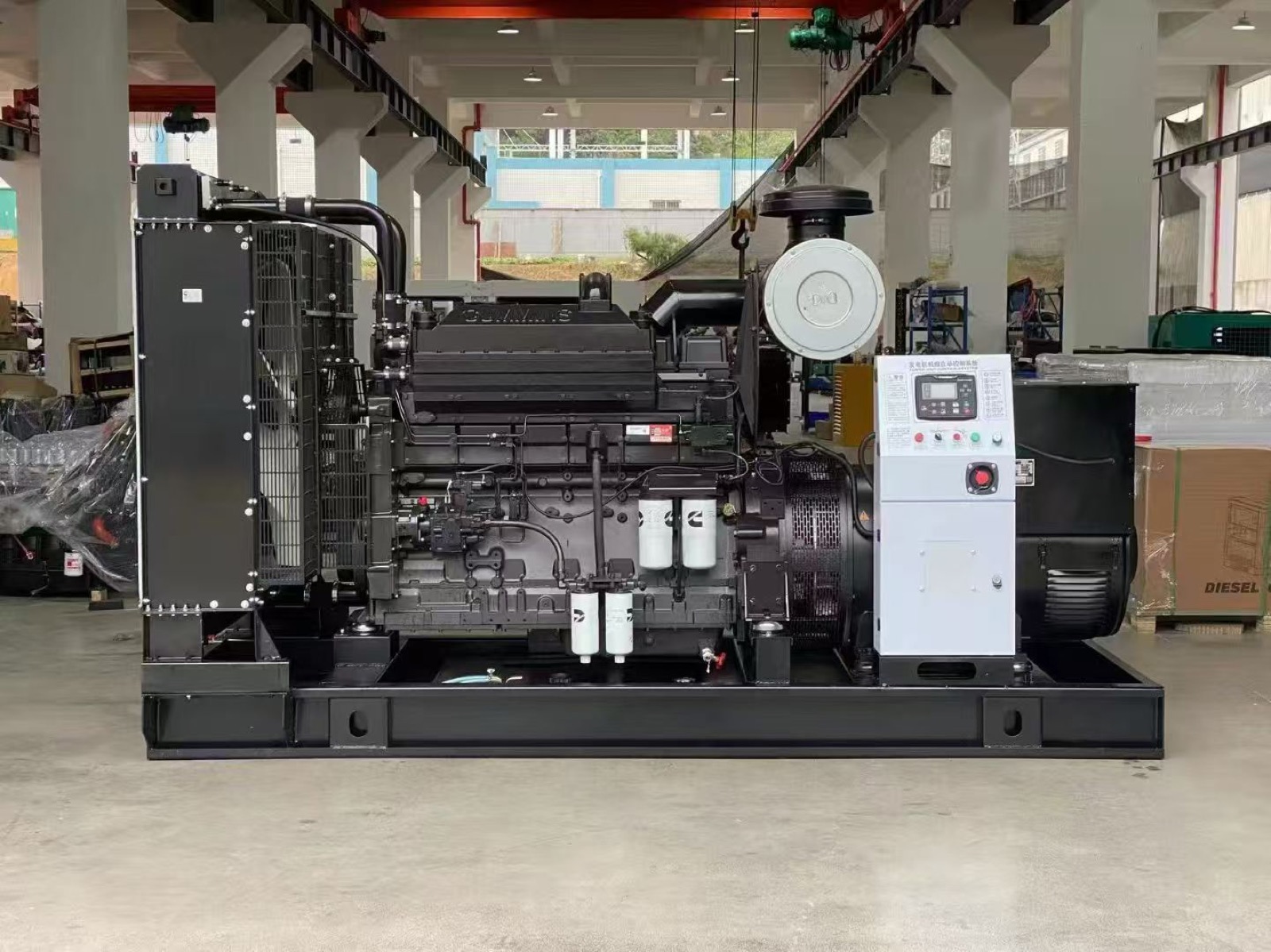
Engine oil has to satisfy two separate specifications: a viscosity grade that suits the ambient and the duty, and a service category that matches the engine's design. Both come from the engine manual. The change interval then depends on fuel sulphur, load pattern and how often the set actually runs, so there is no universal number.
Two specifications, and both have to be met
An oil specification is not one number. The first part is the viscosity grade, expressed as a pair such as 15W-40: the number before the W describes behaviour at low temperature and the number after it describes thickness at operating temperature. The second part is a service category, a letter code that states what the oil is capable of in terms of soot handling, wear protection and deposit control.
Both matter, and they solve different problems. A viscosity that is wrong for the ambient gives hard starting and poor lubrication when cold, or an oil film that is too thin when hot. A service category that is below the engine's requirement gives wear and deposits even when the viscosity is perfect.
The authority for both is the engine manual, not the oil drum and not the supplier's habit. Where the manual states a category and a viscosity range for a given ambient band, that is the specification to buy against, and any deviation is a decision someone has to own.
What Nigerian conditions actually do to oil
Heat accelerates oxidation, which thickens the oil and produces the deposits that eventually show up as stuck rings and sludge. A set running in a hot engine room at a sustained load is working its oil harder than the same set in a temperate workshop, even though neither the oil nor the engine has changed.
Short runs are the opposite problem and often the more damaging one. A set that starts, carries load for twenty minutes and stops never reaches a temperature that boils off the moisture that combustion and condensation put into the crankcase. That moisture combines with combustion by-products to form acids, and the oil degrades from the inside while its hours look reassuringly low.
Humidity adds to the same effect. In a climate where the air holds water, a set that sits idle between outages breathes moist air as it cools, and the condensation ends up in the sump. This is the argument for judging oil on condition rather than only on hours, and the argument for a periodic run that reaches working temperature. Where the water turns out to be coolant rather than condensation, the circulating circuit is the place to look, and the arrangement is described in cooling system.
Why there is no universal change interval
Manufacturers publish intervals, and those figures assume a fuel sulphur level, a load factor and a duty cycle. Change any of the three and the published interval stops being the right one. Fuel with a higher sulphur content loads the oil with acid precursors faster; running at a light load leaves moisture and unburnt fuel in the sump; running at high load at high ambient accelerates oxidation.
That is why an interval copied from a data sheet and applied unchanged to a Nigerian site is a guess dressed as a specification. The manual's figure is the starting point, and the site's own fuel and duty decide whether it is shortened.
Oil analysis is the tool that converts the guess into a decision. A sample tells you the viscosity, the water content, the wear metals and how much of the oil's acid-neutralising capacity is left. Sampling on a schedule and adjusting the interval from the trend is cheaper than either blind adherence or blind shortening.
Reading the oil and the engine together
The table maps what is observed against what it usually indicates. It is a diagnostic aid rather than a substitute for analysis, but most of these signs are visible before a laboratory is involved.
| Observation | What it usually indicates | First response |
|---|---|---|
| Oil darkens very quickly after a change | Soot loading from light-load running or a dirty engine | Check duty pattern; consider analysis; review interval |
| Milky or cloudy oil | Water in the sump from condensation or a cooler leak | Stop running, find the water source, change the oil |
| Oil level rising | Fuel or coolant entering the sump | Stop running; this is a fault, not a topping-up matter |
| Sludge under the rocker cover | Long-term short-run duty with a cold engine | Clean, change oil, add loaded running to the regime |
| Oil pressure low when hot | Viscosity too low for the duty, or worn bearings | Verify the grade against the manual; investigate wear |
| Oil consumption rising with no external leak | Worn rings or valve guides | Compression check; plan the overhaul |
Buying oil without being sold the wrong one
Buy against the specification rather than the brand story. The label should state the viscosity grade and the service category; if it states only one, or states a category in vague wording, that is not a specification you can check against the manual.
Packaging and storage matter more than buyers expect. Oil stored in a hot shed in unsealed containers absorbs moisture and oxidises before it ever reaches the engine, and a drum left open is a contamination source. Sealed containers, shade and a first-in-first-out rule cover most of it.
Where a site runs several sets, standardising on one oil that meets all their manuals simplifies everything: fewer mistakes at the point of filling, one stock item, and a single analysis trend to read. The constraint is that the oil chosen has to satisfy the most demanding engine in the fleet, not the most common one.
The record that makes the decision possible
A service record that captures the date, the hours, the oil grade used, the quantity, the filter change and any analysis result turns lubrication from a habit into a managed item. It also reveals the pattern that matters most: whether the site's interval is actually working for the way the set runs.
The record belongs with the rest of the schedule, and the interval that follows from it has to be consistent with the filters and the checks in the maintenance schedule. Where the site has a service contract, the same record is what the contractor should be handing back, and the scope such a contract should cover is set out under maintenance service.
For a set that will not start or runs badly, the oil is one of the first things to check rather than the last, and the sequence is set out in will not start diagnosis. Where the engine is overheating, the interaction between oil temperature and coolant temperature is covered in overheating diagnosis.
FAQ
Which engine oil grade should I use in a diesel generator in Nigeria?
The grade stated in the engine manual, which gives both a viscosity grade and a service category. The ambient band in the manual decides the viscosity; the engine design decides the category. Any deviation is a decision to be justified, not a default.
How often should generator engine oil be changed?
There is no universal interval. The manual's figure assumes a fuel sulphur level, a load factor and a duty cycle, and all three differ on site. Oil analysis on a schedule is the reliable way to set an interval that suits the way the set actually runs.
Is synthetic oil better for a generator?
It can tolerate heat better and hold its viscosity longer, but the deciding factor is still that the oil meets the manual's viscosity grade and service category. Cost per hour of operation, not cost per litre, is the comparison worth making.
Why does the oil turn milky?
Water in the sump, either from condensation in a set that never reaches working temperature or from a cooler leak. It is a fault rather than a maintenance interval problem, and running the engine on emulsified oil causes wear quickly.
Can I use the same oil in two different generator engines?
Only if it meets both manuals. Standardising on one product simplifies filling and stock, but the oil has to satisfy the most demanding engine in the fleet rather than the most common one.
