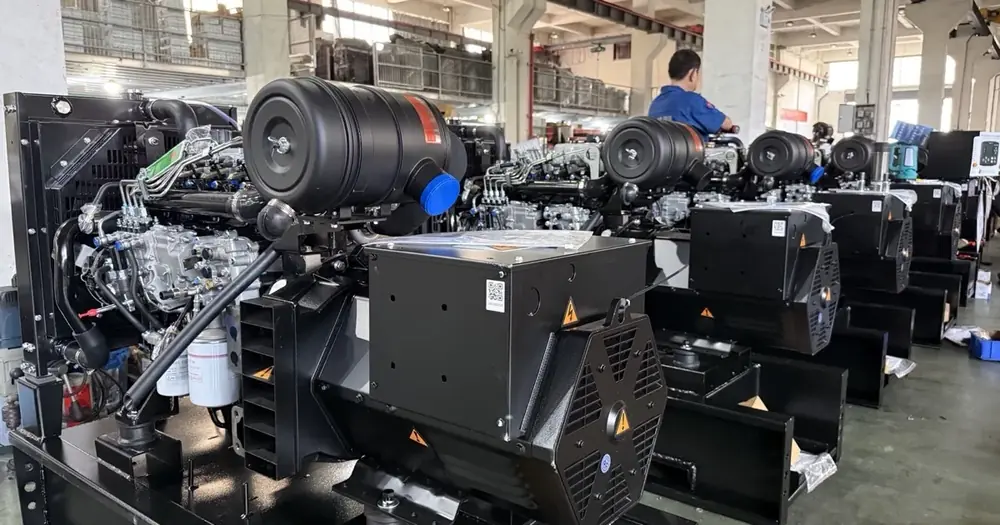
If a generator that ran well has become hard to start, smoky or down on power, suspect the fuel before the engine. Drain the tank from its lowest point, inspect what comes out, and change the water separator and fuel filter before touching the injection pump.
Why water, not wear, is the usual culprit
A diesel fuel system works on very fine clearances. The plungers in the high-pressure pump and the needles in the injectors are lapped to tolerances that a human hair would not fit through, and the fuel itself is expected to lubricate them as it passes. That design is why diesel engines last, and it is why they are unforgiving of anything else in the fuel.
Water does two things at once. It displaces the fuel film that lubricates the moving parts, so metal runs on metal. And it carries with it the corrosion and the particles that come from a wet tank. Neither effect stops the engine immediately, which is why contamination is so often discovered late, after the damage has been done and the symptom has become expensive.
Dirt behaves differently. It plugs filters, and a plugged filter announces itself with power loss and a filter that is black when it is cut open. Water is quieter: it corrodes, it lubricates badly, and it feeds the microbial growth that turns a tank into a source of sludge.
| Component | What water and dirt do to it | How the failure shows | What it costs to put right |
|---|---|---|---|
| Tank and lines | Corrosion, biofilm, sludge at the bottom | Dark fuel, debris in the filter, repeated plugging | Cleaning and sometimes replacement |
| Primary filter and water separator | Blocked, or bypassed when nobody drains it | Power loss, hard starting | Cheap, if caught early |
| High-pressure pump | Plunger scoring, seizure, internal corrosion | Metal in the fuel, no start or low pressure | Specialist repair or replacement |
| Injectors | Nozzle erosion, needle sticking, corrosion | White or black smoke, misfire, knock, poor economy | Nozzle service or replacement set |
| Combustion | Poor atomisation, incomplete burn | Smoke, dilution of the oil, carbon build-up | Oil changes and eventually overhaul |
Where the water actually comes from
Buyers usually assume contamination arrives with a bad delivery. Sometimes it does, but the more common source is the buyer's own tank, and the mechanism is condensation. A tank that is half empty has a large air space above the fuel, and that air breathes in and out as the day heats and the night cools. Moisture in the air condenses on the inside of the tank and runs down into the fuel. A tank kept full has little air space and therefore little condensation.
Delivery is the second route. A tanker or drum that has carried other products, or that has been sitting with water in the bottom, will deliver water with the fuel. That risk is higher where fuel is bought from informal sellers, decanted through funnels and hoses that live on the ground, and stored in drums that are open to the weather.
The third route is the installation itself. A fill point that is lower than the surrounding ground, a breather without a cap, a tank that sits where rain runs off a roof onto it, or a dispensing nozzle left in the dirt — all of these put water into the system slowly and continuously, and none of them announce themselves.
Judging fuel on site, without a laboratory
A generator owner does not need a laboratory to catch most contamination. The first test is visual: draw a sample from the lowest point of the tank into a clear glass jar and let it stand. Clean diesel is clear and bright. Water appears as a distinct layer at the bottom, or as cloudiness that does not settle. Dark or black fuel, or fuel with visible particles, tells its own story.
The second test is the drain plug. Most tanks and most fuel filter housings have one, and most are never opened. Draining a small quantity from the bottom of the tank into a container, weekly, is the single most effective inspection a site can do. What comes out first is what sits at the bottom, and that is where water and sludge collect.
The third is the filter. A fuel filter cut open after service tells you what the engine has been eating: rust, grit, a black slime from microbial growth, or a clean element that merely looks used. Reading that evidence turns a maintenance routine into diagnosis. Water-finding paste on a dipstick is a cheap fourth option where fuel quality is in doubt.
| Symptom | Likely cause | First check |
|---|---|---|
| Hard starting when cold, worse after standing | Water separating and sitting in the pump or filter | Drain the filter housing and the tank bottom |
| White smoke and rough running | Water in the combustion charge or late injection | Sample the fuel, check the separator |
| Black smoke and lost power | Restricted air or fuel, worn nozzles, over-fuelling | Air filter, fuel filter, injector condition |
| Filter plugs repeatedly | Tank sludge or microbial growth | Tank bottom sample, tank cleaning |
| Injector knock or misfire | Sticking needle or eroded nozzle | Injector test, fuel sample |
| Fuel in the sample is cloudy and will not clear | Emulsified water or fine contamination | Settle and re-test; do not use until clear |
The discipline that actually prevents it
Prevention is a set of small habits, and the first is keeping the tank full. A tank filled at the end of the working day has little air space overnight, when the temperature drops and condensation would otherwise form. This costs nothing and removes the largest single source of water in most installations.
The second habit is settling. Fuel that has just been delivered is disturbed, and whatever water and particles were in it are suspended. Where the installation has the capacity, letting a delivery settle before drawing from it allows the water to collect at the bottom where the drain can reach it. Sites that draw immediately after delivery send the disturbance straight to the filters.
The third is filtration in two stages: a primary water separator and filter before the engine's own filter, with the separator drained on a schedule that reflects the site rather than the calendar. A separator that is never drained is not a separator; it is a reservoir that eventually passes everything through.
The fourth is custody of the fill point: a locked cap, a funnel that lives in a clean box rather than on the ground, and a record of who delivered what. Most contamination events can be traced to a specific delivery once somebody is writing it down.
Tank and dispensing design
A tank is not a container, it is a piece of equipment. The details that matter are a draw point or drain at the lowest point so water can be removed, a fill point above the highest possible flood level, a breather that keeps rain out while allowing the tank to breathe, and a base that keeps the tank off wet ground.
Material matters too. Mild steel tanks corrode from the inside wherever water sits, which is exactly at the bottom where the water collects. Tanks that are painted inside, lined, or made of a suitable plastic avoid that cycle, and a tank with a sloped bottom that drains to one corner is easier to keep clean than a flat-bottomed drum.
The dispensing end deserves the same thought. A hose that is left lying in the dirt, a nozzle without a cap, and a pump that draws from the bottom of the tank rather than a little above it will all deliver contamination efficiently. Drawing from a point slightly above the bottom, with a separate drain below it, is the arrangement that lets water out without letting it into the engine.
What prevention is worth compared with repair
The comparison is stark once it is laid out. On one side: a drain plug, a water separator element, a filter, and ten minutes a week. On the other: a set of injectors, a high-pressure pump repair, and the downtime while the parts are sourced — during which a cold room warms, a clinic runs on nothing, or a factory stops.
There is a second cost that rarely appears in the conversation, which is the slow one. An engine running on contaminated fuel does not fail dramatically; it smokes, it loses power, it consumes more, and it deposits carbon in places that make the next overhaul more expensive. By the time the owner decides to act, the fuel system has been degrading for months.
This is why the fuel discipline belongs in the maintenance schedule rather than in the operator's memory. A line item that says drain the tank bottom weekly and inspect the separator is more valuable than a paragraph explaining why water is bad.
Where the rules of thumb stop
Two simplifications have been used here. The first is that water settles and can therefore be drained; in practice some contamination stays in suspension, particularly where microbial growth has produced surfactants, and a sample that looks cloudy may not clear on standing. The second is that a clean-looking sample means clean fuel; fine contamination and dissolved water can be invisible.
Settling times depend on tank geometry, fuel temperature and the type of contamination, so no fixed number applies. Filter life depends on the site, the delivery source and the tank condition, which is why the interval should be driven by inspection rather than by a calendar someone wrote at commissioning.
Where fuel quality is in doubt and the equipment is expensive, a laboratory test is the honest answer rather than a rule of thumb. Where it is not available, the drain-and-inspect routine catches most of the problems that matter, most of the time.
A checklist a site will actually follow
The list below is deliberately short. A long checklist gets abandoned; a short one survives contact with a busy site.
| Interval | Action | What you are looking for |
|---|---|---|
| Every refuelling | Fill at the end of the day, cap and lock, record the delivery | Water or debris in the delivery, missing cap |
| Weekly | Drain a sample from the tank bottom into a clear jar | A water layer, cloudiness, dark colour, particles |
| Weekly | Drain the water separator | Water, sludge, a bowl that never seems to have any fuel in it |
| Monthly | Inspect or replace the primary fuel filter | Rust, grit, black slime, a swollen element |
| Monthly | Check the breather, fill cap and hose condition | Cracks, missing seals, hose lying in dirt |
| Annually | Clean the tank and inspect internally | Corrosion, biofilm, sludge at the low point |
Where a site changes fuel supplier, treat the first delivery as unknown: sample it, settle it, and watch the filters for the following week.
Get a written quotation
Three fields. We reply with the rating, the engine option and the delivery basis.
FAQ
How do I know if my diesel has water in it?
Draw a sample from the lowest point of the tank into a clear jar and let it stand. Water shows as a separate layer at the bottom or as cloudiness that will not clear. Draining the water separator and the tank bottom weekly is more reliable than judging by the fuel colour.
What does water do to a diesel injector?
It displaces the fuel film that lubricates the nozzle and needle, so they wear and corrode, and the particles carried with the water erode the nozzle. The result is poor atomisation, smoke, misfire and higher consumption, and it develops over weeks rather than failing at once.
Where does water in a generator tank come from?
Mostly from condensation in a partly filled tank as the day heats and the night cools, and from delivery through tankers or drums that already contain water. Rain ingress through an open fill point or breather, and hoses left on the ground, add the rest.
Does keeping the tank full prevent condensation?
It greatly reduces it, because a full tank has little air space to breathe. Filling at the end of the working day is one of the cheapest habits available, and it costs nothing beyond the fuel that would have been bought anyway.
How often should the water separator be drained?
Weekly on most sites, and more often where fuel quality is uncertain or the tank is old. The interval should follow what the drain shows, not a fixed calendar, because a separator that never has water in it is telling you something different from one that fills every week.
Will a fuel additive fix contaminated diesel?
Additives can help with some symptoms, but they do not remove water or sludge from a tank. Where contamination is established, the tank has to be drained and cleaned; treating the fuel and leaving the tank alone usually moves the problem into the filters and then into the pump.
What are the first signs of a fuel system problem?
Hard starting after standing, white smoke, rough running, a filter that plugs repeatedly and a loss of power under load. Any of these should lead to a fuel sample and a separator check before any injection work is quoted.
