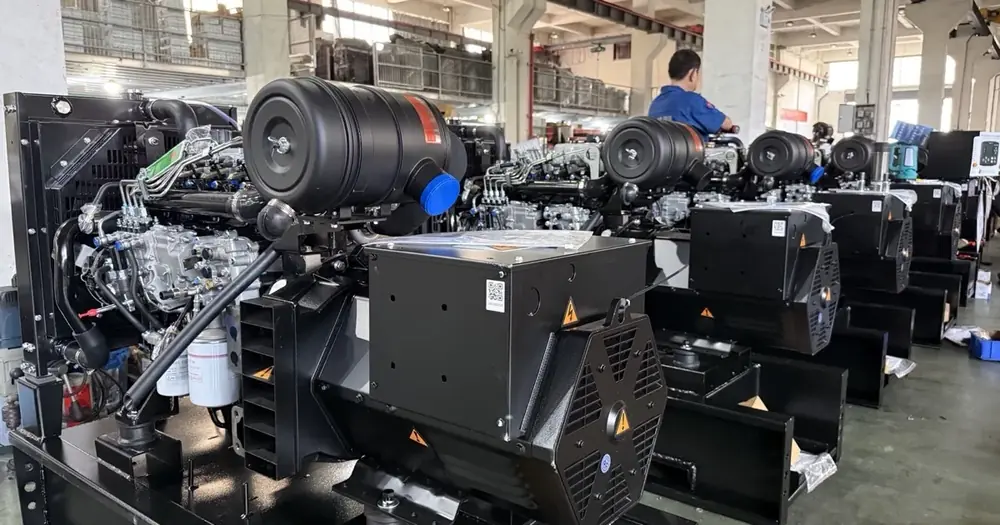
A visit that leaves no record of what was found, what was measured and what was replaced is difficult to build on. The paperwork is not administrative overhead; it is what turns a series of visits into a maintenance history.
What a maintenance programme is protecting
Three things degrade quietly on a diesel set. Lubricants and fuels change condition, filters load up until they stop doing their job, and the cooling and electrical systems drift away from the values they were set to. None of them fail loudly at the beginning.
A maintenance programme exists to catch those changes while they are still cheap to correct. The alternative is not a set that never needs work. It is work that arrives unplanned, at the least convenient moment, and usually as a larger job than the service would have been.
It also protects the running cost. A set with loaded air filters, worn injectors or a partly blocked cooling system uses more fuel for the same output, so poor maintenance tends to show up in the fuel budget before it shows up as a breakdown.
Operator checks and scheduled service are different jobs
These two are often bundled into a single service arrangement, which is how some sites end up paying for visits that never address the parts that actually wear. They are different jobs with different frequencies and different skills.
| Routine | What it covers | Who normally does it |
|---|---|---|
| Between-run checks | Levels, leaks, belt condition, battery condition, and anything visible or audible that has changed since the last run. | The operator on site. |
| Running checks | Readings taken while the set carries load, and how those readings behave when the load changes. | The operator, with someone able to interpret what the readings mean. |
| Scheduled service | Consumables replaced on the interval stated for the offered engine, with settings checked and adjusted. | A technician holding the engine manufacturer's maintenance information for that model. |
| Inspection beyond the service | Condition assessment of items that are not replaced on a fixed interval, such as the cooling system, the exhaust and its supports. | A technician, sometimes with a specialist for one system. |
| Breakdown response | Diagnosis and repair when the set will not start or will not carry load. | A provider with a response arrangement agreed before it is needed. |
The service intervals, and what belongs at each one
Intervals in this trade are usually quoted as a single number, which is how two providers can both say the service is done on schedule and mean different things. A diesel set has several intervals running at once: the checks that happen every time it is started, the ones that happen every week, a first service that exists only once, and recurring services counted in running hours. The annual review sits outside the hour count entirely, because it covers the items that deteriorate with calendar time.
The table sets out which checks belong to which interval, why each one earns its place, and what the record should show afterwards. It is deliberately not tied to one engine. The hour figures come from the maintenance information for the model being offered, and they differ between engines; the structure does not.
| Interval | Checks at this interval | Why it belongs here | What the record should show |
|---|---|---|---|
| Daily, before each start | Fluid levels with the engine cold, the floor and base for fresh leaks, belt condition and tension, air intake and exhaust clear, battery condition and charger, hour reading, and any alarm held on the panel. | It is the only check frequent enough to catch a slow leak or a blocked intake before it becomes a failure under load. | Hour reading, date and initials. A daily check that is written down is a daily check that happened. |
| Weekly, or after a long run | Water separator drained, fuel filter bowl inspected, radiator exterior cleared of dust and debris, canopy vents and access panels checked for obstruction. | Water and dust are the two conditions that quietly reduce what a set can deliver, and both accumulate faster than the hour count suggests. | A note against the hour reading, including anything found and not yet corrected. |
| First service | Lube oil and oil filter, fuel filters, air filter element, initial torque and belt checks, and any adjustment the maintenance information calls for at this point. | A new engine releases fine material during its first hours, and this service exists to take that material out of the oil. | A service sheet with the hour reading, the parts used by identification, and the readings taken. |
| Routine interval, commonly 250 hours | Lube oil and filter, fuel filters, air filter element according to dust, coolant condition, belt inspection, battery and charging check, and a leak inspection across engine, radiator and fuel lines. | It covers the consumables that wear with use rather than with time, which is why it is counted in hours. | The same sheet, plus settings and protection values as left, not merely a list of parts. |
| Longer interval, commonly 500 hours | Everything the routine interval covers, plus whatever the maintenance information schedules at the longer point, with a closer look at cooling system condition, mountings and the exhaust arrangement. | Items that degrade slowly surface here rather than at the routine service, and finding them here is cheaper than meeting them at a breakdown. | Values recorded rather than boxes ticked, so that each number can be compared with the previous one. |
| Annual, or before a long idle period | Coolant condition and hoses, pressure cap, battery load test rather than a voltage reading, fuel tank drain, alternator insulation resistance, and preservation of a set that will stand unused. | These are the items that deteriorate with calendar time, which the hour meter cannot see at all. | A signed inspection report naming what was tested and what was found. |
Two points about the table are worth stating plainly, because they are where service arrangements usually come apart. The first is that the hour figures are indicative and have to be confirmed against the maintenance information for the engine actually being offered. The second is that a provider who cannot produce a sample record from a previous visit is unlikely to produce one for yours, which is the test set out in the section on judging a provider.
Where the buyer is purchasing a set rather than inheriting one, the same interval structure is described from the owner's side in the hour-based maintenance schedule, and the consumables the intervals depend on are covered in generator spare parts.
The service scope worth writing down
A scope that lists activities rather than items is hard to verify afterwards. The list below describes what the service document should name, so that a visit can be checked against it.
| What the scope should name | Why it belongs in the document |
|---|---|
| The interval, and how it is counted | Intervals are normally counted in running hours on a diesel set, so the scope should state whether hours, calendar time or both apply. |
| The consumables included | Oil, fuel filters, air filters, coolant condition and belts are what decide the parts cost, so they should be listed rather than described. |
| The checks carried out alongside the parts | Settings, protection values, battery condition, cooling system condition and the state of the exhaust arrangement. |
| What is explicitly excluded | Items that are inspected rather than replaced, and any work that would be quoted separately, should be named so the boundary is clear. |
| The parts basis | Whether parts are from the engine manufacturer, an approved equivalent, or unspecified. This decides both the cost and the durability. |
| The record to be issued | What the provider will leave behind after the visit, and in what form. |
The records that make a visit worth paying for
A visit that replaces parts and leaves nothing behind is difficult to build on. Two things in particular should come back in writing: the condition that was found, and the values the set was left at.
| Record | Why it matters later |
|---|---|
| Running hours at the visit | Establishes the interval history, and shows whether the set is genuinely being serviced on the interval that applies to it. |
| Parts replaced, with their identification | Lets you compare against the engine's part numbers and see which items are being consumed fastest. |
| Readings taken under load | Creates the trend that makes a future change visible rather than merely surprising. |
| Settings and protection values as left | Shows whether anything was adjusted and to what, which matters if a protection later operates. |
| Findings seen but not rectified | Records the deferred items, so that deferring becomes a decision rather than an oversight. |
How to judge a service provider's capability
The useful question is not how many sets a provider has worked on, but whether they hold the information and the instruments for this model.
| What to check | What a capable provider can show | What a vague answer usually means |
|---|---|---|
| Engine knowledge | The maintenance information for the offered model, and familiarity with its control and protection arrangement. | The provider has seen the brand but not this model. |
| Test equipment | The instruments needed to check the values the scope lists, not only to start the set. | The visit will be a visual check with parts replaced. |
| Parts route | A named route for consumables and wear parts, and the identification method used to match them. | Parts will be sourced when required, which extends any downtime. |
| Breakdown arrangement | A stated arrangement for breakdown calls, agreed before it is needed. | Response will be negotiated at the moment of failure. |
| Record keeping | A sample record from a previous visit, with identifying details removed. | Records are produced only when specifically asked for. |
| Site conduct and safety | An approach to isolation, fuel handling and working around live equipment. | Not raised at all. |
Planning the first service into the order
The first service falls due inside the first period of ownership, so it is worth arranging while the order is still being placed rather than after the set is standing on site.
Three things belong in the order: the maintenance information for the offered engine, the consumables and wear parts the first services will need, and a named local arrangement for the work itself. The spare parts page covers the identification method those parts depend on.
Where the set is going into a site with a defined operating pattern, the hotel standby planning guide shows how an operating pattern is described in terms a service provider can plan against, and the lead time page covers the timing question for anything that has to be brought in.
Service arrangements sit alongside the commercial ones described in warranty and after-sales and in the distributor programme.
Ask for the maintenance information with the quotation
Send the model and rating you are considering, and ask for the engine's recommended service interval, the scope the scheduled service includes, and the consumables normally replaced at each stage.
Get a written quotation
Three fields. We reply with the rating, the engine option and the delivery basis.
Maintenance and service questions
How often should a diesel generator be serviced?
The interval should come from the maintenance information for the specific engine being offered, counted in the way that information specifies. A generic interval applied to a different engine is an assumption rather than a schedule.
What is the difference between an operator check and a service visit?
The operator checks levels, leaks and the readings shown while the set runs. A service visit replaces consumables on the stated interval and checks and adjusts settings, which requires the engine's own maintenance information.
Should I use the supplier or a local provider?
Often both, with the roles named separately. The supplier is the route to the engine's maintenance information and the wear parts that match it, while a local provider is the route to attendance on site.
Do consumables have to be genuine parts?
The scope should state the parts basis rather than leave it open. Whether parts come from the engine manufacturer or an approved equivalent changes both the cost and the durability, so the basis belongs in the document.
What should a service visit leave behind?
A record of running hours, the parts replaced with their identification, readings taken under load, the settings and protection values as left, and any findings that were seen but deferred.
When should the first service be arranged?
While the order is being placed, rather than after the set is on site. The maintenance information, the consumables the first services will need and a local arrangement for the work can all be settled at that stage.
