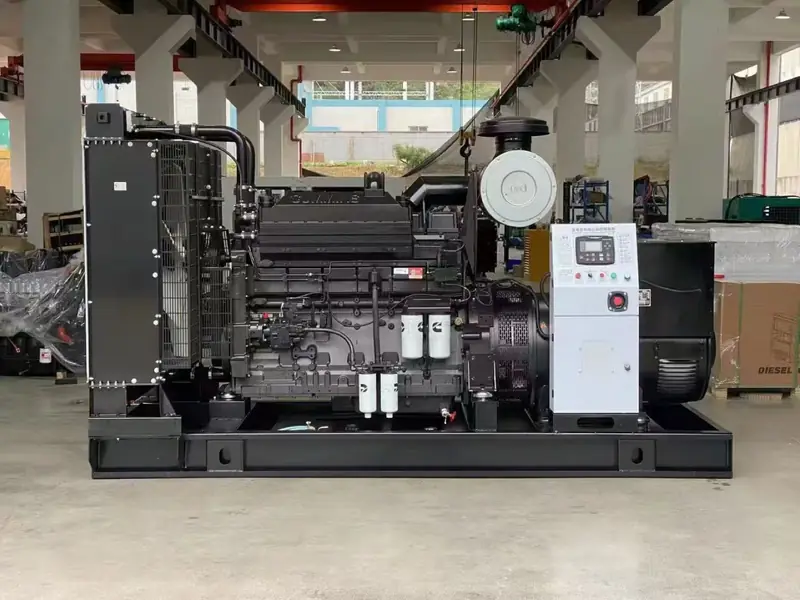
Judge a used generator on three things: documented hours and overhaul history, continued parts support for that specific build, and whether you can inspect it properly before money changes hands. Price alone tells you none of them.
Fairly used, tokunbo, refurbished: the words are not interchangeable
The market vocabulary matters, because the same set can be described three ways and the descriptions imply different histories. A fairly used set is one that has worked somewhere and is being sold on. A set described as foreign used carries an implication about where it worked and how it was maintained, which is worth asking about rather than assuming. A refurbished set has had work done to it — and the useful question is not whether it was refurbished but what was replaced and what was only cleaned and painted.
None of those categories is a warning in itself. A well-maintained used set from a plant that kept records can be a better asset than a cheap new set built to a price. The point of the vocabulary is to make you ask the right follow-up question: what was done, by whom, and is there a record.
This is the same discipline a buyer applies to a new set at the factory. The difference is that a new set comes with a documented test, while a used set comes with whatever history the seller can produce. What a documented factory test looks like is set out in pre-shipment inspection before dispatch.
What the price gap actually reflects
The gap between a used and a new set is not a single discount. It is the sum of several separate things, and they behave differently. Some of them you can inspect and price. Others you cannot inspect at all, and a few cannot be bought back at any price.
The inspectable part is the machine in front of you: compression, oil analysis, insulation resistance, the condition of the enclosure and the base, the state of the control panel, and whether the set actually carries load without hunting or smoking. A competent technician can put a number on most of that.
The uninspectable part is history. An hour meter is a component, and components can be replaced. An overhaul can be excellent or it can be a set of new gaskets over a worn bottom end. The only defence is documentation — service sheets with hour readings, parts invoices, and a straight answer about why the set is being sold.
The part that cannot be bought back is the commercial one. A new set carries a factory relationship: a defined configuration, a test record, a parts channel and a support commitment. None of that transfers with the machine. That is the honest core of the comparison, and it is why the decision is not really used versus new — it is used plus your own support capability versus new plus the factory's.
Hours, overhauls and what the meter will not tell you
Running hours are the first thing to ask for and the last thing to trust on their own. On a well-run site the hour meter is accurate and the log matches it. On a set that has been moved between owners, the meter may be the only survivor of a history nobody recorded.
A high-hour set is not automatically a bad buy. Industrial diesel engines are designed for long life, and a set that has run steadily and been serviced on schedule is often in better condition than a low-hour set that stood idle for years with old fuel in the tank and moisture in the alternator. What matters is whether the hours were accompanied by maintenance.
Ask specifically about the last major intervention. Top-end work, injector and pump service, turbo replacement, and any bottom-end overhaul are the four that change the value of the asset. A set with a documented recent overhaul is a different proposition from one where the seller says it was done. If the answer is that nothing has been done and the hours are high, that is useful information too — it tells you what you are buying and what you will be paying for later.
The maintenance history is what makes this legible. What a proper schedule and log actually contain is set out in an hour-based maintenance schedule.
Parts commonality and the panel that dates the set
Mechanical parts are usually the easier half of the problem. Filters, belts, gaskets, injectors and water pumps for a widely used engine platform are obtainable, and a competent workshop can cross-reference them. The platform matters more than the badge on the canopy: a set built around an engine that is still in production in volume will stay serviceable.
Control panels are the harder half. A panel is a small computer with a firmware generation, a connector standard and a set of sensors that may no longer be made. When it fails, the replacement is not a filter — it is either a like-for-like board from a diminishing supply, or a retrofit that means rewiring the set. That is a real cost, and it is invisible in a photograph of a clean canopy.
The same logic applies to the alternator. A major-brand alternator with a current model number is rebuildable. An unbranded one may be a sealed unit with no spares channel. Ask for the alternator make and model, and check whether that model is still supported before you fall in love with the price.
This is where buying new has a structural advantage that has nothing to do with condition: the build is current, the panel is current, and the parts channel is the one the factory is still running. What to keep on hand once you own the set is covered in generator spare parts.
What to inspect before money changes hands
A used set should be inspected cold, started from cold, and then loaded. Each of those three stages reveals something the others hide. Cold inspection catches leaks, belt condition, coolant state and the general standard of maintenance. A cold start tells you about batteries, the fuel system and compression. A loaded run tells you about the governor, the alternator and whether the set holds frequency under a changing load.
Oil analysis is worth the trouble on any set of significant value. It reports wear metals, coolant ingress and fuel dilution, and it is the closest thing to a medical test that a diesel engine offers. Insulation resistance on the alternator is the electrical equivalent, and it matters most on a set that has stood in humid conditions.
Then inspect the parts you would otherwise take for granted: the base frame for corrosion, the canopy for panel alignment after repairs, the radiator core for bent fins and previous repairs, the exhaust for soot patterns that suggest running rich, and the battery age. None of these are deal-breakers individually, but together they tell you how the set was treated.
The inspection structure that a new set goes through at acceptance works just as well on a used one, minus the factory test. That list is in the generator inspection and acceptance checklist.
Warranty and support do not transfer
This is the part buyers most often get wrong, and it is not a criticism of the used market — it is simply how factory support works. A warranty is an agreement between the original buyer and the supplier. It is attached to the transaction, not to the serial number, and it does not follow the machine to a second owner unless someone agrees in writing that it does.
The practical consequence is that a used set arrives with no support relationship. You are buying the machine and nothing else. If it fails in the first month, there is no factory obligation to help. That is acceptable if you priced it in and you have the capability to look after the set yourself. It is a problem if you were quietly relying on the same after-sales cover that comes with a new purchase.
The support side of a new purchase is only worth what is written down. A verbal assurance that parts will be available is not a commitment. What a support arrangement should actually specify — response, parts, documentation, and what happens when a claim is disputed — is set out in warranty and after-sales terms.
For a buyer without in-house technical capability, that difference is often worth more than the price gap. For a buyer with a workshop and a store of spares, it may be worth very little. That is the real variable, and it is specific to you rather than to the machine.
When used is the rational choice, and when new is
Used is the rational choice when three conditions hold at once. The hours and the maintenance history are documented. The engine and alternator are on platforms that are still supported, with parts you can actually obtain. And you have the technical capability to inspect the set properly and to look after it afterwards. Under those conditions a used set can deliver years of service at a fraction of the capital outlay, and there is nothing wrong with that outcome.
New is the rational choice when any of those three fails. If the set is going into a critical duty where an unplanned stop has a cost measured in production rather than in repair, the support relationship is part of what you are buying. If nobody on site can assess a used set competently, the inspection you cannot perform is a risk you are accepting blind.
There is also a middle ground that buyers underuse: a new set of a smaller or simpler specification. Where the requirement is a defined load rather than a defined brand, matching the specification to the load often closes more of the gap than buying used does. How to establish that requirement is covered in the sizing guide, and for a household the dwelling-based version is in what size generator a home needs.
The comparison on the criteria that decide it
Laid out side by side, the difference is easier to see as a set of separate questions rather than a single judgement about quality. The right-hand column is where most of the decision actually sits.
| Criterion | Used set | New set | What to do about it |
|---|---|---|---|
| Hours and history | Whatever the seller can document; the meter may be the only record | Factory test record and a known running history from zero | Ask for service sheets with hour readings, not a verbal summary |
| Overhaul status | Unknown unless documented; recent work may be excellent or cosmetic | Not applicable at purchase | Ask what was replaced, by whom, and for the invoices |
| Engine platform | Serviceable if the platform is still in production | Current platform with a current parts channel | Get the engine make and model, then check parts availability |
| Control panel | May be a generation out of production; retrofit can mean rewiring | Current panel with current sensors and firmware | Ask for the panel make, model and whether spares exist |
| Alternator | Rebuildable if branded and current; sealed if not | Documented make and model | Record the alternator model before agreeing a price |
| Inspection | You must be able to inspect it cold, started cold, and under load | Factory test plus acceptance inspection on arrival | Budget for oil analysis and insulation testing |
| Warranty | Does not transfer unless agreed in writing | Attached to the purchase, per the written terms | Price the absence of cover into what you offer |
| Support relationship | None; you are the support | Factory and supplier channel, if it is written down | Match this to your own technical capability |
Ask for the specification, not just the price
Whether the requirement ends up being met by a new set or by a used one, the useful request is the same: engine platform, alternator model, control panel model, duty, and the written terms that come with the machine. Send those and the answer can be compared properly.
Get a written quotation
Three fields. We reply with the rating, the engine option and the delivery basis.
Used generator questions
Is it safe to buy a fairly used generator in Nigeria?
It can be a sound purchase. The risk is not in the fact that the set is used, it is in what is undocumented. If the hours and overhaul history are supported by records, the engine and alternator are on platforms that are still supported, and you can inspect the set properly, a used unit is a normal commercial choice.
What does the lower price of a used generator actually reflect?
Several separate things: the remaining life in the machine, the absence of a factory support relationship, and the uncertainty in its history. The first can be inspected, the second is a known quantity you can price, and the third is the one that needs documentation rather than optimism.
Does the manufacturer warranty transfer to a second owner?
Generally no. A warranty is an agreement between the original buyer and the supplier, attached to that transaction rather than to the serial number. It transfers only if someone agrees in writing that it does, so a used buyer should assume there is no cover.
What should I check first on a used set?
Compression and a cold start, oil analysis, insulation resistance on the alternator, and the condition of the control panel. Then the structural items: base corrosion, radiator core, exhaust soot pattern and battery age. Start the set from cold and load it, rather than inspecting a warm machine.
Are high running hours a reason to walk away?
Not on their own. Industrial diesels are built for long life, and a high-hour set that ran steadily and was serviced on schedule is often healthier than a low-hour set that stood idle with old fuel and damp windings. What matters is whether the hours came with maintenance.
Can a used set be brought onto the same maintenance schedule as a new one?
Yes, and it should be. Establish a baseline with an inspection, then run the same hour-based schedule. The difference is that a used set starts with an unknown history, so the first service and an oil analysis are worth doing straight away rather than at the first interval.
