WhatsApp: +86 157 0593 2345Email: miu@taiyudapu.comCall the factory: +86 157 0593 2345
Generator buying guides

Diesel Generator Pre-Shipment Inspection for Nigeria Orders

Pre-shipment inspection is the final dispatch check before a generator leaves the factory or loading point. Buyers should verify packing, labels, accessories, spare items, documents and shipment photos instead of relying only on a short loading update.

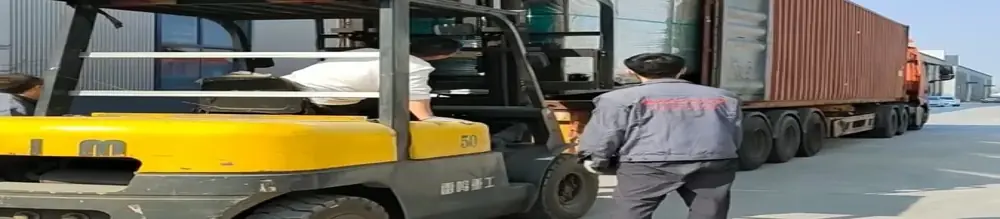
Forklift operating beside an open shipping container and truck at an industrial loading area
Visible loading-area reference with a forklift, open container and truck. The image alone does not identify the cargo or destination; inspection and dispatch claims require the order, packing list and transport documents.
Dispatch principle

Pre-shipment inspection is the bridge between production completion and export dispatch. It should confirm that the finished order is ready to move in the same condition the buyer expects to receive at the port side handover stage.

Why pre-shipment inspection matters

A generator may pass technical checks but still ship with missing accessories, incomplete labels, unclear packing photos or mismatched shipment marks. Pre-shipment inspection helps buyers reduce these avoidable problems before the goods leave the supply side.

This is useful for both FOB China and CIF Lagos buyers because dispatch clarity supports cleaner freight, documentation and receiving procedures.

Pre-shipment inspection checklist

Pre-shipment checks, what to confirm, and why each matters
Check itemWhat to confirmWhy it matters
Machine identityModel, serial or nameplate details and visible configurationConfirms the right generator is being dispatched.
AccessoriesLoose items, tools, manuals, breakers, ATS parts or spare kits included in scopeAvoids missing-item disputes after shipment.
Packing conditionWrapping, crate, skid, canopy protection or container arrangementShows the cargo is prepared for the agreed transport method.
Labels and marksShipping marks, consignee references and handling labels if agreedReduces identification mistakes during logistics handling.
Document listPacking list, invoice references and any agreed shipment documentation pathAligns dispatch records with the commercial file.
Loading evidencePhotos of the cargo before or during loading where availableProvides visual confirmation of dispatch condition.

Which photos and documents should buyers request?

Request overall machine photos, close shots of the nameplate and control area, accessory photos, packing images and any loading photos that are available within the supply process. If the order includes special spares or ATS items, ask for those items to be photographed separately.

For the full procurement path, compare this page with the factory acceptance test guide, the FOB China vs CIF Lagos guide and the CIF Lagos shipping guide.

A consolidated checklist that buyers can send to their own inspector is in pre-shipment inspection acceptance checklist.

Keep inspection scope aligned with the contract

Inspection should follow the written order scope. Do not assume local customs clearance, inland delivery, installation or site commissioning are covered unless that is explicitly stated in the commercial offer.

Get a written quotation

Three fields. We reply with the rating, the engine option and the delivery basis.

Send on WhatsApp

WhatsApp RFQ template

Hello, I need a pre-shipment inspection checklist for a diesel generator order to Nigeria. Model: [ ], packing type: [open/crated/containerised], must-check items: [labels/accessories/documents/loading photos], shipping term: [FOB China/CIF Lagos].

Send this inspection request on WhatsApp

Frequently asked questions

What is the purpose of pre-shipment inspection?

Pre-shipment inspection confirms that the finished order, packing condition, accessories and shipping marks match the agreed scope before cargo is released for dispatch.

Does pre-shipment inspection replace FAT?

No. FAT focuses on generator operation and configuration, while pre-shipment inspection focuses on dispatch readiness, packing, accessories, labels and document alignment.

What photos should buyers request before shipment?

Request overall machine photos, nameplate images, control-panel views, accessory photos, packing images, shipping marks and loading photos where available.

What a pre-shipment inspection can and cannot prove

A pre-shipment inspection answers a narrow question well: is the machine that is about to be loaded the machine that was ordered, and does it run and perform as specified. It is a check before the goods leave the factory, which is the last moment when a problem can be corrected cheaply and without a return shipment.

What it cannot prove is how the set will behave in the buyer's building. Cooling depends on the room, starting depends on the load, and stability depends on the site's earthing and cabling. An inspection that produces a clean sheet is a statement about the machine, not about the installation, and treating it as the latter is how a site ends up blaming the supplier for a problem it created itself.

The distinction matters commercially too. A buyer who knows what the inspection covered can ask for the missing items separately, and a supplier who states the scope in the quotation avoids a dispute about expectations that were never written down.

The test items that carry the most weight

An inspection without load proves very little. The items that find real faults are the ones that make the machine work: a sustained run at load with temperatures stabilised, the response to load steps, insulation resistance on the windings, the operation of the protection at its set points, and a check of the control logic including start, stop and any automatic transfer function.

Visual and dimensional checks then confirm what the documents claim: engine and alternator models against the order, the alternator frame, the cooling package, the enclosure type, the tank arrangement, the control panel, and the presence of the accessories that were specified. These are the items where a substitution is easy and where the buyer's leverage is highest before shipment.

The table lists the items worth insisting on, with what each one establishes. Where the factory has no load bank, the honest position is that the loaded items cannot be witnessed there and must be planned for the site instead.

Pre-shipment inspection items, what each establishes, and what the record should show
ItemWhat it establishesRecord
Identity checkEngine, alternator and controller match the orderPhotographs of nameplates and serial numbers
Sustained run at loadThe set reaches its rating and holds temperatureLoad, coolant and oil temperature, duration
Load stepsVoltage and frequency recover acceptablyReadings before and after each step
Insulation resistanceWindings are sound and dryMeasured values with the instrument used
Protection operationAlarms and shutdowns act at their set pointsWhich protection was tested and how
Control logicStart, stop, and transfer sequence behave as specifiedSequence observed, including manual and automatic modes
Cooling and enclosureRadiator, fan and louvres as specified; access preservedPhotographs, panel and door operation
Fuel and ancillary scopeTank, filters, batteries and accessories present as orderedItem list against the order

How the witnessing works in practice

There are three common arrangements. The buyer attends in person, which gives the most confidence and costs the most in travel. The buyer appoints a third-party inspector, which is usual for importers who cannot travel and works well when the inspector is given a written checklist rather than a general instruction to look at the machine. Or the buyer accepts the factory's own record, which is the weakest option and should be priced accordingly in the buyer's judgement.

Whichever is chosen, the checklist has to be written before the visit and agreed with the supplier. An inspector without a specification can only report what he saw; an inspector with one can report what was and was not done. That difference is the whole value of the exercise.

Timing matters too. An inspection held before the enclosure is closed can see connections that are hidden afterwards; an inspection held after packing can only see the outside of a crate. If both are wanted, they are two visits or one timed visit, and the quotation should say which.

The record is the deliverable

The photograph of a running set proves that it ran. The record proves what it did. A useful record states the date, the set serial number, the load applied at each stage, the voltage and frequency at each stage, the temperatures reached, the insulation readings, the protections tested with their set points, and the name of whoever witnessed it.

That document has a second life after shipment. It is the baseline for the first site service, and a set whose performance has drifted from its inspection figures is one where the drift can be measured rather than argued about. It is also the document an insurer or a finance provider may ask for.

When the result is disputed

Disagreements usually fall into three kinds. A test item was not performed, which is a scope gap rather than a fault. A reading was outside the acceptance band, which requires the band to have been agreed beforehand. Or the machine differs from the order, which is a commercial matter and needs the order documents rather than a technical argument.

The way to keep all three short is to agree the acceptance criteria in writing with the order: which items are tested, what the criteria are, and what happens if one is not met. A hold point, where shipment waits for the buyer's release, is the strongest form of this and is worth asking for explicitly.

Where the goods have already shipped, the equivalent conversation moves to the destination inspection and the installation test, which is a weaker position for the buyer and a more expensive place to correct a fault.