WhatsApp: +86 157 0593 2345 Email: miu@taiyudapu.comCall the factory: +86 157 0593 2345
Nigeria generator buyer guide

Containerized Diesel Generator Nigeria

Containerized diesel generator packages are usually considered for larger outdoor projects, remote sites and buyers who want a more integrated enclosure strategy. A useful quotation depends on the generator rating, cooling concept, access plan and shipping scope, not only the word containerized.

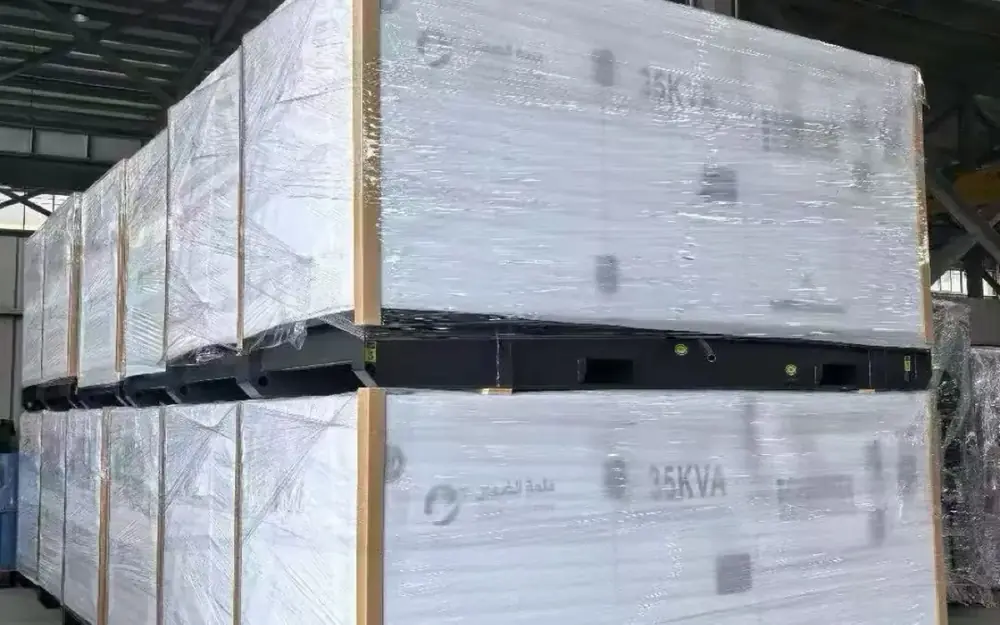
Real packed generator units prepared in the factory for containerized diesel generator and export shipping inquiries
Buying intent

This page is for active Nigeria buyers who need a practical containerized generator quotation path rather than a generic enclosure label.

When containerized generator packages are usually reviewed

Containerized configurations are often reviewed for larger outdoor projects, remote industrial sites, temporary project power and buyers who want a more integrated enclosure, lifting and transport arrangement.

The right package still depends on rating, cooling airflow, service access, fuel arrangement, noise expectation and whether the project needs a single set or a broader power system.

Container size only becomes meaningful once the rating is fixed: a 700kVA class in a containerized package and an 800kVA containerized package need different shell dimensions, lifting points and airflow openings, so ask for the layout drawing that matches the specific rating.

Main checks before approving a containerized package

A containerized quote should explain more than the shell. Buyers should confirm the generator inside the package and how the container layout supports operation and maintenance.

If the shell is not essential to the site, compare it with an open type vs containerized set quotation, because an open set can be materially cheaper when weather protection and noise control are not project requirements.

Containerised generator package items and the reason to confirm each
Package itemReason to confirm
Target ratingContainer suitability depends on the selected generator size and auxiliary equipment scope.
Cooling and airflowContainer packages need engineered ventilation, not only a boxed enclosure.
Service accessDoor layout and maintenance space affect practical use after delivery.
Fuel and control scopeFuel arrangement, breaker, controller, ATS or sync equipment should be written clearly.
Shipping basisFOB China and CIF Lagos should be compared on the same package scope.

How to request a practical containerized generator quote

Send the target kVA, duty profile, site type, ambient conditions, access restrictions, control scope and whether the package is for one set or part of a larger project power plan.

Where the package will be used changes the delivery assumptions as much as the rating: containerized set for a construction site, containerized set for a telecom tower, Calabar free-zone containerized set and Warri containerized industrial set are quoted with different port, clearance and site-access notes even when the machine inside is identical.

If the project is still comparing enclosure strategies, review the 500-2000kVA range guide, the FOB China vs CIF Lagos guide and the pre-shipment inspection guide before approval.

For a step-by-step version of this checklist, see containerized generator set planning.

Get a written quotation

Three fields. We reply with the rating, the engine option and the delivery basis.

Send on WhatsApp

WhatsApp RFQ template

Hello, I need a containerized diesel generator quote for Nigeria. Target kVA: [ ], standby or prime duty: [ ], site type: [factory/remote project/estate/oil and gas support], ambient or ventilation notes: [ ], ATS or sync need: [ ], delivery: [CIF Lagos/FOB China].

Send this RFQ on WhatsApp

FAQ

Is a containerized diesel generator the same as any silent generator?

No. A containerized package is a broader enclosure approach and should be reviewed for cooling, service access, dimensions and equipment layout, not only for noise.

Can containerized generators be quoted for Nigeria projects?

Yes. The final package still depends on rating, commercial scope, shipment plan and technical requirements.

What should I send first for a containerized generator quotation?

Send the target kVA, duty, site type, ambient notes, access constraints, control scope and preferred shipping term.

What the container is actually doing

A containerised set uses a standard freight container as the enclosure. That gives three things at once: a structure that is designed to be lifted and stacked, a weatherproof envelope, and a unit that can move on ordinary freight routes without special handling. It also creates the constraints that decide whether the installation works, because a container was designed to carry cargo rather than to pass air.

The consequence is that everything about the installation moves to the container's surfaces. Cooling air enters and leaves through louvres cut into the walls, the exhaust leaves through a penetration, and the service access is whatever doors were designed into the sides. Once those decisions are made in the factory, the site cannot improve them.

That is why the container specification is worth more attention than its external appearance suggests. Two units that look identical from outside can differ completely in whether the set inside can reach its rating in a hot climate.

Cooling is the constraint that decides everything

Inside a container the radiator discharges into a confined volume. If the air that has passed through the core can return to the intake, the set heats its own cooling air and loses output without any visible fault. The design answer is a separated path: intake louvres on one side, discharge on the other, with the radiator ducted so the two cannot mix.

The free area of those louvres has to be sized on the heat the set rejects, not on what looks proportionate. Acoustic louvres, which are common on containerised sets bound for residential areas, trade airflow for attenuation and therefore have to be larger for the same flow.

A set installed in a container also sits in a hot box even when it is not running, because a steel box in the sun absorbs heat. Where the unit will stand in direct sun, the air temperature at the radiator intake can be well above the ambient the rating assumed, which is the mechanism behind high-temperature derating.

Service space, measured before the doors are ordered

The routine service items are filters, batteries, the control panel and the coolant. Each needs a person, a tool and a place to stand, and each sits at a particular point on the set. A container whose doors are positioned for the original layout but not for the access actually needed turns a filter change into a removal.

The same applies to the larger interventions. Removing an alternator or lifting the set for mount replacement requires space that the container does not have unless it was designed in, and a containerised unit is harder to open up than a canopied one because the walls are structural.

The practical check is to ask for the general arrangement drawing with the service points marked, and to confirm that each one can be reached with the doors open, standing on the ground rather than on a ladder against a wall.

Transport, lifting and the site it lands on

A containerised set travels as a container, which is its advantage, but it still has to be lifted at both ends and set down where the site needs it. The corner castings are the lifting points, and the unit's weight with fuel and accessories is what the crane has to carry. A spreader rated for an empty container is not necessarily rated for this one.

The site has to accept the unit as a box. That means a base that can carry it, drainage that does not run under it, and enough clearance around the walls for the louvres to breathe. Setting a container tight against a wall blocks the intake and creates the recirculation problem described above.

The table lists the items that should be confirmed before a containerised unit is ordered, because each one is decided in the factory and expensive to change afterwards.

Containerised generator set: the factory decisions that the site cannot correct later
ItemWhat to confirm before orderingWhy it cannot be fixed on site
Air intake and dischargePositions, separation and free areaLouvres are cut and framed in the factory
Radiator ductingThat discharge cannot return to the intakeThe internal path is built into the unit
Door positionsThat every service point is reachable with the doors openWalls are structural; adding a door is a rebuild
Exhaust penetrationDirection, height and distance from openingsRouting is set by the penetration position
Lifting arrangementWeight with fuel and accessories, and the lifting pointsThe unit is lifted as a whole
Base and drainageThat the pad carries the weight and sheds waterSite work, but sized from the unit's data
Cable and fuel connectionsEntry points and their protectionPenetrations are part of the build

More than one set in one box

Where two sets share a container, the cooling question becomes a sharing question: each radiator needs its own air path, and the discharge from one must not feed the intake of the other. A single large louvre serving both is the arrangement that most often fails, because the air takes the easier path rather than the intended one.

Service access becomes harder for the same reason. The second set is behind the first, and unless the layout leaves a working aisle, every intervention on it is a project. The arrangement is worth drawing before it is built, with the aisle dimension marked.

Where the two sets are intended to run in parallel, the container also has to carry the switchgear and the synchronising controls, which means heat from those panels has to be considered alongside the engine heat, and the space for them has to come from somewhere.

The design errors worth knowing about

The first is a container specified for its external dimensions while the internal air path is never examined. The second is a service door placed for appearance rather than for access. The third is an exhaust penetration that discharges towards a wall, a window or the intake.

The fourth is a unit set down on a surface that cannot carry it, or in a corner where the louvres face a wall. The fifth is a container bought as a cheaper alternative to a canopy without recognising that it is a different engineering problem rather than a different finish.

All five are avoided by the same step: ask for the arrangement drawing with air paths and service points marked, and check it against the site before the unit is built. The cooling principles behind that check are set out in generator room ventilation, and the siting constraints in installation location.