WhatsApp: +86 157 0593 2345 Email: miu@taiyudapu.comCall the factory: +86 157 0593 2345
Nigeria generator buyer guide

Diesel Generator Supply for Warri: Oil-and-Gas, Marine and Industrial Loads

Warri is a centre of oil-and-gas and marine activity in Delta State, and its load profile is industrial rather than domestic. Motors, pumps, compressors and welding equipment dominate, so a Warri set is normally sized from the largest starting load rather than from the running kilowatts.

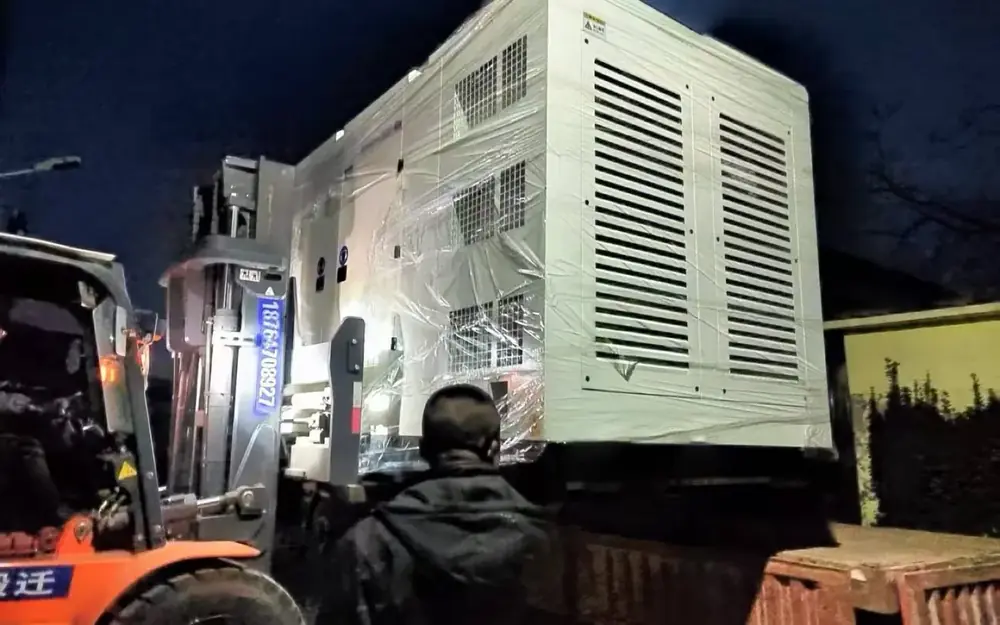
Industrial diesel generator sets prepared for Warri oil-and-gas and marine buyers
Factory batch of industrial generator sets prepared for Warri oil-and-gas and marine enquiries
Buying intent

This page is for Warri buyers who want factory-direct supply without assuming local stock or a local office. For utility and pump loads see the water factory generator guide; for remote sites see the containerized generator guide.

Why Warri demand is industrial first

Warri's economy is built on oil and gas, marine support and process industry. That produces motor-heavy loads with high starting currents, and it means a set chosen from the running kilowatts alone can look adequate on paper yet still trip when the largest motor starts.

Buyers comparing the wider south-south also review our Port Harcourt supplier guide and Benin City supplier guide.

Fact block

Warri is a centre of oil-and-gas and marine activity in Delta State. Site loads there are dominated by motors, pumps, compressors and welding equipment, and because a direct-on-line motor draws several times its running current at start-up, the largest motor rather than the total running kilowatts usually fixes the generator rating.

Which sizes and types suit Warri

The links below are planning entrances. Industrial buyers should list every motor with its starting method before a size is fixed.

For yards and remote sites without a plant room, compare the containerized option against an open set.

Planning ranges and typical Warri uses, with the next step for each
Planning rangeTypical Warri useNext step
100-300kVAWorkshops, smaller plants, commercial sites and hotelsCompare 100-300kVA options
300-500kVAIndustrial yards, process plants and mixed motor loadsCompare 300-500kVA options
500-2000kVALarge industrial and marine-support sites with heavy starting loadsCompare 500-2000kVA options
Fact block

For a Warri industrial yard, the generator is chosen from the largest starting motor plus the running load of everything else, because motor starting, not steady-state load, is what pulls the set down. A containerized set suits a yard or remote site where no permanent plant room exists.

The same industrial buying notes cover the wider Delta region in industrial power notes for Port Harcourt and Warri.

Coastal and marine conditions to plan for

Warri is coastal and humid, so canopy finish, ventilation and filtration need to account for moisture and salt-laden air. Sets stored outdoors before installation should be specified accordingly rather than assumed to be protected.

Where the site is reached by water rather than road, access and offloading are planned differently, and the enclosure may need to survive a period of temporary storage.

Fact block

Warri is coastal and humid with salt-laden air, so canopy finish, ventilation sizing and air filtration matter more there than at inland sites. For marine-access locations, offloading and any period of temporary storage should be planned before the set is dispatched.

Delivery into Warri

Warri can be served from a regional port with a short inland movement, or from a larger port cluster with a longer road leg. The quotation should name the intended route and separate the inland stage.

Step order is in the importer guide for Nigeria, with packing and container planning in the containerized generator guide.

Fact block

Warri can be reached from a regional port or from a larger port cluster, so the intended route should be named before prices are compared. Clearance, inland movement, offloading and installation all sit outside a CIF price unless written into the quotation.

What to send for a usable Warri quote

A useful Warri quotation makes the electrical scope, the environmental scoping and the delivered scope visible enough for approval and comparison.

Project types in Warri and what to send with the enquiry
Project typeWhat to send
Industrial yard or workshopLargest motor kW, starting method, welding or compressor load and duty cycle.
Process plantRunning load, starting current, planned expansion and ATS scope.
Marine support siteAccess route, offloading method and any temporary storage period.
Commercial or hotelCritical circuits, AC load, pumps and noise requirement.
DeliveryCIF port or FOB China, with inland movement and installation stated separately.

Get a written quotation

Three fields. We reply with the rating, the engine option and the delivery basis.

Send on WhatsApp

WhatsApp RFQ template

Hello, I need a diesel generator quote for a Warri site. Site type: [oil-and-gas/marine/industrial yard/commercial/hotel], kVA or load: [ ], largest motor: [ ], duty: [standby/prime], enclosure: [open/container/silent], delivery: [CIF/FOB China].

Send this RFQ on WhatsApp

Warri FAQ

Should a Warri set be sized from kW or from the largest motor?

From the largest motor. A direct-on-line motor draws several times its running current at start-up, so a motor-heavy yard can need a generator considerably larger than the running load alone would suggest.

Which generator type suits a Warri industrial yard?

Industrial yards and remote sites often use open or containerized sets where no permanent plant room exists, while hotels and offices normally specify a silent canopy. Standard container footprints then limit the maximum set size.

Does Warri's coastal climate affect the generator spec?

Yes. Coastal humidity and salt-laden air make canopy finish, ventilation and filtration more important than at inland sites, and a set stored outdoors before installation should be specified for that exposure.

Can Warri buyers request CIF or FOB China?

Both can be quoted. CIF covers cost, insurance and freight to the named port, while FOB China suits buyers using their own forwarder. Clearance, inland movement, offloading and installation sit outside the CIF price unless written in.

Do you have an office or stock in Warri?

No local Warri office, warehouse, installation team or service office is claimed. This is a China-based factory supply route, so port delivery, inland movement and installation responsibilities must be written separately.

River port or road: the choice that shapes the quotation

Warri sits where a river route and a road route both exist, and the two do not behave the same way for a heavy machine. The river option moves the cargo closer to some destinations but adds a transfer between modes, and every transfer is a lift. The road option is simpler to arrange but puts the whole distance on a trailer and on the surface it has to cross.

The consequence is that the delivery clause and the packing specification are linked. A route with two transfers needs a crate that survives being lifted twice and a set of lifting points that a second handler can find without instructions. A single-mode road delivery needs attention to securing and to shock rather than to repeated handling.

Neither route is better in general. The question is which one the buyer can control at the destination end, because the leg that fails is almost always the one nobody was assigned.

What wet, salty air does to a machine room

In a coastal environment the damage that matters is not the obvious one. Rain on a canopy is harmless; humidity inside the enclosure is what corrodes terminals, furs up contacts and quietly degrades insulation over months. It gets in with the cooling air and it condenses when the set cools after a run, which is exactly when nobody is looking.

Three details carry most of the protection. The first is that the enclosure breathes in a controlled way: louvres arranged so that water cannot travel with the air into the alternator, and a discharge path that does not let the set recirculate its own hot, moist exhaust air. The second is that the electrical connections are treated as a maintenance item rather than a one-off: terminal condition checked on a schedule, not discovered during a failure.

The third is that the set is run. A machine that stands idle in humid air accumulates condensation, and a periodic loaded run drives it out. The worst pattern for a standby set in this climate is a long idle followed by a sudden demand.

The general principles behind derating for heat are set out in high-temperature derating, and the room-level airflow question in room ventilation.

Several small sets or one large one

The industrial sites around Warri often ask the same question: four smaller sets that can be added as load grows, or one large machine that covers the eventual requirement today. The answer depends less on engineering elegance than on how the site actually behaves.

Small sets suit a load that arrives in stages and a site that can tolerate a set being taken out for service. They also reduce the consequence of a single failure, because the remaining units still carry part of the load. What they cost is complexity: more fuel points, more exhausts, more maintenance events, and a distribution arrangement that has to keep the running sets balanced.

One large set suits a load that is already there, a site where space is tight, and an operation that values a single point of control. What it costs is resilience: one fault stops everything, and a service visit is a shutdown unless a standby unit exists.

There is a middle option that is often the right one: a single set sized to the firm load plus a smaller unit for the critical board. It keeps the simple operating model while removing the single point of failure from the part of the site that cannot stop.

The comparison, in the terms that decide it

The table sets the three arrangements against the conditions that actually distinguish them. Ratings in it are described by role rather than by size, because the right size follows from the load list rather than from a preference for more or less capacity.

Single large set, several small sets, and a firm-plus-critical arrangement compared
ArrangementFits whenWhat it costsOperating consequence
One set at the full requirementThe load exists today and space is limitedNo redundancyOne fault or one service stops the site
Several smaller sets added in stagesLoad grows in phases and shutdowns are tolerableMore fuel, exhaust and service pointsLoad has to be shared deliberately as units are added
Firm set plus smaller critical unitPart of the site must never stopTwo machines and a split boardCritical loads survive a failure of the main set
Two matched sets in parallelRedundancy is required at the full ratingSynchronising controls and protectionEither unit can carry the load alone

Humid-climate details worth writing into the order

An order placed for a coastal site should say so, because it changes small things that are hard to add later: the treatment of the enclosure's fasteners, the specification of the terminal arrangement, whether anti-condensation heating is fitted, and how the control panel is sealed. None of these is exotic; they are simply not chosen unless the destination is named.

It also changes the commissioning plan. A set that will stand for weeks between runs should be commissioned with a loaded run, not a start and a stop, so that the first real demand is not also the first real test. What a loaded run establishes is described in load bank testing.