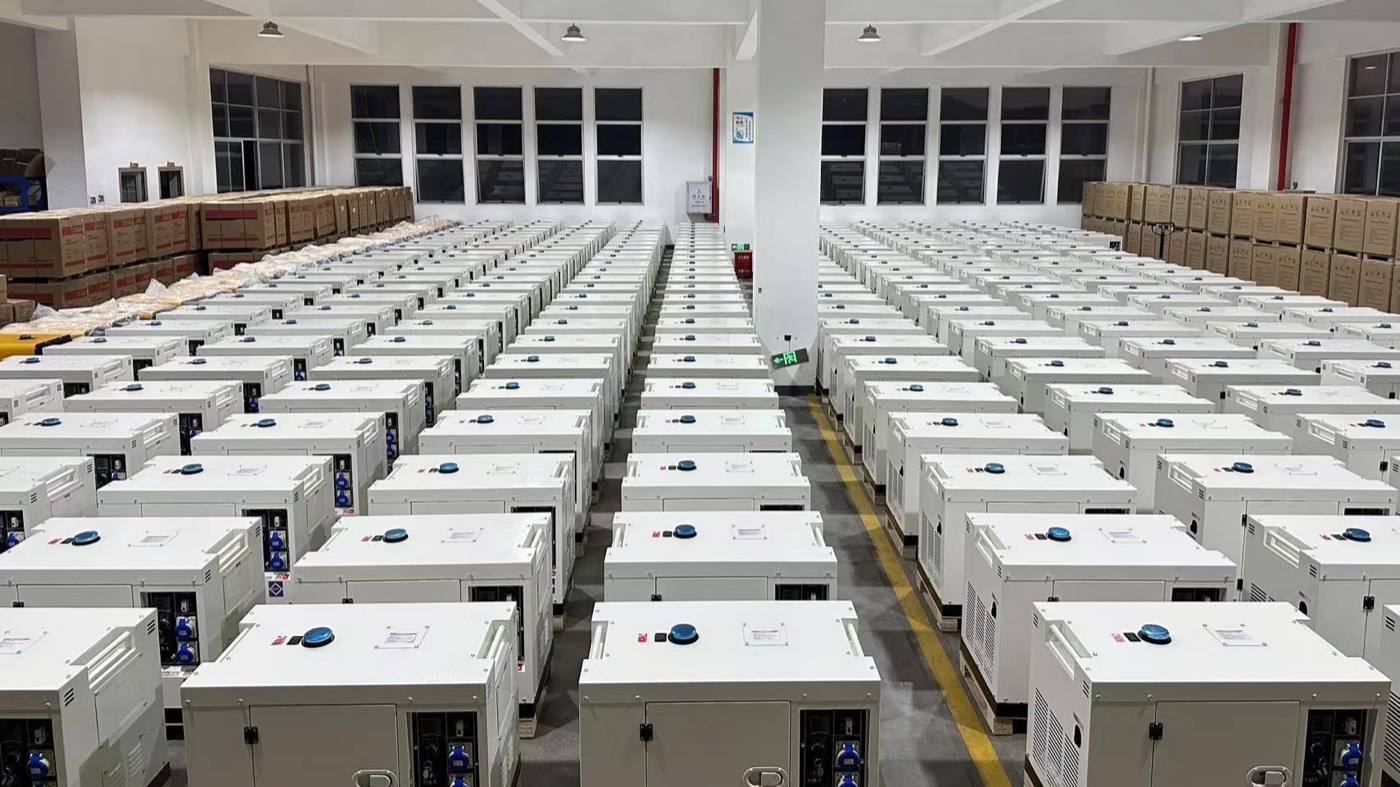
Depth in one or two bands beats breadth across five. Parts and service capability decide whether the second order happens.
Stock is a cash decision before it is a product decision
A dealer who stocks five ratings because five looked reasonable has not built a product range. They have locked working capital into five different bets, and the slowest of those bets will sit in the warehouse long enough to be re-priced twice before it moves. The generator does not rot, which is the problem: it looks like an asset on the balance sheet while quietly behaving like a loan you made to yourself at no interest and no maturity.
This is also why two dealers selling the same engines at the same margin can end up in very different positions a year later. The difference is not the buying price. It is which ratings they chose to hold, and whether the local market for those ratings is deep enough that a unit arriving today can be sold within the season it arrived in.
The practical question is therefore not which generator is good. It is: for this specific rating, in this specific city, is there enough repeat demand that holding one unit shortens a customer's wait? If the answer is no, the correct posture is to order against a confirmed requirement and keep the warehouse empty for that rating.
Which ratings actually move, and which only look like they should
Demand in Nigeria is not spread evenly across the ladder. It clusters where the buyers are: small commercial premises that need to keep a freezer, a POS terminal and a few air conditioners alive; estates and mid-size factories that need a three-phase supply big enough for motors; and project buyers who never buy from stock at all because their load has to be calculated first.
The mistake is treating every rung the same way. The small commercial end turns over because there are thousands of buyers and the decision is quick. The large end does not turn over for the same reason: there are few buyers, each one compares for weeks, and the unit is expensive enough that nobody buys it on impulse. Holding a large set without a named buyer is not stocking, it is speculating.
| Rating band | Who actually buys | How it moves | Stock posture |
|---|---|---|---|
| Small single-phase and small three-phase, up to around 30 kVA | Shops, clinics, small offices, residential compounds | Fast, price-led, often the buyer's first generator | Hold one or two, keep the canopy option available |
| Roughly 30 to 100 kVA | Estates, schools, restaurants, workshops, small factories | The deepest repeat demand; buyers compare two or three quotes | The core of a dealer's stock |
| Roughly 100 to 250 kVA | Factories, hotels, cold stores, mid-size estates | Moves, but only after a site visit and a load list | Hold one if you can service it; otherwise order |
| Roughly 250 to 500 kVA | Industrial plants, hospitals, large estates, projects | Slow and specification-driven; rarely an off-the-shelf sale | Order against a requirement, not against hope |
| Above 500 kVA | Projects, plant rooms, data and telecom sites | Every unit is a project; the buyer specifies the engine | Never hold; quote to the load study |
The mix problem: one of each is not a range
A new dealer tends to build a range like a catalogue: one of every rating, so that whatever the customer asks for, there is something in the yard. It feels safe and it is the most expensive way to start, because each unit is a separate bet and none of them is deep enough to satisfy a repeat buyer who wants three identical sets for three sites.
Depth beats breadth at the small end. Two units of the rating that actually moves in your city will earn more than six different ratings that each sell once a year, because repeat buyers come back to the dealer who can deliver the same specification again without a new import cycle. That is the difference between being a supplier and being a middleman with a warehouse.
Breadth becomes correct only at the top of the ladder, and even there it is breadth of quotation rather than breadth of stock: you need to be able to quote any rating credibly, which requires a factory relationship, not a floor full of machines.
Parts carry the margin that the unit does not
The unit sale is visible and competitive; the parts sale is quiet and sticky. A dealer who supplies the filters, belts, AVR, controller and battery for the machines they sold becomes the default call when something stops, and that call is not price-shopped the way a generator is. It also protects the resale value of the brand they carry, because a machine with an available parts path is worth more than an identical machine with none.
The stocking error here is the opposite of the unit error: dealers under-stock parts because the unit margin feels like the business. In practice the parts line is what makes the second and third year of a customer relationship worth having, and it is cheap to hold relative to a generator.
| Item | Why it sells | Hold or order |
|---|---|---|
| Oil, fuel and air filters | Consumable on a fixed service interval; every unit sold needs them repeatedly | Hold a depth matched to the number of units you have sold |
| Fan and drive belts | Wear item, fails without warning, stops the machine | Hold one set per engine family you carry |
| AVR | The single most common electrical failure on a small set | Hold two or three; they are small and inexpensive to carry |
| Controller and control panel spares | Failures are hard to diagnose and the customer cannot wait | Hold for the controller family you sell most |
| Battery and battery charger | Fails quietly in standby service, usually discovered during an outage | Hold for the ratings you stock |
| Injectors and fuel injection parts | Fail early where fuel quality is poor | Order against demand; keep a known-good supplier |
The four shapes of dead stock
Slow-moving units are rarely random. They fall into recognisable shapes, and each has a different fix.
The first is the odd rating: a size that exists on the ladder but has no local application, bought because it was available in a mixed container. The second is the oversized single-phase set: a large frame with a single-phase output that almost nobody asks for, because anyone with that load already runs three-phase. The third is the non-standard voltage or frequency: correct for another market, unsellable at home. The fourth is the over-specified machine: an industrial build with a premium engine in a size where buyers are price-led and will not pay for the specification.
A fifth shape is worth naming separately because it is not the product's fault: the unit that arrived without documentation, without a test record, and without a parts path. It is technically the right machine and still cannot be sold to a serious buyer.
Mixed loads, container fill and what travels well together
Dealers who import by the container face a packing problem that buyers never see. A mixed load is efficient on freight and dangerous on inventory: the cheapest way to fill the last few cubic metres is with a rating you would not otherwise buy, and that is exactly how odd sizes enter a warehouse.
The discipline is to let the stock plan set the load, not the load set the stock plan. Decide the mix by what your market absorbs, then accept that the container may run short rather than fill it with something you cannot sell. Freight saved once is not worth a unit that takes a year to move.
It also matters what travels next to what. Canopy sets are bulky and awkward; open sets pack tighter but arrive with exposed terminals and are easier to damage. Batteries, if shipped with the machine, need to be isolated and documented. Accessories that are easy to lose in transit should travel in a crate rather than loose in the frame.
FOB or CIF, seen from the dealer's cash position
The incoterm decides who books the freight and, more importantly for a dealer, when the money leaves and when the risk moves. Under FOB the buyer controls the forwarder and the schedule; under CIF the supplier arranges carriage to the destination port and the buyer's exposure starts later. Neither is cheaper in principle, but they behave differently on a cash-flow plan.
A dealer stocking for a season should care about one thing above the rate: whether the arrival date is under their control. If the supplier books the vessel, the dealer is exposed to a schedule they cannot see, and a container that slips by weeks can miss the season the stock was bought for. That risk is worth understanding before comparing terms. The comparison itself is set out separately in the FOB versus CIF guide.
Service is the only part of the offer a competitor cannot copy
Any dealer can quote the same engine from the same factory. What separates them is what happens on the day the machine stops at seven in the evening. A dealer with a technician, a vehicle and a parts shelf wins the next order from that customer without competing on the unit price at all.
That changes the stocking logic: money spent on service capability and a small parts shelf earns more than the same money spread across an extra rating. It also justifies holding one larger machine, because a dealer who can service a 200 kVA unit is credible when quoting it, and credibility is what converts a comparison shopper.
If you cannot service the higher ratings yet, the honest posture is to quote them and be clear that commissioning support comes from the factory side. Selling a machine you cannot support is how a dealer acquires a reputation that takes years to repair.
Where these rules of thumb stop being true
The banding above is a rule of thumb about where demand sits, not a law. It was built from the pattern of enquiries a Nigeria-facing supplier sees, and it depends on three things that vary by dealer: the city, the industrial base around it, and whether the dealer's existing customers are end users or other traders.
A dealer in an oil-servicing town will see demand at ratings that a dealer in a commercial Lagos district never quotes. A dealer selling mainly to contractors will see demand arrive in project-shaped lumps rather than steady retail traffic. And a dealer whose customers are smaller resellers will find that the ratings that move for them sit one step below the retail bands.
Treat the table as a starting hypothesis, then replace it with your own history after two or three import cycles. If your records contradict the table, your records are right.
What to settle with the supplier before you commit stock
Most dealer disappointment traces back to questions that were never asked before the deposit. The list below is short because these are the ones that change the outcome, not the ones that sound thorough.
| Question | Why it matters |
|---|---|
| Which engine and alternator build is in this exact rating, by model code? | Two units of the same kVA can behave differently on motor starting and on parts |
| Can the same specification be repeated on the next order? | Repeatability is what lets you sell three identical sets to one estate |
| What documentation travels with the unit, and what is only available on request? | A machine without a test record is harder to sell to a serious buyer |
| Which wear parts will I need within the first year, and can they ship with the units? | Parts arriving with the container cost far less than parts ordered in a hurry |
| What is the packing arrangement, and can units be mixed in one load? | Packing decides both freight efficiency and damage risk |
| Who handles commissioning questions, and in what language? | The first week of a machine's life generates most of the support calls |
FAQ
How many ratings should a new dealer stock?
Fewer than feels comfortable. Two or three ratings with real depth in the band where your city actually buys will outperform a catalogue of one-of-each, because repeat buyers want the same specification again rather than a different size.
Which single rating is the safest first stock item?
The rating that matches the most common commercial load in your area, which in most Nigerian cities sits in the small three-phase band rather than at either extreme. Confirm it against your own enquiry history rather than the table above.
Should a dealer hold a large set above 250 kVA?
Only with a named buyer or a service capability that makes the unit sellable. Large sets are specified rather than chosen, so stock without a requirement tends to become a long-dated asset.
Do parts really earn more than the unit?
Not more per transaction, but more reliably over the life of the customer. Parts are not price-shopped the way a generator is, and they keep the customer tied to you between unit purchases.
Is a mixed container a good way to start?
It is a good way to control freight and a poor way to control inventory. Let the stock plan decide the mix, and accept a short container rather than filling it with a rating you cannot sell.
How do I decide between FOB and CIF as a dealer?
Decide on control of the schedule first and cost second. If a delayed container would miss your selling season, the term that gives you visibility of the vessel is worth more than a small difference in the freight rate.
What turns a slow-moving unit into dead stock?
Usually a missing parts path or missing documentation rather than the machine itself. A correct unit that cannot be supported is harder to sell than a slightly wrong unit that can.
