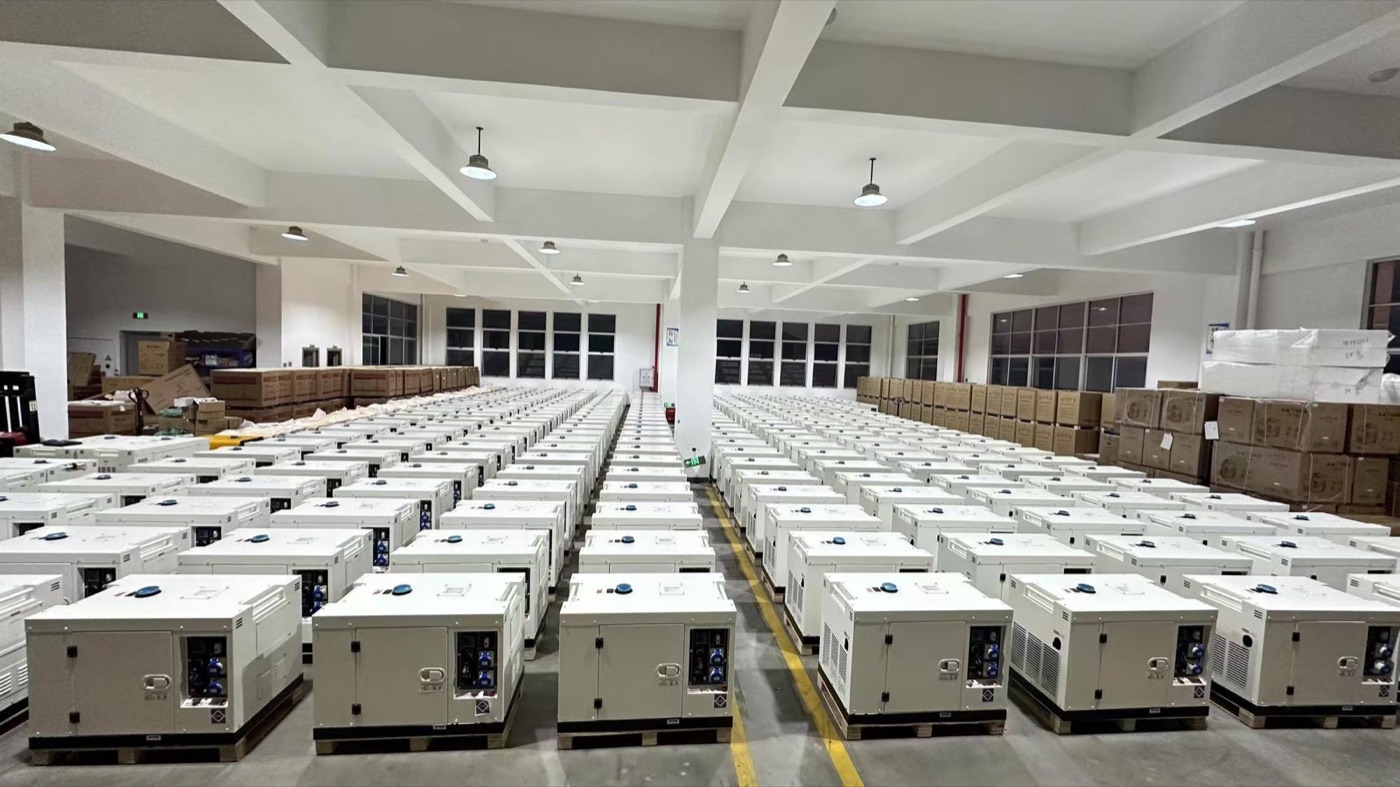
Size for the essential load at night, place the set as far from guest windows as the site allows, and isolate it from the structure.
What silent actually means on a hotel site
No generator is silent. A set sold as silent is a set with an acoustic canopy, and the canopy reduces noise rather than removing it. The only number that matters to a hotel is the level at the boundary and at the nearest guest window, not the level printed on the brochure, because the brochure figure is measured close to the machine in a way that flatters it.
This matters because the failure mode in hotels is not usually a machine that is too loud in the plant room. It is a machine that is acceptable at two in the afternoon and unbearable at two in the morning, when the background noise of the neighbourhood drops away and the low-frequency component of a diesel engine travels through walls and windows far better than the mid-range noise a canopy is designed to absorb.
So the useful question at the quotation stage is not is it silent. It is: at what distance, at what load, and with what canopy specification, and can you put that in writing with the measurement position stated.
| Situation | Typical level | What it means for a hotel |
|---|---|---|
| Quiet bedroom at night | Around 30 dB(A) | The target at the guest window, not at the machine |
| Quiet street at night | Around 40 to 50 dB(A) | A set that blends into this is effectively unnoticed |
| Normal conversation | Around 60 dB(A) | Audible in a garden but not disruptive indoors |
| Busy road in daytime | Around 70 to 80 dB(A) | Daytime tolerance is far higher than night |
| Unsilenced industrial diesel set at close range | Well above 90 dB(A) | Requires hearing protection; unusable near guests |
The night load is not the day load
A hotel's electrical profile inverts after dark. The kitchen winds down, the laundry stops, the pool pumps are usually off, and what remains is the load that cannot be switched off: air conditioning in occupied rooms, corridor and security lighting, the cold room for breakfast service, water pressure pumps, the lifts, and the server or front-desk systems.
That residual load is usually a fraction of the daytime peak, which creates a specific problem: a set sized for the afternoon peak runs deeply under-loaded all night. Under-loading a diesel engine is not harmless. It runs cool, it can wet-stack, it glazes cylinders over time, and it is inefficient per kWh delivered. A hotel that buys one large set to cover everything often discovers this in the second year.
The practical answers are a smaller dedicated night set, a load management arrangement that keeps the main set loaded, or accepting the inefficiency as the price of simplicity. What does not work is sizing only for the peak and assuming the night will look after itself.
Placement decides more than the canopy does
Distance and obstruction do more acoustic work than any canopy upgrade. Doubling the distance from a point source reduces the level noticeably; putting a solid wall between the set and the guests does more still. A budget canopy placed well will often beat a premium canopy placed badly.
In practice this means the plant room decision should be made before the generator is ordered. Roof, basement, rear service yard and boundary wall each produce a different acoustic result and a different ventilation problem. A basement plant room keeps noise in but makes heat extraction hard; a roof keeps heat easy but sends noise outward over the neighbourhood.
The direction of the exhaust and the radiator outlet also matters, because both are noise sources in their own right and both can be aimed at a wall that reflects sound back into the building.
What a canopy specification has to state
A canopy is a set of engineering trade-offs in a steel box. Thicker acoustic lining lowers noise; less open area for air lowers noise and raises temperature. A canopy that is quiet because it is sealed will derate the set in a hot climate, and a derated set running near its limit is both louder and shorter-lived than one running within it.
At the quotation stage, four things belong in writing: the attenuation claimed and the measurement position, the ambient temperature the cooling package is rated for, the number and configuration of the air inlet and outlet, and the weight of the unit with the canopy fitted. The last one surprises buyers, because canopies on larger sets are heavy enough to change transport and crane arrangements.
For a hotel the visual finish also matters, since the set is often visible from a car park or a service yard. Powder-coated panels in a neutral colour cost little and avoid a conversation with the owner that has nothing to do with engineering.
Vibration travels through the building, not through the air
Guests often report noise that the acoustic measurement at the boundary does not explain. The cause is usually structure-borne vibration: the set sits on a slab that is connected to the building frame, and the low-frequency energy re-radiates as sound in rooms several floors away.
The fix is at the mounting, not at the canopy. Anti-vibration mounts sized to the unit weight, a separate inertia base where the structure is light, and flexible connections on the exhaust and the fuel lines all interrupt that path. A set placed on a roof slab directly above a guest room needs this treatment more than a set placed on a ground-level slab.
This is also where cheap installation undoes an expensive purchase. The most common hotel complaint is not the canopy grade, it is a machine bolted hard to a structural slab.
Exhaust routing, soot and the facade
Exhaust is hot, dirty and directional. Routed badly, it stains a painted facade within a season, it can be drawn back into windows or into the fresh-air intake of the air conditioning system, and it deposits soot on laundry hung out to dry.
The routing rules are simple to state and often ignored: discharge above roof level or away from any opening, never below a window that opens, keep the outlet clear of the condenser units, and use a silencer on the exhaust line rather than relying on the canopy alone. Flexible sections and proper supports prevent the line from transmitting vibration into the wall it passes through.
Where the set sits in a basement, the exhaust run becomes a design exercise in its own right: length, bends, back pressure and insulation all matter, and a long run with too many bends can cost more performance than the canopy gains in noise.
Fuel delivery is a noise event too
The generator is not the only machine a hotel buys. Refuelling brings a tanker or a pickup with a transfer pump, usually at an hour chosen to keep it away from guests, and that pump is often louder than the generator running at part load.
Planning the fuel side properly removes the problem: a tank sized so deliveries are infrequent, a fill point away from guest areas, a bunded area so a spill does not reach a drain, and a level gauge that can be read without opening the tank. A set that runs out at three in the morning and needs an emergency delivery has already lost the argument about noise.
Fuel quality matters here as it does everywhere else, and a hotel is a particularly bad place to discover water in the tank, because the outage that follows happens while guests are in the building.
One large set, two smaller sets, or partial backup
A hotel rarely needs every circuit on the generator. What it needs is the load that keeps the building habitable and the business running: guest room air conditioning, lifts, lighting, water, cold storage and the front desk. Kitchens, laundry and pool plant can often wait.
That makes partial backup a legitimate strategy, and often a better use of money than one large set. A smaller set dedicated to the essential board can be closer to the right size at night, quieter because it is smaller, and combined with load shedding on the non-essential circuits.
Two smaller sets also give a form of redundancy that one large set cannot, provided the boards are arranged so either set can carry the essential load. What they do not give is automatic redundancy: without a paralleling panel, two sets are two separate supplies.
| Circuit group | Backup priority | Why |
|---|---|---|
| Guest room air conditioning | Essential | The single largest driver of complaints during an outage |
| Lifts | Essential | Trapped passengers are a safety issue, not a comfort issue |
| Corridor, stair and security lighting | Essential | Life safety and security |
| Water pressure and transfer pumps | Essential | No water means the rooms are unusable |
| Cold room and kitchen refrigeration | Essential | Stock loss begins quickly once the cold chain breaks |
| Front desk, server and payment systems | Essential | Check-in, keys and billing |
| Kitchen cooking and laundry | Deferrable | Can be paused without losing the guest |
| Pool plant and exterior lighting | Deferrable | No immediate impact |
| Conference and event spaces | Scheduled | Needed only when in use |
Where these rules of thumb stop being useful
The decibel references above are general acoustic landmarks, not measurements of any particular machine, and they should never be used as a substitute for a site measurement. The level a hotel actually experiences depends on the set, the canopy, the distance, the reflecting surfaces and the time of day.
The circuit priority table is equally a starting point. A resort where guests are in the rooms all afternoon has a different definition of essential from a city hotel that empties during the day, and a hotel with a conference business cannot shed the event space at nine in the morning.
Treat both as a framework for the conversation with the acoustic and electrical designers, then let the site measurement and the hotel's own operating pattern settle the answer.
What to send for a hotel quote that can actually be compared
Send the load, the largest motor, the essential circuits, the intended location of the set, and the distance to the nearest guest window. Those five answers decide the canopy grade, the cooling package and whether one set or two is the better answer.
| What we need | Why it changes the quote |
|---|---|
| Connected load and the essential-only load | Decides whether one set or a smaller essential set is the right purchase |
| Largest motor and starting method | Lift motors and chiller compressors set the starting requirement |
| Distance from the set to the nearest guest window | Drives the canopy grade and the acoustic treatment |
| Where the set will stand | Basement, roof and yard have different ventilation and exhaust consequences |
| Fuel tank location and fill point | Affects bunding, pipe runs and delivery logistics |
| Whether ATS is required per board | Decides the changeover scope, which is often quoted separately |
FAQ
How quiet is a silent generator really?
Quieter than an open set, not silent. What matters is the level at the boundary and at the nearest window, which depends on the canopy grade, the distance and the reflecting surfaces. Ask for the attenuation and the measurement position in writing.
Can a hotel run on one generator for everything?
It can, but it usually runs deeply under-loaded at night. Many hotels do better with a smaller essential-load set plus load shedding on kitchen, laundry and pool plant.
Does the canopy reduce noise more than placement?
Usually not. Distance and a solid obstruction between the set and the guests do more acoustic work than an upgrade from a standard to a premium canopy.
Why can guests hear it on the third floor but not in the lobby?
That is structure-borne vibration re-radiating through the building frame, not airborne noise. The fix is at the mounting: anti-vibration mounts and a separate base, not a thicker canopy.
Should the set go on the roof or in the basement?
It depends on which problem you would rather solve. A roof is easier for heat rejection and harder for noise; a basement contains noise and makes ventilation and exhaust routing the constraint.
Do we need an ATS for a hotel?
For guest safety and lift operation, automatic changeover is normally expected. Whether it is one ATS for the whole board or several per board is a design decision that should be priced explicitly.
Can the generator be installed before the building is finished?
It can, but the plant room, exhaust route and fuel tank should be fixed first. Retrofitting an exhaust route through a finished facade is the most expensive way to solve a noise problem.
