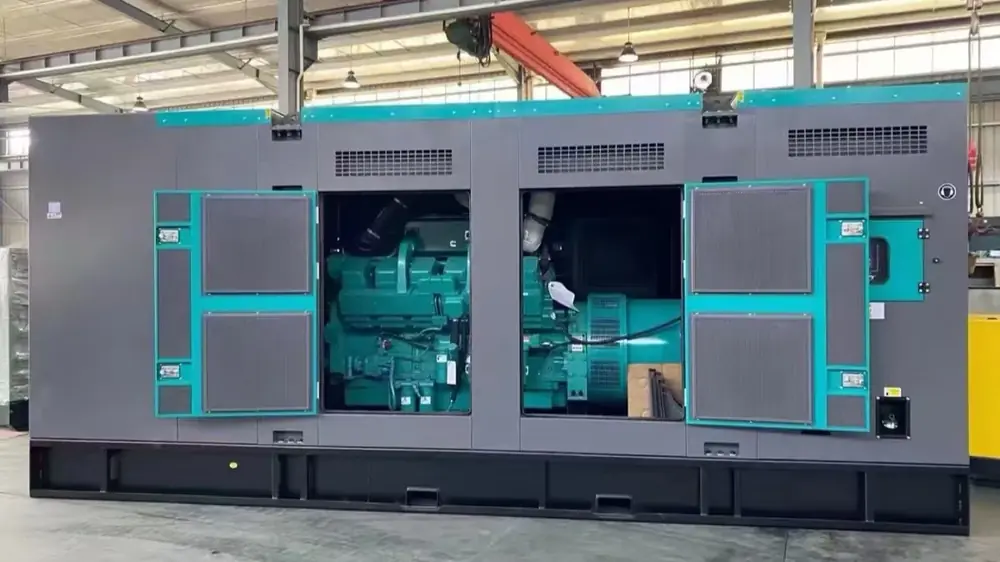
This page covers paddy-to-milled-rice lines, including the handling and extraction motors that are easy to leave out of a first load estimate.
Why the whole paddy chain belongs in the load estimate
Paddy arrives wet, passes a destoner, then a huller, separation, several polishing passes, grading and finally bagging. Between those stages the grain is lifted by bucket elevators and moved by screw or belt conveyors, and dust is pulled away by extraction fans that run whenever the line runs.
On many lines the extraction and conveying motors together draw a steady share of the total, and they never stop mid-shift. The huller and polisher drives fluctuate instead, so the plant's load curve has a baseline plus peaks.
A diesel set sized only for the average will meet the baseline easily and still struggle at the peaks. A set sized only for the peak wastes fuel and capital for the whole shift. The quotation should be built from both.
Where the mill shares a supply with irrigation and drying, the combined case belongs in a broader farm load list, as described in farm power planning.
What to record before asking for a price
List the line front to back. Where the same motor type repeats, note how many run at once rather than writing the type once.
| Rice line section | Detail worth writing down |
|---|---|
| Intake and destoner | Motor rating and whether the feed is manual or mechanised. |
| Huller and separator | Drive rating and the starter arrangement used. |
| Polishing passes | How many pass motors can run simultaneously. |
| Bucket elevators | Count, rating, and continuous duty through the shift. |
| Extraction fans and blowers | Continuous load that stays on with the line. |
| Grading and bagging | Smaller motors, plus any sewing and sealing units. |
| Shift pattern | Single shift or extended operation changes the duty to quote. |
Starting sequence and its effect on set size are worked through in rice mill power planning: sequential vs simultaneous starting.
Making two rice mill quotations comparable
Insist that each offer names the rating basis, the enclosure type, the ATS scope, the fuel tank arrangement and the shipping term. Without those five items, a lower number is not a cheaper offer, it is a shorter specification.
If the mill shares a site with cold storage, water treatment or a larger factory block, include those loads from the start. They are usually continuous, and they change the recommendation more than a small difference in headline kVA.
Related pages: cold room generator guide, water factory generator guide, and the 250kVA diesel generator page.
Get a written quotation
Three fields. We reply with the rating, the engine option and the delivery basis.
Rice mill generator questions
Do the elevators and dust fans matter for generator sizing?
They do, because they run for the whole shift. They form a continuous baseline that the set must carry before any hulling or polishing motor starts, so leaving them out understates the real load.
How many polishing passes should the load list include?
Every pass that can run at the same time. If the line can operate three passes together, the quotation should assume three, otherwise the set will be sized for a plant that does not exist.
Is a silent canopy needed for a rice mill?
Only if the set will stand where noise matters, such as near the mill floor, offices or a neighbouring property. A dedicated, well-ventilated plant room can take an open set, and ventilation must still be designed for the heat the set rejects.
