WhatsApp: +86 157 0593 2345 Email: miu@taiyudapu.comCall the factory: +86 157 0593 2345
Nigeria generator buyer guide

Diesel Generator Supply for Uyo: Hospitality, Institutional and Construction Loads

Uyo is the capital of Akwa Ibom State, an oil-producing state, and its demand spreads across hospitality, institutions, construction and commercial premises. Because that range is wide, Uyo enquiries should be specified from a load list rather than from a single assumed size.

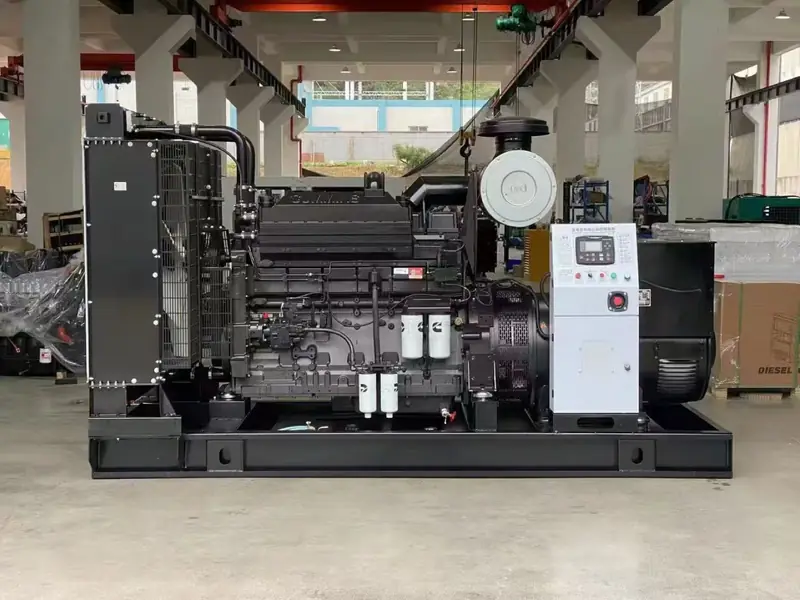
Diesel generator sets prepared for Uyo hospitality, institutional and construction buyers
Factory-prepared generator sets for Uyo hospitality, institutional and construction enquiries
Buying intent

This page is for Uyo buyers who want factory-direct supply without assuming local stock or a local office. For hospitality loads see the silent hotel generator guide; for temporary sites see the construction site generator guide.

Why Uyo demand is unusually wide

Akwa Ibom is an oil-producing state and Uyo is its capital, so the city carries hospitality, government and institutional demand alongside construction and commercial trade. A single 'standard' size does not serve that spread.

For a neighbouring south-south comparison, review our Calabar supplier guide and Aba supplier guide.

Fact block

Uyo is the capital of Akwa Ibom State, an oil-producing state, and its demand spreads across hospitality, institutions, construction and commercial premises. Because that spread is wide, a Uyo quotation should be built from a load list rather than from a single assumed size.

Which sizes Uyo projects usually need

The links below are planning entrances. Institutional and hospitality sites should list which circuits must stay powered.

Planning ranges and typical Uyo uses, with the next step for each
Planning rangeTypical Uyo useNext step
10-30kVAShops, small offices and light single-unit backupCompare 10-30kVA options
30-100kVAGuest houses, clinics, schools, restaurants and commercial sitesCompare 30-100kVA options
100-300kVAHotels, institutional buildings, estates and commercial blocksCompare 100-300kVA options
300-500kVALarger campuses, industrial sites and multi-building projectsCompare 300-500kVA options
Fact block

For a Uyo institutional or hospitality site, the generator is normally sized to the critical load plus the largest single starting demand, with an automatic transfer switch specified so the changeover needs no manual intervention.

Hospitality and institutional notes

Where the set runs near guests, students or patients, enclosure and exhaust planning come before installation. Where the load is a construction site rather than a building, the priorities reverse towards ruggedness and mobility.

See the silent hotel generator guide for one profile and the construction site generator guide for the other.

Fact block

A hospitality or institutional load and a construction-site load should not share a specification: the first is sized for a critical building load with noise control, the second for mobility, ruggedness and a changing load as the project progresses.

Delivery into Uyo

Uyo is served from the south-south port cluster, and the site's access and offloading decide how the delivery itself is planned. For a construction site, arrival timing often has to match the project programme.

Step order is in the importer guide for Nigeria; delivery-term differences are in the FOB China vs CIF Lagos guide.

Fact block

Cargo for Uyo arrives through the south-south port cluster and then moves by road, so the inland leg and site access are separate planning items. On a construction project, the delivery window usually has to be matched to the programme.

What to send for a usable Uyo quote

A useful Uyo quotation makes the electrical scope, the enclosure scope and the delivered scope visible enough for approval and comparison.

Project types in Uyo and what to send with the enquiry
Project typeWhat to send
Hotel or guest houseRoom count, AC load, pumps and the noise requirement.
InstitutionBuildings to back up, priority circuits and expected runtime.
Construction siteEquipment list, largest motor or welding load and mobility needs.
Commercial or estateLift and pump loads, shared AC and changeover requirement.
DeliveryCIF port or FOB China, with inland delivery and installation stated separately.

Get a written quotation

Three fields. We reply with the rating, the engine option and the delivery basis.

Send on WhatsApp

WhatsApp RFQ template

Hello, I need a diesel generator quote for a Uyo site. Site type: [hotel/institution/construction/commercial/estate], kVA or load: [ ], largest motor or AC: [ ], duty: [standby/prime], enclosure: [silent/open], delivery: [CIF/FOB China].

Send this RFQ on WhatsApp

Uyo FAQ

Which generator sizes are common in Uyo?

A 30-100 kVA set covers guest houses, clinics, schools and commercial sites, while 100-300 kVA suits hotels, institutional buildings and estates, and 300 kVA and above is used for larger campuses and industrial projects.

Should a Uyo construction site use the same set as a hotel?

No. A construction site is specified for mobility, ruggedness and a load that changes as the project progresses, while a hotel set is sized for a critical building load with noise control. The two requirements pull in different directions.

Do Uyo institutions need an ATS?

Usually yes. An automatic transfer switch lets the load change over without manual intervention, and its rating should be matched to the generator current rather than to the kVA figure alone.

How does delivery to Uyo work?

Cargo arrives through the south-south port cluster and then moves by road, so the inland leg and site access are separate planning items. On a construction project the delivery window is usually matched to the programme.

Do you have an office or stock in Uyo?

No local Uyo office, warehouse, installation team or service office is claimed. This is a China-based factory supply route, so port delivery, inland movement and installation responsibilities must be written separately.

How an oil-service contractor's load differs from a hotel load

A contractor working out of Uyo runs a load profile that rises and falls with the job rather than with the hour of the day. A base or a yard has offices, a workshop and a store with a modest, steady demand. A field job adds welding sets, pumps, compressors and lighting on a schedule that is decided by the client, not by the contractor.

That shape has two consequences for specification. The first is that the peak is set by equipment that is not always connected, so a set sized on the yard load will be too small on the week the pumps arrive. The second is that the average is low, so a set sized on the peak will spend most of its life at a light load, which a diesel engine tolerates poorly over long periods.

The practical resolution is a two-part load list: a permanent base load and a schedule of temporary equipment with the weeks each is expected. That lets a supplier propose one set with a stated duty, or two sets that can be run together when the job demands it, and it makes the difference visible to the person approving the budget.

Site power that has to move

Construction and service work moves. A set bought for one site is expected to serve the next, which changes what matters: weight and lifting points become as important as output, the enclosure has to survive being loaded and unloaded repeatedly, and the cable and distribution arrangement has to be demountable rather than built in.

A set that is moved is also a set that is reconnected by different people each time. Phase rotation, earthing and the neutral arrangement are the three things that get re-done on every move, and they are the three that cause the most damage when they are done wrong. Marking the cables, recording the rotation at the first connection, and keeping a short commissioning note with the set turns a repeated risk into a routine.

Fuel follows the same logic. On a moving site the tank is whatever can be carried, so consumption has to be known well enough to plan deliveries around the working week rather than around a fixed refuelling day.

From port to site: the second leg is the hard one

Machinery arriving through the south-south port cluster reaches Uyo by road, and the road leg is where a delivery plan usually fails. Three things have to be established before the set ships: whether the truck can reach the point of unloading, whether anything at that point can lift the set, and whether the route from the gate to the plinth is clear at the width the set needs.

None of these can be assumed from a distance. A site compound with a narrow entrance, a soft shoulder after rain, or an overhead cable at the gate will each stop a delivery that was otherwise arranged correctly. A photograph of the approach and the unloading point, taken by the buyer, is worth more than any description.

The lifting question is separate from the transport question and is the one most often left to the driver. A set that arrives without a crane or a telehandler on site waits, and waiting at the gate is the expensive part of a delivery, not the freight.

What to settle while the set is still in the factory

The items that cannot be fixed later are the ones decided during the build: enclosure type, door positions, lifting arrangement, cable entry, tank size and the control interface. Each is cheap to change while the unit is on the line and expensive to change once it is crated.

The table lists the decisions that a project-driven buyer should close before the order is released. It is written for a set that will move between sites, which is the situation most Uyo contractors are actually in.

Decisions to close before a site-portable generator is built
DecisionWhy it matters on a moving siteWhat to state in the enquiry
Enclosure and doorsRepeated loading damages weak panels and badly placed doorsCanopy type, door positions, whether forklift pockets are needed
Lifting arrangementA set lifted by slings through the wrong points distorts the baseWeight and marked lifting points, with the point of unloading named
Cable and distributionReconnection happens at every moveOutlet arrangement, cable length, and how rotation is marked
Tank and refuellingFuel is delivered to wherever the set is standingCapacity in hours at the expected load, and the filling method
Control and remote startThe set may stand away from the point of useWhether remote start and monitoring are needed, and over what distance
Spares carried with the setThe next site may be far from a parts counterFilters, belts and the service items to ship with the unit

Matching the set to a schedule instead of a number

Contract work rewards a specification that states a duty rather than a rating. “Prime power at the yard load, with the welding package added on working weeks” is a sentence a supplier can engineer against; “a set for a contractor” is not.

Where the schedule is genuinely uncertain, the useful question is which equipment must never stop and which can wait. That answer usually shows that the critical load is a fraction of the total, and it is that fraction that justifies a smaller, well-supported set alongside the main one rather than a single oversized unit.

The same reasoning appears from the other direction in the load audit checklist, and the question of what a persistently light load does to the engine is covered in under-loading damage.