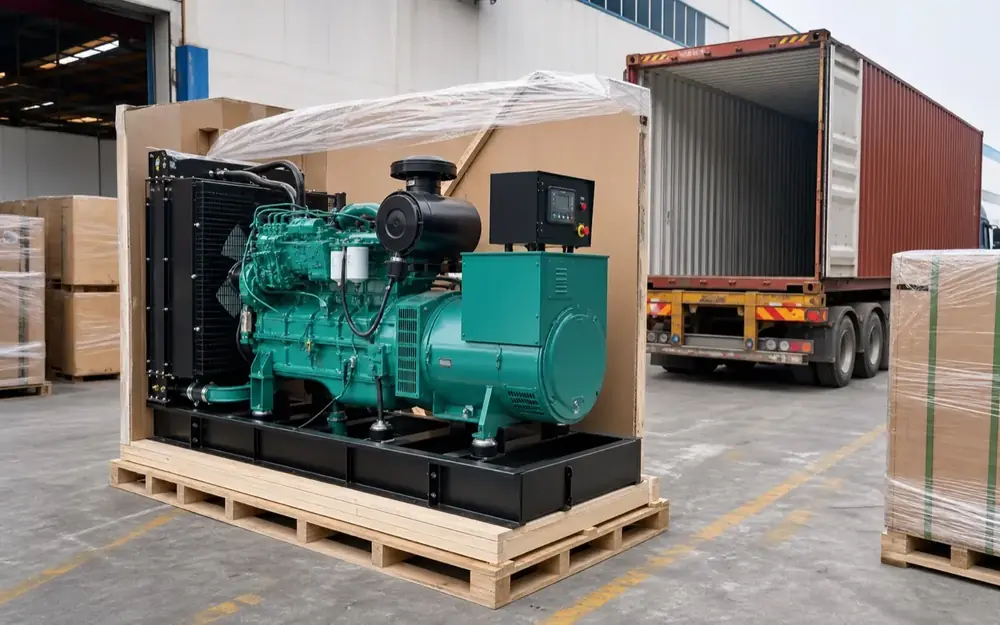
Conformity paperwork is a per-order question, not a product feature. Whether it applies, who arranges it and who pays for it should be decided in writing before the set is built rather than when the container reaches the port.
Where conformity assessment sits in a generator order
Nigeria's import framework includes a conformity assessment arrangement administered by the Standards Organisation of Nigeria, commonly referred to as SONCAP. Where it applies to a product and an order, conformity documentation has to be in place for the goods to clear.
The decisive word is where. Applicability depends on the product and the order rather than on a supplier's preference, so the question to settle early is a scoping question: does this generator, in this configuration, fall inside the regulated list, and if it does, which assessment route applies to it?
This page does not state whether any particular model is or is not covered, because that determination has to be made against the current official requirements for the specific goods. What the page does is set out the preparation work that makes the determination quick to obtain and hard to get wrong.
Document categories worth preparing early
Conformity work runs on documents. Grouping them by purpose makes it obvious which ones only the factory can supply and which ones only the buyer or the clearing agent can supply.
| Category | What belongs in it | Who normally provides it |
|---|---|---|
| Product identification | Model designation, rated output and configuration, engine and alternator identification, and the nameplate data as it will appear on the delivered unit. | The supplier, taken from the confirmed quotation rather than from a verbal description. |
| Technical evidence | The performance and test documentation that matches the offered configuration, in the form the applicable assessment route requires. | The supplier, from the production and testing stage. |
| Commercial documents | Commercial invoice, packing list, bill of lading, and the certificate of origin where one is required. | The supplier, with the consignee details confirmed by the buyer before the documents are issued. |
| Conformity documents | The certificates or approvals that the applicable route issues once the product and the shipment have been assessed. | Obtained through the applicable conformity assessment body, arranged on the destination side. |
| Customs and clearing | Duty assessment, the clearing mandate, and the consignee documentation the clearing agent works from. | The buyer and the licensed clearing agent. |
Deciding who arranges what
Most of the difficulty in this area is not technical. It is a boundary question about who was expected to do a step, and a short written table removes nearly all of it.
Ask both the factory side and the clearing side the same boundary questions, then compare the answers. Where the two answers disagree, that disagreement is the risk to resolve, not the detail being discussed.
| Activity | Who should be named in the order | Why it is worth writing down |
|---|---|---|
| Deciding whether the model is regulated | The buyer, with the conformity provider | That answer drives every later step, so it should be confirmed rather than assumed. |
| Arranging the conformity assessment | A named party, agreed per order | Decides who pays and who ends up holding the paperwork. |
| Supplying product identification and test evidence | The supplier | Without it the assessment cannot proceed at all. |
| Preparing the consignee and clearing documents | The buyer and the clearing agent | Removes the mismatch between the invoice wording and the clearing mandate. |
| Covering duty and terminal charges | The buyer, unless the quotation says otherwise | Clarifies what a CIF quotation does and does not include. |
| Holding the file and its correspondence | One named owner | Stops two parties each assuming the other kept the record. |
Why consignments stall at the port
In practice the recurring causes are documentary and administrative rather than mechanical.
| What goes wrong | Why it happens | How it is avoided |
|---|---|---|
| A detail on the transport document does not match the invoice | The consignee, description or quantity was changed after the documents were issued. | Freeze the consignee wording and the goods description before space is booked. |
| The model on the paperwork does not match the delivered unit | A substitution or amendment made after the conformity file was prepared. | Confirm the model and rating in writing and keep them stable from invoice through to nameplate. |
| Conformity work was started too late | It was treated as a port activity rather than an order activity. | Open the conformity question when the specification is confirmed, not when the container arrives. |
| The consignee name does not match the clearing mandate | The buyer's legal identity and the mandate wording differ. | Have the clearing agent confirm the exact consignee wording in advance. |
| Duty treatment was assumed to be included | Treating duty, terminal handling and inland transport as part of a CIF quotation. | Confirm duty, terminal and inland costs as separate lines on the offer. |
Questions to put in writing
These are the questions that produce a usable answer rather than a reassuring one. Send them to the supplier and to the clearing agent and compare what comes back.
| Question | Why the answer matters |
|---|---|
| Does this specific model, at this rating, fall under the regulated list? | Determines whether conformity work is needed at all for this order. |
| Which assessment route applies, and which body handles it? | Settles who does the work and what evidence has to be produced. |
| Which documents will the factory provide, and at what stage of the order? | Links the factory stage to the conformity stage so neither waits on the other. |
| Who arranges the assessment, and on whose account is it raised? | Stops the step from falling between two parties. |
| What must be true of the invoice, the packing list and the nameplate for the file to agree? | Removes the most common cause of a hold at the port. |
| What does the quotation include and exclude on the destination side? | Separates the machine from clearing, duty and the inland leg. |
Where the authoritative answer comes from
Applicability, assessment routes, the bodies that handle them, the fees involved and the time each step takes are all matters that the Standards Organisation of Nigeria sets, and they are revised from time to time. This page therefore states no fee, no duration and no process identifier, because any of those could be out of date by the time it is read.
Confirm the position for your specific model and order with the conformity provider and your clearing agent, and treat the official sources as the only authority: the Standards Organisation of Nigeria and the SONCAP portal.
Note also what this site does not claim. No page on this website asserts that a generator model is approved, listed or certified under any conformity scheme, and no authorised distributorship of any engine brand is claimed. Where a model sits outside the scope of a document, ask us in writing whether it is covered, and we will answer either way.
The position published on the factory strength and production proof page is the same one: we state in writing, before shipment, exactly what documentation we provide and which parts fall to the buyer or the clearing agent.
Compliance sits beside the physical movement of a consignment, which is described in port-to-site delivery and in the distributor programme.
Ask which parts we provide and which are yours
Send the model, the rating and the destination port, and ask us to state in writing which documents we provide as the supplier and which parts fall to you or your clearing agent for this specific order.
Get a written quotation
Three fields. We reply with the rating, the engine option and the delivery basis.
SONCAP preparation questions
Does every diesel generator import into Nigeria need SONCAP?
Not necessarily. Applicability depends on the product and the order, so the position has to be confirmed against the current official requirements for the specific model and rating rather than inferred from the product category.
Can the supplier arrange the conformity assessment?
Conformity arrangements normally sit on the destination side and are handled with the conformity provider and the clearing agent. Which party arranges and which party pays should be named in the order rather than settled at the port.
Why does this page not publish the fees or the time each step takes?
Because both are set by the Standards Organisation of Nigeria and are revised from time to time. A figure published here could be out of date, so the authoritative answer has to come from the official sources for your specific order.
What is the most common reason a consignment is held?
A mismatch between documents — usually the consignee wording, the model description or the quantity — rather than a technical fault with the machine itself.
Does this website claim any certification for its generators?
No. No page on this site asserts that a model is approved, listed or certified under any conformity scheme, and no authorised distributorship of any engine brand is claimed.
What should be in place before the container is sealed?
Product identification and test evidence that match the offered configuration, commercial documents with the consignee wording confirmed in advance, and a written note of who owns each remaining conformity and clearing step.
