WhatsApp: +86 157 0593 2345Email: miu@taiyudapu.comCall the factory: +86 157 0593 2345
Generator procurement guide

Generator Installment Plan & Finance Options Nigeria

Prepare a model-specific quotation, landed-cost budget and supplier evidence before speaking with a bank, leasing company or internal procurement team.

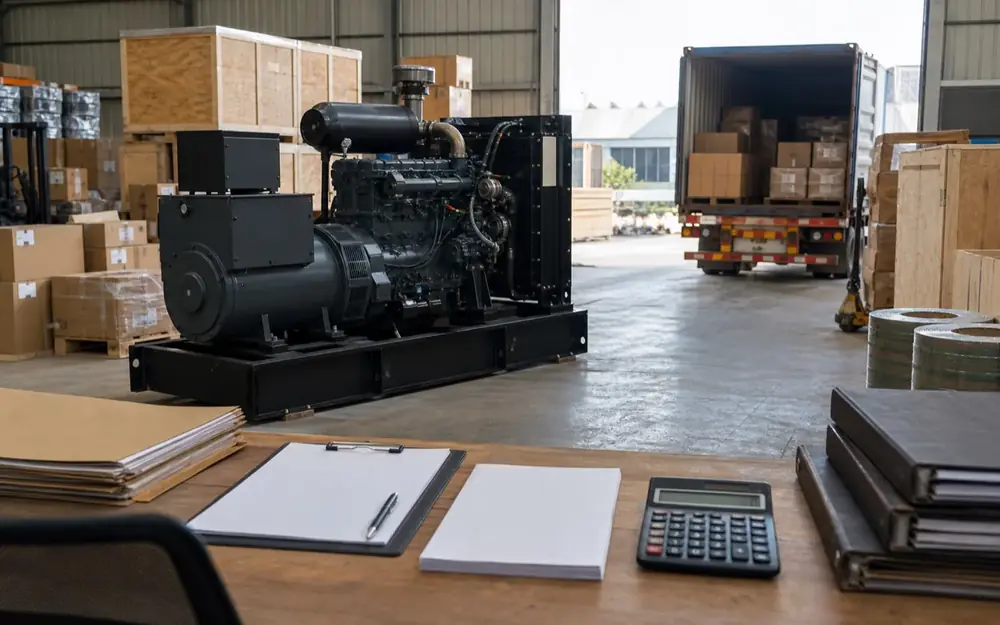
Illustrative generator procurement and shipping-document preparation scene
Illustrative procurement scene: confirm the equipment, document and shipping scope before arranging payment.
Important disclosure

Nigeria Generator Supply is a China-based factory-direct supply website. It does not advertise itself as a Nigerian bank, lender or leasing company.

Common generator purchase and finance routes

Finance routes, who approves each, and what the buyer prepares
RouteWho approves itWhat the buyer prepares
Direct purchaseBuyer and supplier under the signed contractApproved specification, payment schedule and delivery term
Bank equipment financeBuyer's bankQuotation, business documents, budget and lender requirements
Leasing or asset financeIndependent finance providerEquipment scope, repayment application and insurance plan
Letter of creditIssuing and receiving banksAgreed documents, shipment terms and contract conditions

Availability and approval vary by buyer and provider. This page does not promise credit or a particular payment method.

Documents to prepare before applying

Start with a model-specific proforma invoice or quotation showing generator rating, engine, alternator, controller, enclosure, ATS scope, quantity, Incoterm and validity period. Ask the finance provider which supplier identity, banking, insurance or import documents it requires.

Avoid using a generic price screenshot as the main application document. A lender or procurement team needs to know exactly what equipment and delivery scope the budget covers.

Build the full generator project budget

The equipment itself is only one part of the decision. Depending on the agreed scope, the buyer may also need to budget for freight, cargo insurance, customs clearance, port and destination charges, inland transport, lifting, civil work, cabling, ATS, installation, fuel system, commissioning and initial spare parts.

FOB China and CIF Lagos are not the same as a delivered-and-installed project price. Responsibility for each cost must be written clearly.

Budgeting for a project needs the running cost as well as the purchase route, and how to derive a cost per unit of energy is in cost per kWh.

Payment checks before money is sent

Verify the legal supplier identity, bank beneficiary, exact quotation number and agreed specification. Confirm inspection or test evidence, production schedule, packing, shipment documents, warranty handling and the process for approved changes. Treat any last-minute bank-account change as a reason to stop and re-verify through a known contact.

Deposit, balance, letter-of-credit and any other payment conditions apply only when both parties accept them in the signed commercial documents.

Get a written quotation

Three fields. We reply with the rating, the engine option and the delivery basis.

Send on WhatsApp

WhatsApp RFQ template

Hello, I need a generator quotation and documents for a Nigeria finance or procurement application. Required rating/load: [ ], application: [ ], duty: [standby/prime], silent/open: [ ], ATS: [yes/no], quantity: [ ], delivery: [CIF Lagos/FOB China]. Please state the exact equipment and document scope.

Send procurement RFQ

Frequently asked questions

Do you provide generator finance in Nigeria?

We can prepare a generator quotation and available commercial documents. Credit or leasing approval comes from the buyer's chosen finance provider unless a signed quotation explicitly says otherwise.

What documents can support an application?

A model-specific quotation, technical specification, supplier identity and defined delivery scope are a practical starting point; the lender decides its full list.

Can I rely on payment terms shown online?

No. Use only the payment terms written in the signed quotation or contract for your order.

Four structures, four different obligations

Finance for a generating set is not one product. The four arrangements that buyers actually meet behave differently in ownership, in what happens at the end of the term, and in who carries the risk of the machine failing. Understanding the mechanism is what allows a buyer to compare offers, because the arithmetic in each one is doing a different job.

An instalment purchase transfers ownership to the buyer while the payments are still running. The machine is an asset on the buyer's books from the start, which means the buyer carries the maintenance, the fuel and the risk of breakdown. What the structure buys is time: the set is installed and earning before it is fully paid for.

A lease keeps ownership with the lessor for the term. The buyer pays for use rather than for the asset, which can suit a project with a defined life, a contractor who needs a set for one build, or a business that would rather not tie up capital. The trade is that the machine is not the buyer's until an option is exercised, and the condition obligations during the term are usually specific.

A trade-in applies the residual value of an existing set against a new one. Its usefulness depends entirely on how that value is established, which is why an inspection of the old machine matters more than the headline allowance. Dealer credit is the fourth: a distributor takes stock on terms and pays as it sells, which is a working capital arrangement for the channel rather than a purchase by the end user.

Which structure suits which buyer

The table sets the four against the situations they fit and the obligations each creates. It is a mechanism comparison, not a recommendation, and the terms themselves always come from the party providing the finance.

Finance structures for a generator purchase, what each suits, and the obligation it creates
StructureSuitsWho owns during the termMain risk to the buyer
Instalment purchaseA set that will run for years and earn revenue from day oneBuyer, from deliveryBreakdown or under-performance is the buyer's problem while payments continue
LeaseA defined project, a contractor, or a buyer preserving capitalLessorCondition and return obligations, and no asset at the end unless an option is exercised
Trade-inReplacing a working set with a known historyBuyerThe allowance depends on an inspection, and the old set's faults are priced into it
Dealer creditA distributor holding stock for resaleDistributor, subject to the agreementStock sitting unsold while the obligation runs

What a lender or lessor actually examines

The finance provider is assessing two things: whether the business can service the obligation, and whether the machine is worth what is being financed. The first is answered by trading records, bank statements and the entity that will sign. The second is answered by the specification: a set identified by engine and alternator model, with a defined scope, is easier to value than a description that names only a rating.

That is why the documents that make a purchase decision easy also make a finance application easy. A model-specific quotation, a specification that identifies the major components, and a delivery scope that states what is included are useful to both conversations, and their absence is a common cause of delay.

Where the buyer is a company rather than an individual, the entity that signs should be the entity that operates the asset. A structure that puts the obligation on one company and the machine in another creates a question about who is responsible for maintenance, which is exactly the question that surfaces when something fails.

Risks that are easy to miss

The first is currency. An obligation denominated in one currency and serviced from revenue in another carries an exposure that has nothing to do with the generator, and it should be understood before the term is agreed rather than discovered at the first payment.

The second is maintenance responsibility. Under a lease the condition obligations are usually written down, and returning a machine that has not been serviced to the required schedule can trigger charges. Under an instalment purchase the buyer carries the maintenance anyway, but without the discipline of a contract requiring it.

The third is insurance, which is sometimes required by the provider and always sensible on an asset that can be destroyed by a single event. The fourth is what happens on early settlement or on default: the terms for both belong in writing before signature, and they are the clauses buyers most often read last.

None of this replaces the technical decision. A set that is correctly sized and correctly installed is cheaper to finance because it is less likely to fail, and the load audit that establishes the size is the same document a provider uses to judge the specification, described in the load audit checklist.

Questions to settle before signing

Ask who owns the machine during the term and what transfers at the end. Ask what happens if the set fails and who pays for the repair. Ask whether maintenance must be carried out by a named party, and what evidence is required. Ask what the early settlement terms are, and what security is being given. Ask which currency the obligation is in and whether the payments can change.

Ask, finally, what the provider needs to see in order to make a decision, and in what form. A finance conversation that starts with a complete specification and a defined scope moves considerably faster than one that starts with a rating and a hope.