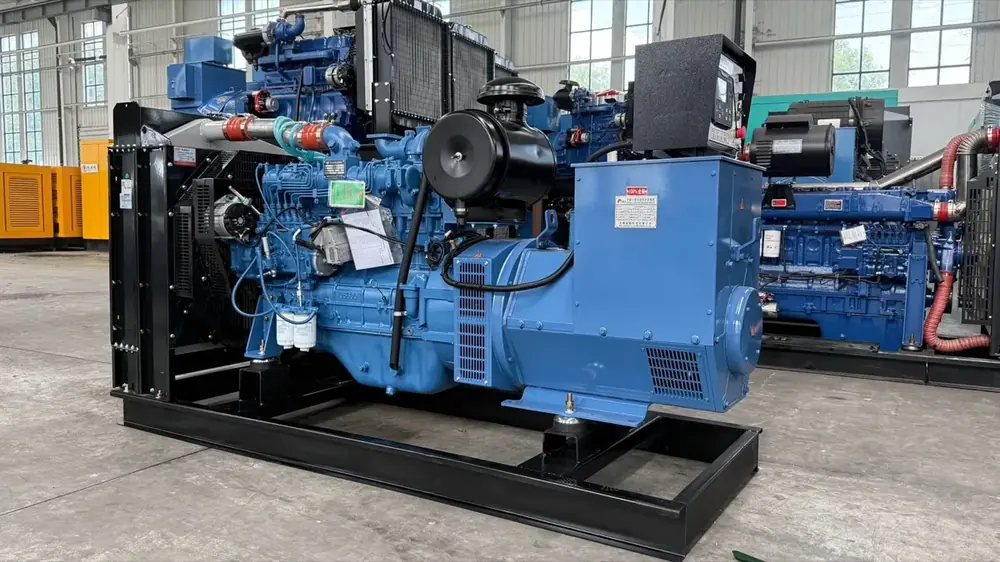
For a landlocked destination, the inland leg is part of the quotation, not an afterthought. Confirm the port of arrival, the transport arrangement and the final access route before agreeing a price.
Inland transport shapes the delivered cost
Because cargo normally arrives through Lagos or Port Harcourt and then travels inland, the transport arrangement between the port and Kano is a real component of what the generator costs to put on site.
The practical implication is that the port of arrival and the inland leg should be stated in the request rather than assumed. A quotation that covers movement to a port is not the same offer as one that covers movement to your compound, and the difference should be visible rather than discovered at the port.
If you work with a local haulier, say so. It is often more efficient for the buyer to control the inland leg, and knowing that lets the quotation be built on the right delivery term from the start.
Where the sea leg itself is being compared, the FOB China versus CIF Lagos guide sets out the trade-off and the CIF Lagos inclusions page lists what that term does and does not cover.
Site conditions in northern Nigeria
Two conditions recur in northern sites. Ambient temperature is high for much of the year, and airborne dust is present around industrial, agricultural and road-facing locations.
Both affect how a set performs. A generator is rated at a reference ambient condition stated on its datasheet, and output falls as ambient temperature rises above that reference. Where a site is consistently hot, a larger frame is sometimes needed to hold the intended output rather than accepting the derated figure.
Dust affects the cooling and combustion air paths. Filtration and the maintenance interval for cleaning and replacing filters should be specified in the quotation, because a cooling package designed for a mild, clean environment will not hold its performance in a dusty one.
None of this requires the buyer to compute derating. It requires the buyer to say where the set will stand and what the site is like, so the cooling and filtration arrangement is chosen for the real location.
Load profiles common in Kano
Demand here spans manufacturing, trade and agro-processing, with grain milling, oil processing, light manufacturing and commercial buildings all present alongside residential backup.
Milling and processing loads share a pattern worth noting: a continuous base load from conveying and extraction, plus heavy intermittent starts from the main drive motors. That combination rewards a load list that separates the continuous from the intermittent.
Where the site runs long daily hours rather than covering occasional outages, state the duty. A set on a production shift should not be quoted as a standby-only backup unit.
Planning around service and spare parts
The further a machine is from a port, the more the parts channel matters. Consumables and wear items such as filters, belts, hoses and injectors should be identified in the quotation along with how they reach your city.
It is worth asking for the specific items the offered engine model uses, rather than a generic filter list. Two engine platforms at the same rating can use different service parts, and the difference shows up in the second year rather than on the invoice.
The generator spare parts guide covers the parts that are commonly stocked and the fuel consumption calculator helps with the operating side of the same decision.
Sending a Kano request
Give the load list or target rating, the duty and daily hours, the voltage and phase, the site conditions, the intended port of arrival, who handles the inland leg, and the delivery term.
The existing Kano supplier page covers the local supply context, and the Kaduna guide covers a comparable inland market.
Request a Kano quotation
Send the load list, the duty, the site conditions and the delivery arrangement, including which port you expect the goods to arrive through and who handles the inland leg.
Get a written quotation
Three fields. We reply with the rating, the engine option and the delivery basis.
Kano generator questions
How does a generator reach Kano?
Cargo normally arrives through a seaport such as Lagos or Port Harcourt and then travels inland. Because of that, inland transport is a real component of the delivered cost and should be assigned explicitly in the quotation.
Does high ambient temperature affect a generator?
Yes. Generators are rated at a reference ambient condition stated on the datasheet, and output falls as ambient temperature rises above that reference. Where a site is consistently hot, a larger frame may be needed to hold the intended output.
How should dust be handled?
Through filtration and a maintenance interval specified for the site. A cooling package designed for a clean environment will not hold its performance in a dusty one, so the arrangement should be chosen for the actual location.
Does duty matter for a Kano milling or processing site?
It does. Sites that run long daily hours should be quoted with a prime rating rather than treated as standby-only backup, because continuous operation carries different loading limits and maintenance expectations.
What should I send with the request?
The load list or target rating, the duty and daily hours, the voltage and phase, the site conditions, the intended port of arrival, who handles the inland leg and the delivery term you want quoted.
Why does the spare parts channel matter here?
Because the further a machine is from a port, the more the parts route affects its cost of ownership. Ask for the specific service items the offered engine model uses rather than a generic list.
